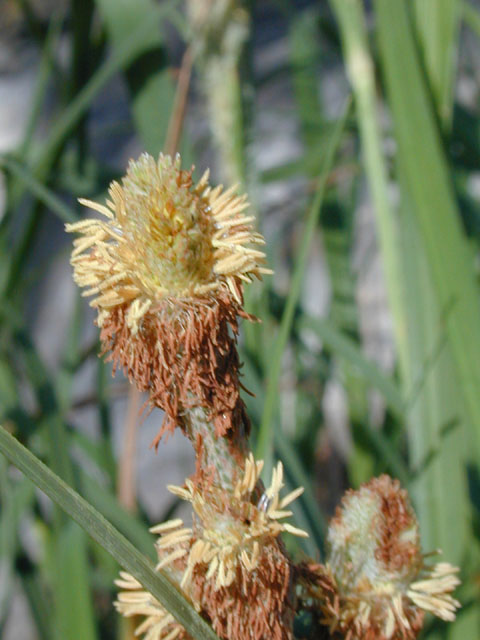
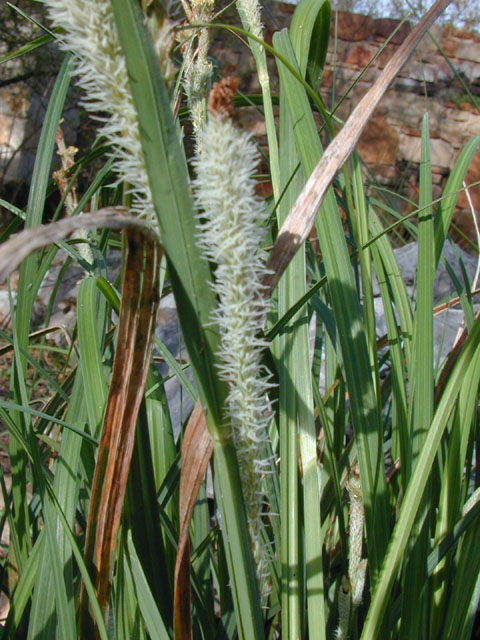


Emory Sedge

Carex emoryi

Other common name(s):

Emory's Sedge

Family:

Cyperaceae (Sedge Family)

Plant Ecoregion Distribution Map

This map uses data from the US EPA. EPA  servers have been offline frequently so maps may not display. We are working on a solution.

Cross Timbers, Edwards Plateau, Texas Blackland Prairies
Carbonate Cross Timbers, Eastern Cross Timbers, Grand Prairie, Limestone Cut Plain, Western Cross Timbers
Balcones Canyonlands, Edwards Plateau Woodland, Llano Uplift, Semiarid Edwards Plateau
Floodplains and Low Terraces1, Northern Blackland Prairie, Southern Blackland Prairie

Plant Characteristics

Growth Form

Grass & Sedge

Height

1
to
4
ft.

Spread

1
to
3
ft.

Leaf Retention

Semi Evergreen

Lifespan

Perennial

Habitat and Care Requirements

Soil Type(s)

Poor Drainage, Moist, Mud

Light Requirement

Sun, Part Shade

Water Requirement

Medium, High

Native Habitat

Wetland or Riparian

Bloom and Attraction

Bloom Color

White, Green, Brown

Bloom Season

Spring, Summer

Seasonal Interest

Seeds, Pollen

Wildlife Benefit

Butterflies, Birds, Bees

Maintenance

Best suited for use in landscapes with ample space. Spreads readily by underground rhizomes and can overrun small garden beds in a relatively short period of time. That said, it is valuable for wetland restoration, soil retention, and in wet meadows and storm water projects. Useful in large areas to out compete non-native species, Good for rain gardens. Deer resistant. Propagation: seed, clump division.

Comments

Blooms July-August. A cool-season sedge with bright green grass-like leaves. Leaf retention depends on the region. Inconspicuous florets born on spikes.
Previous Scientific Name(s): Carex stricta var. elongata
Material Treatment Method Collection References
Clump Division Replant the divisions immediately to minimize stress on the plants. Trim any damaged or long roots to encourage quicker establishment. Ensure each division has a healthy portion of roots and shoots. Prepare planting holes in a suitable location with well-drained, moist soil. Place each division into its hole, ensuring the crown is at soil level, and backfill with soil. Water the divisions thoroughly after planting to settle the soil around the roots. Maintain consistent moisture but avoid waterlogging. The newly separated clumps will grow into individual, full-sized plants within a growing season. Emory's sedge can be optimally propagated in spring and autumn through division. Avoid extreme summer heat or winter cold to ensure successful propagation. Begin by carefully digging up the mature plant. Use a garden fork or spade to avoid damaging the root system. Separation Gently shake off excess soil from the roots. Locate natural divisions or offsets in the clump and use a sharp, clean knife or spade to separate these sections. 1 ) https://www.picturethisai.com/care/propagate/Carex_emoryi.html 2) https://greg.app/emorys-sedge-overview/ 3) https://www.botanikks.com/plants/carex-emoryi-dewey/539285/1
Seed No Treatment Sow them in spring, ensuring the soil remains moist to encourage germination. Germination typically takes between 14 to 30 days under optimal conditions. Keep an eye on moisture levels, as consistent watering is crucial for successful sprouting. The seedling stage lasts about 4-6 weeks. During this time, the young plants establish their roots and begin to grow. Collect mature seeds in late summer or early fall. Harvest the seeds once the spikes have fully matured and turned brown. 1) https://greg.app/emorys-sedge-overview/ 2) https://www.botanikks.com/plants/carex-emoryi-dewey/539285/1
Stem Cutting Plant the stem in a moist potting mix, ensuring that the lower nodes are buried in the mix. Cover the pot with clear plastic to maintain humidity and place in a warm, bright location. Water the new plant regularly and remove the plastic once it has rooted and is producing new growth. Identify mature, healthy stems that have not yet blossomed. Cut a small section of stem that includes a few leaves and roots. https://plantiary.com/plant/carex-emoryi_4682.html
Rhizome Cutting Plant the cuttings in a tray or pot filled with a soil mix. Keep the soil mix moist and place the container in a shaded area. Once the new plants have established a strong root system, they can be transplanted into individual pots or directly into the ground. Cut the rhizomes in sections measuring about 2 to 3 inches long. https://www.botanikks.com/plants/carex-emoryi-dewey/539285/1

About the Region

Fall Symposium 2025 Logo - Teach for the Future

Salado, the location of our Fall 2025 Symposium, lies at the intersection of two ecoregions: the Edwards Plateau (Limestone Cut Plain) and Blackland Prairie (Northern Blackland Prairie).

The Edwards Plateau area is also called the Hill Country; however, this general term covers a much larger area extending farther north. Spring-fed creeks are found throughout the region; deep limestone canyons, rivers, and lakes (reservoirs) are common. Ashe juniper is perhaps the most common woody species found throughout the region. Additional woody species include various species of oak, with live oak (Quercus fusiformis) being the most common. Sycamores (Platanus occidentalis) and bald cypress (Taxodium distichum) border waterways. This area is well known for its spring wildflower displays, though they may be viewed in spring, late summer, and fall, as well. According to Texas Parks and Wildlife, average annual rainfall in the Edwards Plateau ranges from 15 to 34 inches.

The Blackland Prairie extends from the Red River south to San Antonio, bordered on the west by the Edwards Plateau and the Cross Timbers, and on the east by the Post Oak Savannah. Annual rainfall averages 30 to 40 inches, with higher averages to the east. This region is dominated by prairie species. The most common grass species include little bluestem (Schizachyrium scoparium) and Indian grass (Sorghastrum nutans) in the uplands and switchgrass (Panicum virgatum) in the riparian areas and drainages. Common herbaceous flowering plants include salvias, penstemons, and silphiums. This area has suffered greatly from overgrazing and agricultural use. Few intact areas remain, though many of the plants can be found along county roadsides throughout the region.

Our fall Symposium host chapter, the Tonkawa Chapter, includes both of these ecoregions.

Source: Wildflowers of Texas by Michael Eason