Netleaf Hackberry

Celtis reticulata

Other common name(s):

Netleaf Sugar Hackberry, Western Hackberry, Sugar Hackberry, Texas Sugarberry, Palo Blanco, Acibuche

Family:

Cannabaceae (Hemp Family)

Plant Ecoregion Distribution Map

This map uses data from the US EPA. EPA  servers have been offline frequently so maps may not display. We are working on a solution.

Central Great Plains, Chihuahuan Deserts, Cross Timbers, East Central Texas Plains, Edwards Plateau, Gulf Coast Prairies and Marshes, High Plains, Southwestern Tablelands, Texas Blackland Prairies
Broken Red Plains, Limestone Plains, Red Prairie
Chihuahuan Basins and Playas, Chihuahuan Desert Grasslands, Chihuahuan Montane Woodlands, Low Mountains and Bajadas, Stockton Plateau
Carbonate Cross Timbers, Eastern Cross Timbers, Grand Prairie, Limestone Cut Plain, Western Cross Timbers
Bastrop Lost Pines, Floodplains and Low Terraces2, Northern Post Oak Savanna, Northern Prairie Outliers, San Antonio Prairie, Southern Post Oak Savanna
Balcones Canyonlands, Edwards Plateau Woodland, Llano Uplift, Semiarid Edwards Plateau
Southern Subhumid Gulf Coastal Prairies
Canadian/Cimarron High Plains, Llano Estacado, Rolling Sand Plains
Canadian/Cimarron Breaks, Caprock Canyons Badlands Breaks, Flat Tablelands and Valleys, Semiarid Canadian Breaks
Floodplains and Low Terraces1, Northern Blackland Prairie, Southern Blackland Prairie

Plant Characteristics

Growth Form

Tree

Height

25
to
50
ft.

Spread

25
to
50
ft.

Leaf Retention

Deciduous

Lifespan

Perennial

Habitat and Care Requirements

Soil Type(s)

Rocky, Limestone, Well Drained, Moist, Dry

Light Requirement

Sun, Part Shade

Water Requirement

Low

Native Habitat

Grassland, Wetland or Riparian

Bloom and Attraction

Bloom Color

White

Bloom Season

Spring

Seasonal Interest

Fruit, Flowers

Wildlife Benefit

Butterflies, Birds, Small Mammals

Maintenance

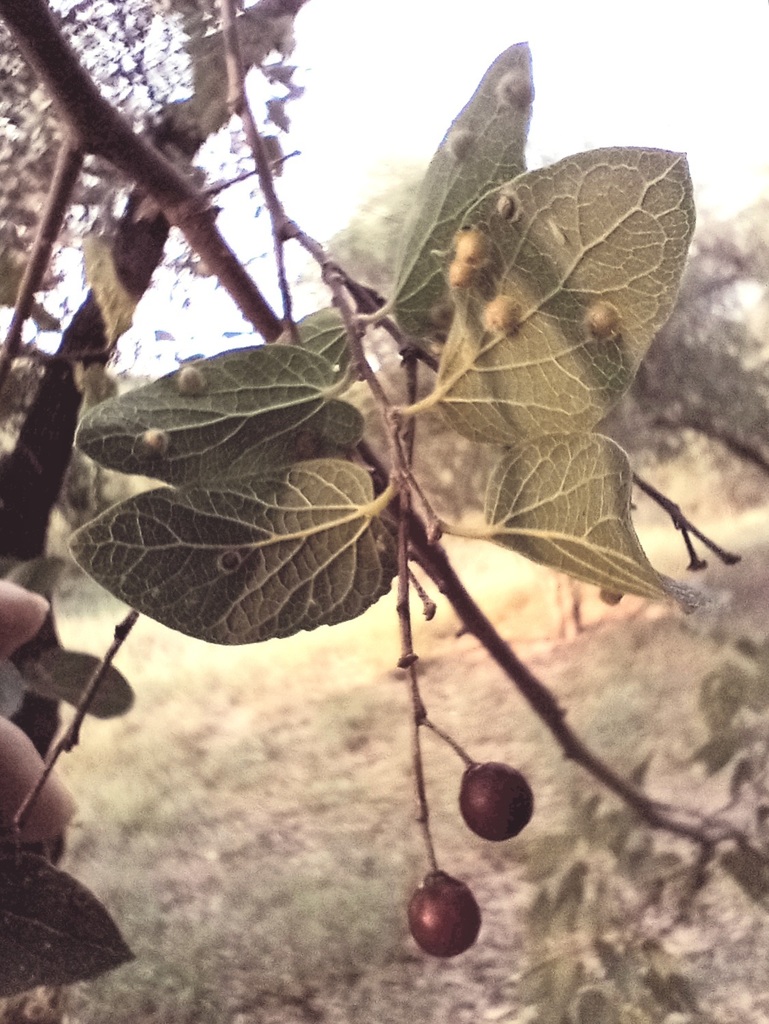
Withstands severe drought and high heat. Slow growing. Also fairly resistant to disease and insect problems. Prune only as needed to remove weak limbs or to raise canopy for walkways. Galls that form on leaves are not harmful to the tree. Add mulch to improve drought tolerance in the spring. Propagation: seed, sucker transplant.

Comments

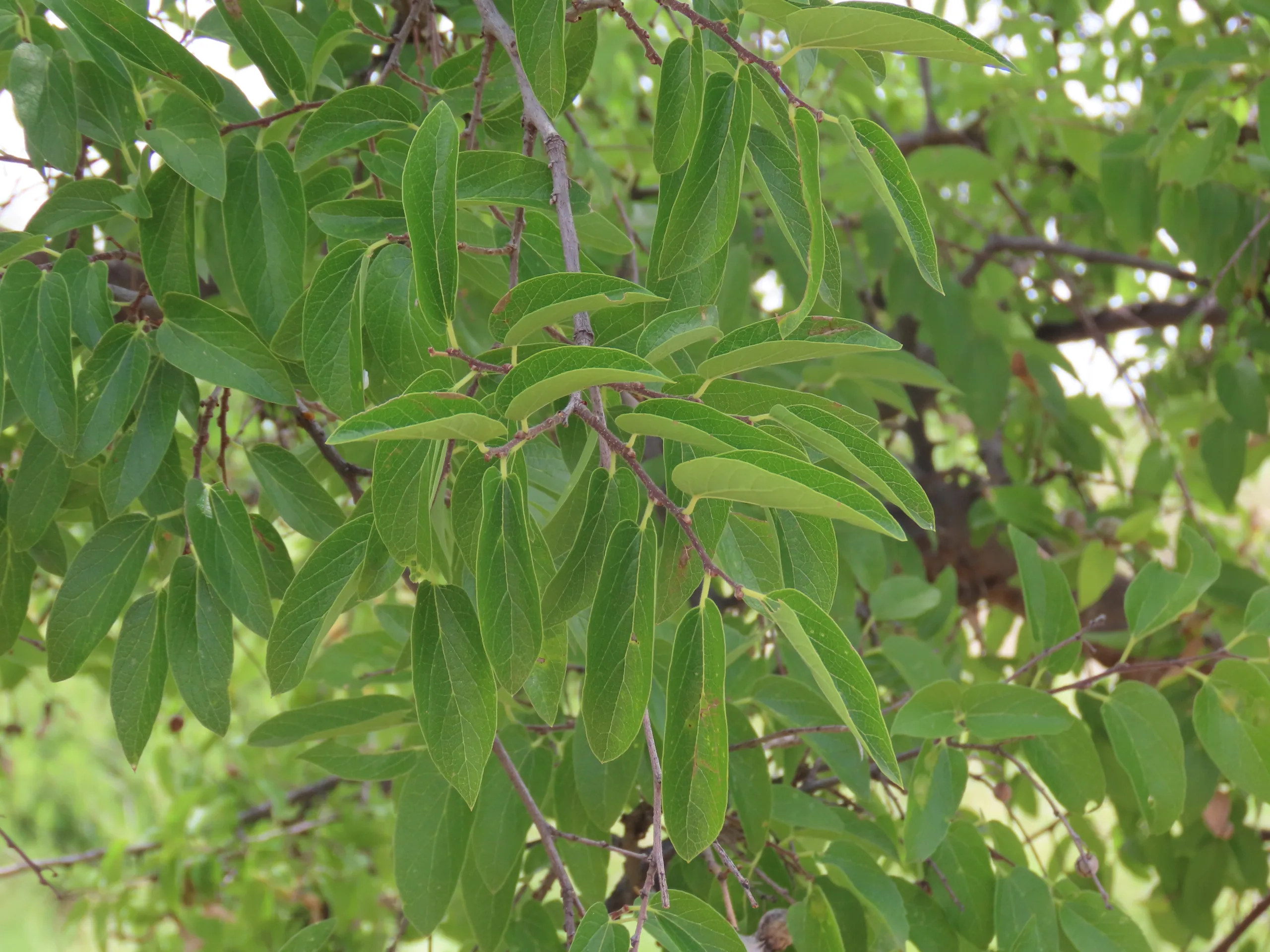
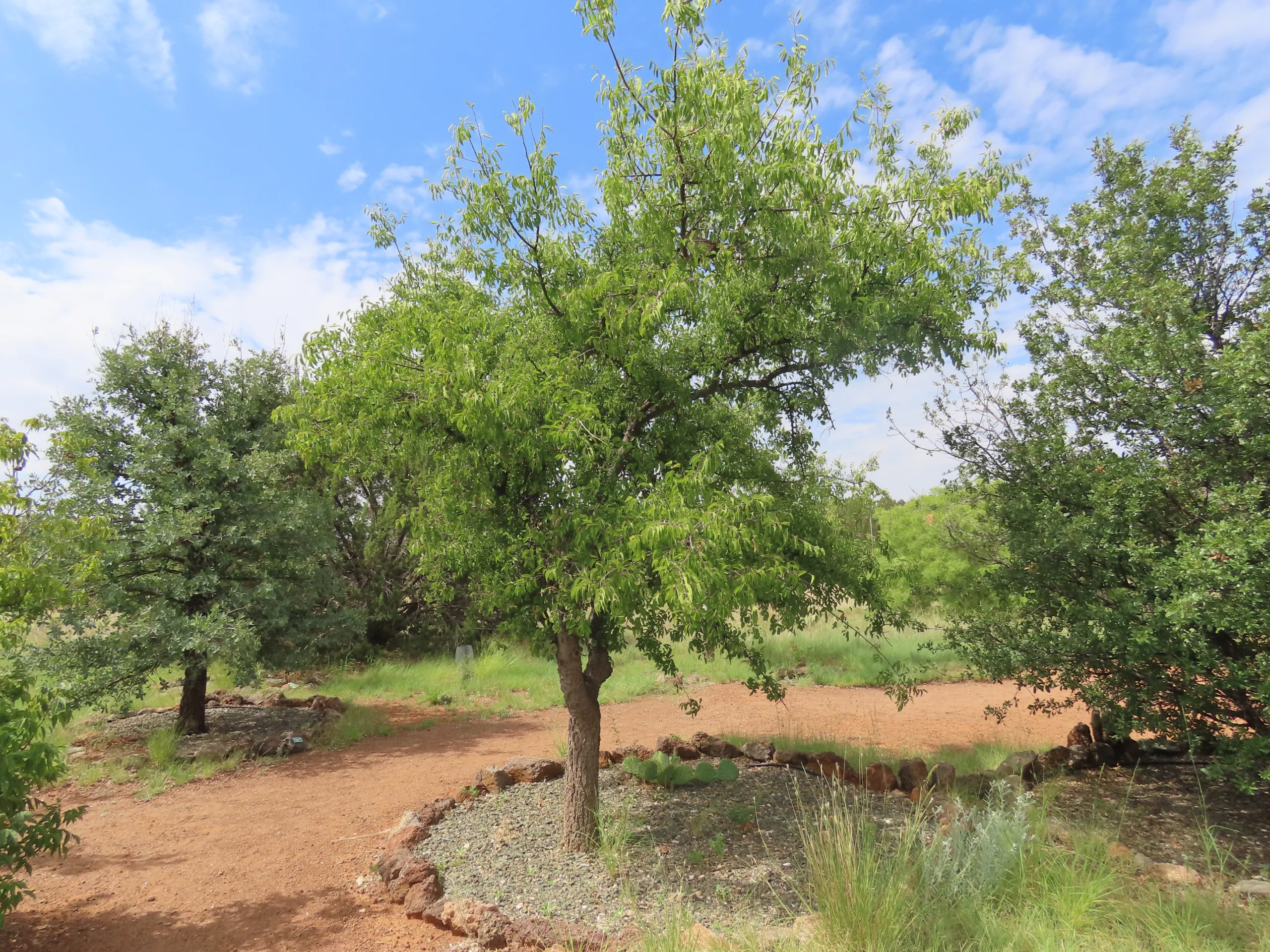
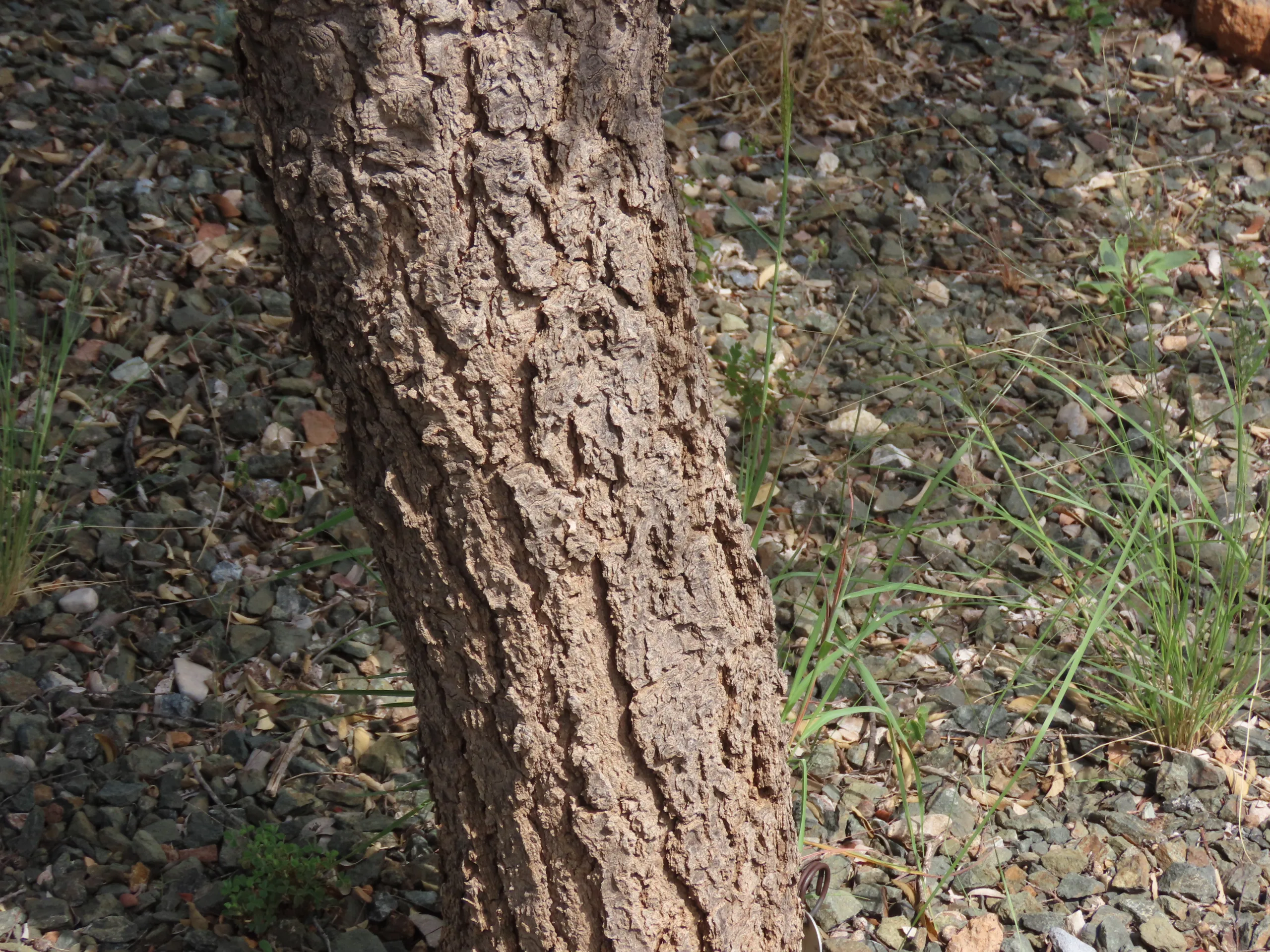
Blooms February-April. A tree or large shrub with gray, ridged bark. Leaves up to 3 inches long, (smaller than those of Sugar Hackberry) a pointed tip, and a slightly asymmetric base. The leaf upper surface somewhat rough to the touch and darker green than the lower surface. Flowers are inconspicuous. The fruit is a spherical berry, 1/4 inch in diameter, reddish. This is the native hackberry of the Western United States. The branches often have deformed bushy growths called witches’-brooms, produced by mites and fungi.
Previous Scientific Name(s): Celtis laevigata var. reticulata, Celtis brevipes, Celtis occidentalis, Celtis laevigata var. brevipes, Celtis douglasii
Material Treatment Method Collection References
Seed Stratification Following pulp removal, all hackberry species should be cold-stratified at 5°C in a moist media to break dormancy. Stratification for 90-120 days is effective. Sow seed in a seedbed or open frame in autumn. Berries are collected by hand in September-December. If it is early in the season and fruits are still moist, spread the berries to prevent mold. If it is later in the season, no additional drying is necessary. Pulp removal is recommended to increase germination rates. To remove flesh from berries for storage or planting, wash under running water in a semi-fine sieve to remove pulp. Let seed dry completely. 1) https://rngr.net/npn/propagation/protocols/celtis-ehrenbergiana-celtis#:~:text=Foothills%20and%20mesas%201%2C500%2D3%2C000,winnowing%20to%20remove%20berry%20debris. 2) https://harvesttotable.com/how-to-grow-celtis-hackberry/#:~:text=Where%20to%20plant%20Celtis%20%E2%80%93%20Hackberry%20*,soil.%20Celtis%20will%20grow%20in%20alkaline%20soil. 3) https://www.gardenia.net/plant/celtis-occidentalis#:~:text=Propagation%20by%20Cuttings,and%20keep%20them%20consistently%20moist.
Softwood Cutting Remove lower leaves and dip the cut end in rooting hormone. Plant cuttings in a well-draining soil mix and keep them consistently moist. Roots should develop within 6 to 8 weeks, after which the cuttings can be transplanted into larger containers or outdoor beds. Can be propagated by softwood cuttings taken in early summer. Take 6-inch cuttings from young, vigorous shoots. https://www.gardenia.net/plant/celtis-occidentalis#:~:text=Propagation%20by%20Cuttings,and%20keep%20them%20consistently%20moist.

About the Region

Fall Symposium 2025 Logo - Teach for the Future

Salado, the location of our Fall 2025 Symposium, lies at the intersection of two ecoregions: the Edwards Plateau (Limestone Cut Plain) and Blackland Prairie (Northern Blackland Prairie).

The Edwards Plateau area is also called the Hill Country; however, this general term covers a much larger area extending farther north. Spring-fed creeks are found throughout the region; deep limestone canyons, rivers, and lakes (reservoirs) are common. Ashe juniper is perhaps the most common woody species found throughout the region. Additional woody species include various species of oak, with live oak (Quercus fusiformis) being the most common. Sycamores (Platanus occidentalis) and bald cypress (Taxodium distichum) border waterways. This area is well known for its spring wildflower displays, though they may be viewed in spring, late summer, and fall, as well. According to Texas Parks and Wildlife, average annual rainfall in the Edwards Plateau ranges from 15 to 34 inches.

The Blackland Prairie extends from the Red River south to San Antonio, bordered on the west by the Edwards Plateau and the Cross Timbers, and on the east by the Post Oak Savannah. Annual rainfall averages 30 to 40 inches, with higher averages to the east. This region is dominated by prairie species. The most common grass species include little bluestem (Schizachyrium scoparium) and Indian grass (Sorghastrum nutans) in the uplands and switchgrass (Panicum virgatum) in the riparian areas and drainages. Common herbaceous flowering plants include salvias, penstemons, and silphiums. This area has suffered greatly from overgrazing and agricultural use. Few intact areas remain, though many of the plants can be found along county roadsides throughout the region.

Our fall Symposium host chapter, the Tonkawa Chapter, includes both of these ecoregions.

Source: Wildflowers of Texas by Michael Eason