

Claret Cup Cactus

Echinocereus triglochidiatus

Other common name(s):

Claret Cup, Hedgehog Cactus, Kingcup Cactus, Mojave Mound, Mohave Mound

Family:

Cactaceae (Cactus Family)

Plant Ecoregion Distribution Map

This map uses data from the US EPA. EPA  servers have been offline frequently so maps may not display. We are working on a solution.

Chihuahuan Deserts, Edwards Plateau, Southern Texas Plains
Chihuahuan Montane Woodlands, Low Mountains and Bajadas
Balcones Canyonlands
Semiarid Edwards Bajada

Plant Characteristics

Growth Form

Cactus & Succulent

Height

.5
to
1
ft.

Spread

1
to
3
ft.

Leaf Retention

Evergreen

Lifespan

Perennial

Habitat and Care Requirements

Soil Type(s)

Sand, Gravelly, Rocky, Granitic, Calcareous, Well Drained, Dry

Light Requirement

Sun

Water Requirement

Low

Native Habitat

Grassland, Woodland

Bloom and Attraction

Bloom Color

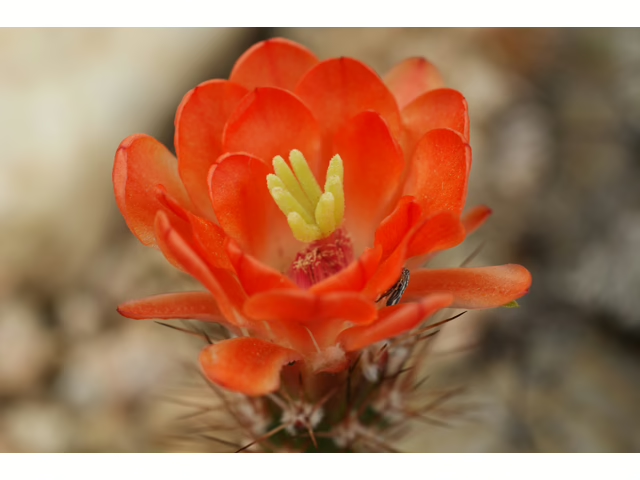
Red, Orange

Bloom Season

Spring

Seasonal Interest

Fruit, Nectar, Pollen

Wildlife Benefit

Butterflies, Birds, Small Mammals, Hummingbirds, Bees

Maintenance

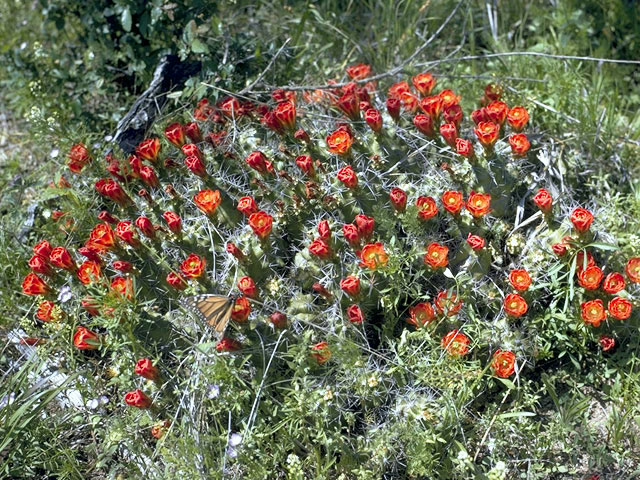
Widely cultivated for its showy flowers and is among the easiest of the cacti to grow. Great for xeriscape gardens. It needs good drainage and requires strong sunlight to maintain a healthy appearance. A harsh “dry and cool” winter environment combined with maximum light exposure enhances spring flower production. The bright red-orange flowers often cover the whole plant in the spring. Very drought and heat tolerant. Reduce water during the winter dormant season. Overwatering during this time can cause stress and lead to root damage. Native habitat: upper edge of Mojave Desert to coniferous forests, igneous and calcareous rock outcrops, cliffs, and sandy hills. Special care may be needed when growing outside of its native habitat. Propagation: seed.

Comments

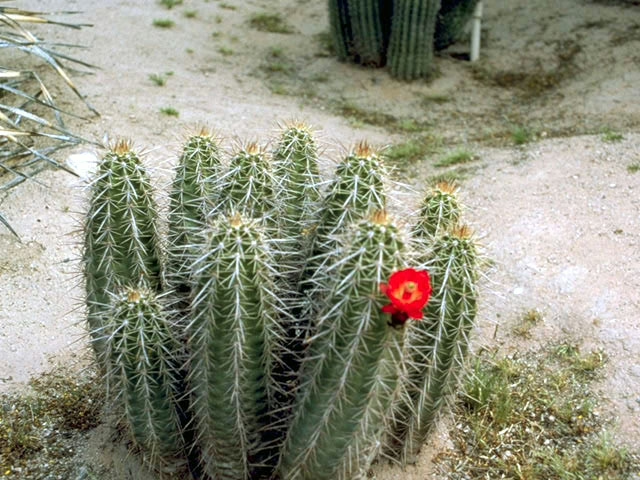
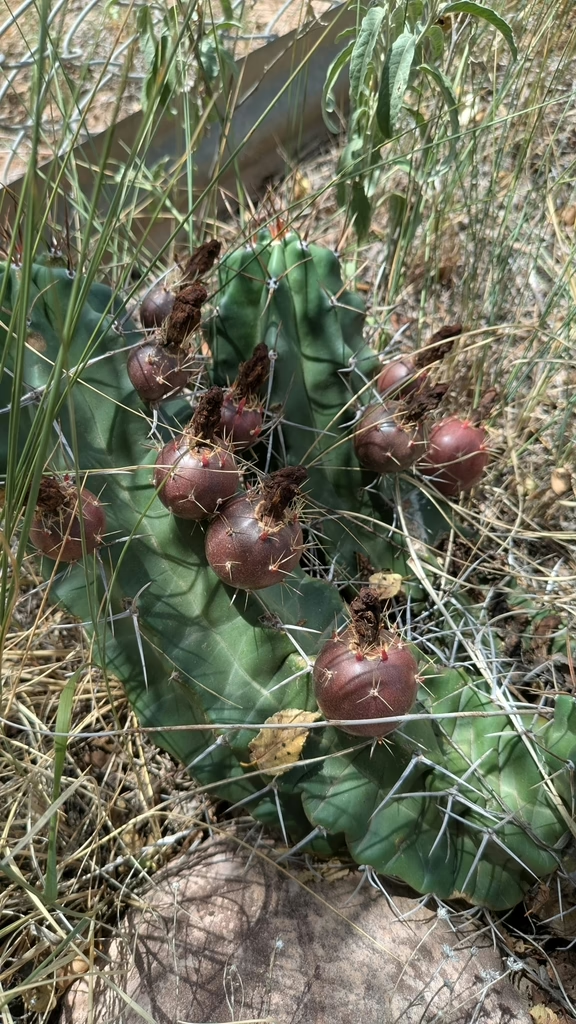
Blooms April-May. Its highly variable form is cylindrical and low-growing, Grows in clumps as much as 3-4 feet across but usually smaller. Thick, fleshy stems, erect, cylindrical, with ridges and long spines. often with two strikingly different forms growing in the same area. The numerous flowers grow at the top of stems. The fruit is a red, 1-inch berry, appearing 2-2.5 months after flowers.
Previous Scientific Name(s): Echinocereus triglochidiatus var. triglochidiatus, Echinocereus mojavensis, Echinocereus triglochidiatus var. mojavensis, Echinocereus triglochidiatus var. toroweapensis, Echinocereus triglochidiatus var. gonacanthus, Echinocereus coccineus ssp. mojavensis, Echinocereus triglochidiatus ssp. mojavensis, Echinocereus triglochidiatus ssp. triglochidiatus
Material Treatment Method Collection References
Offshoots Division Transplant the offsets immediately in loose, well-draining soil. Set seedlings or divisions 12 to 24 inches apart, positioned slightly above ground level to prevent waterlogging. Tamp the soil firmly to stabilize each plant, and wait a week before the first watering. Thereafter, water only when the top two to three inches of soil are dry. Offsets, aka daughters or pups, are stems that grow beside a parent stem. Divide them in the spring to start new plants. Wear thick gloves. Use a clean garden shovel to dig around and about four to six inches below the outer cylinders in the mound. Use your fingers to gently separate the desired number of stems from the parent. Each must have roots attached. Tamp the soil back around the parent mound. https://gardenerspath.com/plants/succulents/grow-claret-cup-cactus/
Offshoots Division Allow the offset to dry for a few days to form a callus, then plant it in well-draining soil. Carefully remove a healthy pup from the base of the parent plant using sterilized tools. 1) https://planetdesert.com/products/claret-cup-cactus-echinocereus-triglochidiatus 2) https://earthone.io/plant/echinocereus%20triglochidiatus
Seed No Treatment Note that many sources do not recommend propagating this succulent using seeds because it is slow-growing, and germination can take several weeks to months. Here is a detailed method to try. In spring, fill a seed tray three-quarters of the way with moist cactus and succulent potting mix. Surface sow several seeds per cell. Cover the tray with clear plastic wrap and place it in bright, indirect sunlight. The plastic creates a greenhouse effect, and there is no need to water. When the seeds sprout, remove the wrap and keep the soil evenly moist but not soggy. Allow the seedlings to grow until they are at least an inch tall and have spines. Thin them to one per cell. Alternatively you can scatter a few seeds over moist garden soil every 12 to 24 inches. Do not bury them. Maintain even moisture without oversaturation. Remove the seeds from the ripe reddish fruit. Wear protective gloves to avoid contact with any remaining spines.Gently twist the fruit to detach it and slice the fruit in half. Scoop out the flesh and place it in a mesh strainer. Use the back of a spoon to press the pulp through the strainer and retain the seeds. Rinse the seeds well and spread on a clean paper towel in a single layer to dry out. Store the dry seeds in an airtight jar in a cool, dry place until the following spring; they don’t require cold stratification. 1) https://gardenerspath.com/plants/succulents/grow-claret-cup-cactus/ 2) https://gardenbeast.com/echinocereus-triglochidiatus-guide/ 3) https://succulentsnetwork.com/echinocereus-triglochidiatus-claret-cup-cactus/ 4) https://guzmansgreenhouse.com/growing-claret-cup-cactus/

About the Region

Fall Symposium 2025 Logo - Teach for the Future

Salado, the location of our Fall 2025 Symposium, lies at the intersection of two ecoregions: the Edwards Plateau (Limestone Cut Plain) and Blackland Prairie (Northern Blackland Prairie).

The Edwards Plateau area is also called the Hill Country; however, this general term covers a much larger area extending farther north. Spring-fed creeks are found throughout the region; deep limestone canyons, rivers, and lakes (reservoirs) are common. Ashe juniper is perhaps the most common woody species found throughout the region. Additional woody species include various species of oak, with live oak (Quercus fusiformis) being the most common. Sycamores (Platanus occidentalis) and bald cypress (Taxodium distichum) border waterways. This area is well known for its spring wildflower displays, though they may be viewed in spring, late summer, and fall, as well. According to Texas Parks and Wildlife, average annual rainfall in the Edwards Plateau ranges from 15 to 34 inches.

The Blackland Prairie extends from the Red River south to San Antonio, bordered on the west by the Edwards Plateau and the Cross Timbers, and on the east by the Post Oak Savannah. Annual rainfall averages 30 to 40 inches, with higher averages to the east. This region is dominated by prairie species. The most common grass species include little bluestem (Schizachyrium scoparium) and Indian grass (Sorghastrum nutans) in the uplands and switchgrass (Panicum virgatum) in the riparian areas and drainages. Common herbaceous flowering plants include salvias, penstemons, and silphiums. This area has suffered greatly from overgrazing and agricultural use. Few intact areas remain, though many of the plants can be found along county roadsides throughout the region.

Our fall Symposium host chapter, the Tonkawa Chapter, includes both of these ecoregions.

Source: Wildflowers of Texas by Michael Eason