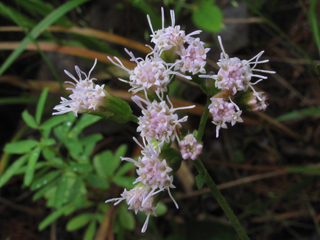
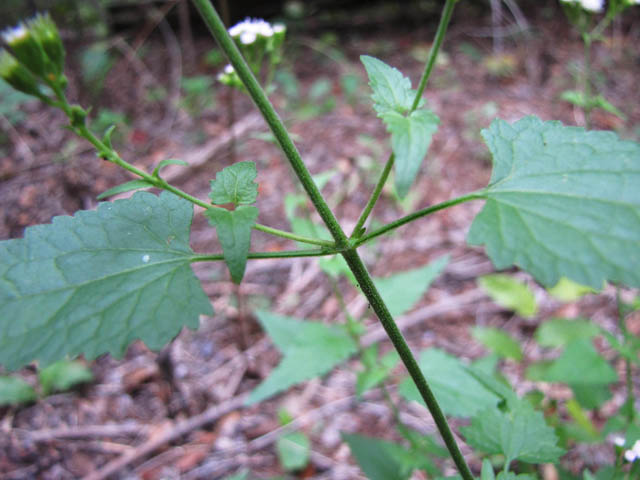


Pink Thoroughwort

Fleischmannia incarnata

Other common name(s):

Pink Slender Thoroughwort

Family:

Asteraceae (Aster Family)

Plant Ecoregion Distribution Map

This map uses data from the US EPA. EPA  servers have been offline frequently so maps may not display. We are working on a solution.

East Central Texas Plains, Gulf Coast Prairies and Marshes, Southern Texas Plains, Texas Blackland Prairies, Western Gulf Coastal Plain
Southern Post Oak Savanna
Coastal Sand Plain, Floodplains and Low Terraces4, Laguna Madre Barrier Island and Coastal Marshes, Lower Rio Grande Alluvial Floodplain, Lower Rio Grande Valley, Mid-Coast Barrier Islands and Coastal Marshes, Northern Humid Gulf Coastal Prairies, Southern Subhumid Gulf Coastal Prairies, Texas-Louisiana Coastal Marshes
Rio Grande Floodplain and Terraces, Texas-Tamaulipan Thornscrub
Floodplains and Low Terraces1, Northern Blackland Prairie, Southern Blackland Prairie
Flatwoods, Floodplains and Low Terraces3, Pleistocene Fluvial Terraces, Red River Bottomlands, Southern Tertiary Uplands

Plant Characteristics

Growth Form

Herbaceous

Height

1
to
6
ft.

Spread

0
to
0
ft.

Leaf Retention

Deciduous

Lifespan

Perennial

Habitat and Care Requirements

Soil Type(s)

Sand, Clay, Moist

Light Requirement

Part Shade

Water Requirement

Medium

Native Habitat

Woodland, Wetland or Riparian

Bloom and Attraction

Bloom Color

White, Pink, Purple

Bloom Season

Fall

Seasonal Interest

Seeds, Nectar, Pollen

Wildlife Benefit

Butterflies, Birds, Nectar Insects, Moths, Bees

Maintenance

Very little maintenance needed. It prefers moist soils. Native habitat: moist woodlands, thickets, marshes, and along streambanks. Propagation: seed.

Comments

Blooms October-December. Stems branching and sprawling. Leaves triangular with serrated margins. Produces numerous flower heads in a flat-topped arrangement at the ends of the stems. The fruit is a cypsela: a dry, one-seeded fruit, usually topped by pappus.
Previous Scientific Name(s): Eupatorium incarnatum
Material Treatment Method Collection References
Seed No Treatment Sow the seeds in seed trays or small pots filled with seed-starting mix. Keep the soil moist and warm. Expect seeds to germinate within a few weeks, though it may take longer. Once seedlings develop a few true leaves, you can gently move them into larger containers or the garden. Allow seedheads to dry on plants; remove and collect seeds. 1) https://www.picturethisai.com/wiki/Fleischmannia_incarnata.html#:~:text=Water:%20Pink%20slender%2Dthoroughwort%20thrives,handling%20and%20growing%20medium%20quality 2) https://propagate.one/how-to-propagate-fleischmannia-incarnata/?amp=1&print=pdf
Stem Cutting Remove any leaves that would be submerged in water. Fill a jar or container with clean water, ensuring it’s deep enough to submerge the cut end of the stem. Change the water frequently to prevent algae growth. Root development can take a few weeks or even months. Once the cutting has developed a healthy root system, you can gently pot it in well- draining soil. Choose a healthy, non-flowering stem from your Fleischmannia. The ideal time for this is in spring or early summer when the plant is actively growing. Make a clean, angled cut just below a node (where a leaf or branch grows). https://propagate.one/how-to-propagate-fleischmannia-incarnata/?amp=1&print=pdf
Clump Division Plant each division in a well-prepared container or garden bed, ensuring the roots are spread out and the crown of the plant is at or slightly above soil level. The best time for division is usually in early spring or late summer when growth is active. Gentle Excavation: Carefully dig up the clump and gently separate it into smaller divisions. Each division should have its own roots and healthy aerial growth. https://propagate.one/how-to-propagate-fleischmannia-incarnata/?amp=1&print=pdf

About the Region

Fall Symposium 2025 Logo - Teach for the Future

Salado, the location of our Fall 2025 Symposium, lies at the intersection of two ecoregions: the Edwards Plateau (Limestone Cut Plain) and Blackland Prairie (Northern Blackland Prairie).

The Edwards Plateau area is also called the Hill Country; however, this general term covers a much larger area extending farther north. Spring-fed creeks are found throughout the region; deep limestone canyons, rivers, and lakes (reservoirs) are common. Ashe juniper is perhaps the most common woody species found throughout the region. Additional woody species include various species of oak, with live oak (Quercus fusiformis) being the most common. Sycamores (Platanus occidentalis) and bald cypress (Taxodium distichum) border waterways. This area is well known for its spring wildflower displays, though they may be viewed in spring, late summer, and fall, as well. According to Texas Parks and Wildlife, average annual rainfall in the Edwards Plateau ranges from 15 to 34 inches.

The Blackland Prairie extends from the Red River south to San Antonio, bordered on the west by the Edwards Plateau and the Cross Timbers, and on the east by the Post Oak Savannah. Annual rainfall averages 30 to 40 inches, with higher averages to the east. This region is dominated by prairie species. The most common grass species include little bluestem (Schizachyrium scoparium) and Indian grass (Sorghastrum nutans) in the uplands and switchgrass (Panicum virgatum) in the riparian areas and drainages. Common herbaceous flowering plants include salvias, penstemons, and silphiums. This area has suffered greatly from overgrazing and agricultural use. Few intact areas remain, though many of the plants can be found along county roadsides throughout the region.

Our fall Symposium host chapter, the Tonkawa Chapter, includes both of these ecoregions.

Source: Wildflowers of Texas by Michael Eason