

Honey Locust

Gleditsia triacanthos

Other common name(s):

Common Honey Locust, Thorny Common Honey Locust, Honey Shucks Locust, Sweet Locust, Thorny Locust, Honey Shucks, Sweet Bean Tree

Family:

Fabaceae (Pea Family)

Plant Ecoregion Distribution Map

This map uses data from the US EPA. EPA  servers have been offline frequently so maps may not display. We are working on a solution.

Chihuahuan Deserts, East Central Texas Plains, Edwards Plateau, Gulf Coast Prairies and Marshes, Texas Blackland Prairies, Western Gulf Coastal Plain
Chihuahuan Desert Grasslands
Bastrop Lost Pines, Floodplains and Low Terraces2, Northern Post Oak Savanna, Northern Prairie Outliers, San Antonio Prairie, Southern Post Oak Savanna
Balcones Canyonlands
Northern Humid Gulf Coastal Prairies
Floodplains and Low Terraces1, Northern Blackland Prairie, Southern Blackland Prairie
Flatwoods, Floodplains and Low Terraces3, Pleistocene Fluvial Terraces, Red River Bottomlands, Southern Tertiary Uplands, Tertiary Uplands

Plant Characteristics

Growth Form

Tree

Height

30
to
75
ft.

Spread

to
ft.

Leaf Retention

Deciduous

Lifespan

Perennial

Habitat and Care Requirements

Soil Type(s)

Loam, Clay, Deep, Well Drained, Moist

Light Requirement

Part Shade

Water Requirement

Medium

Native Habitat

Woodland, Wetland or Riparian

Bloom and Attraction

Bloom Color

Yellow

Bloom Season

Spring

Seasonal Interest

Fruit, Fall Color, Seeds, Forage, Nectar, Larval Host, Nesting Material

Wildlife Benefit

Browsers, Butterflies, Small Mammals, Nectar Insects, Moths, Bees

Maintenance

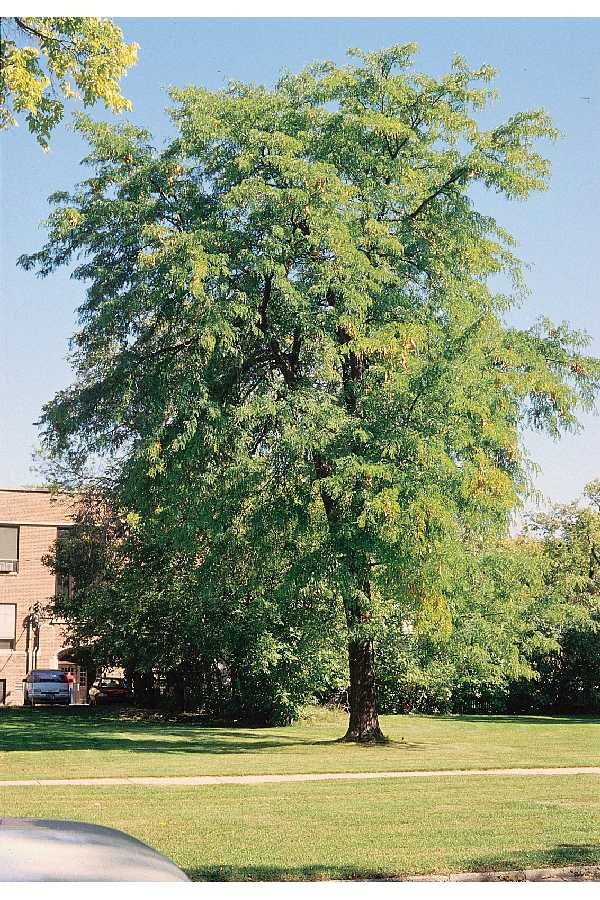
Fast growth rate and long lived. An attractive shade tree, providing filtered light that allows other plants to grow underneath. Turns a golden color in the fall. It is heat, cold, and drought tolerant. Produces sprouts that can be pulled or mowed to control for space. Plant out of the way of foot traffic due to spines. Native Habitat: moist riparian to dry upland woodlands. It suffers from mites, Mimosa webworm invaders, a number of cankers, and other pests. Propagation: seed, cutting, transplant seedlings.

Comments

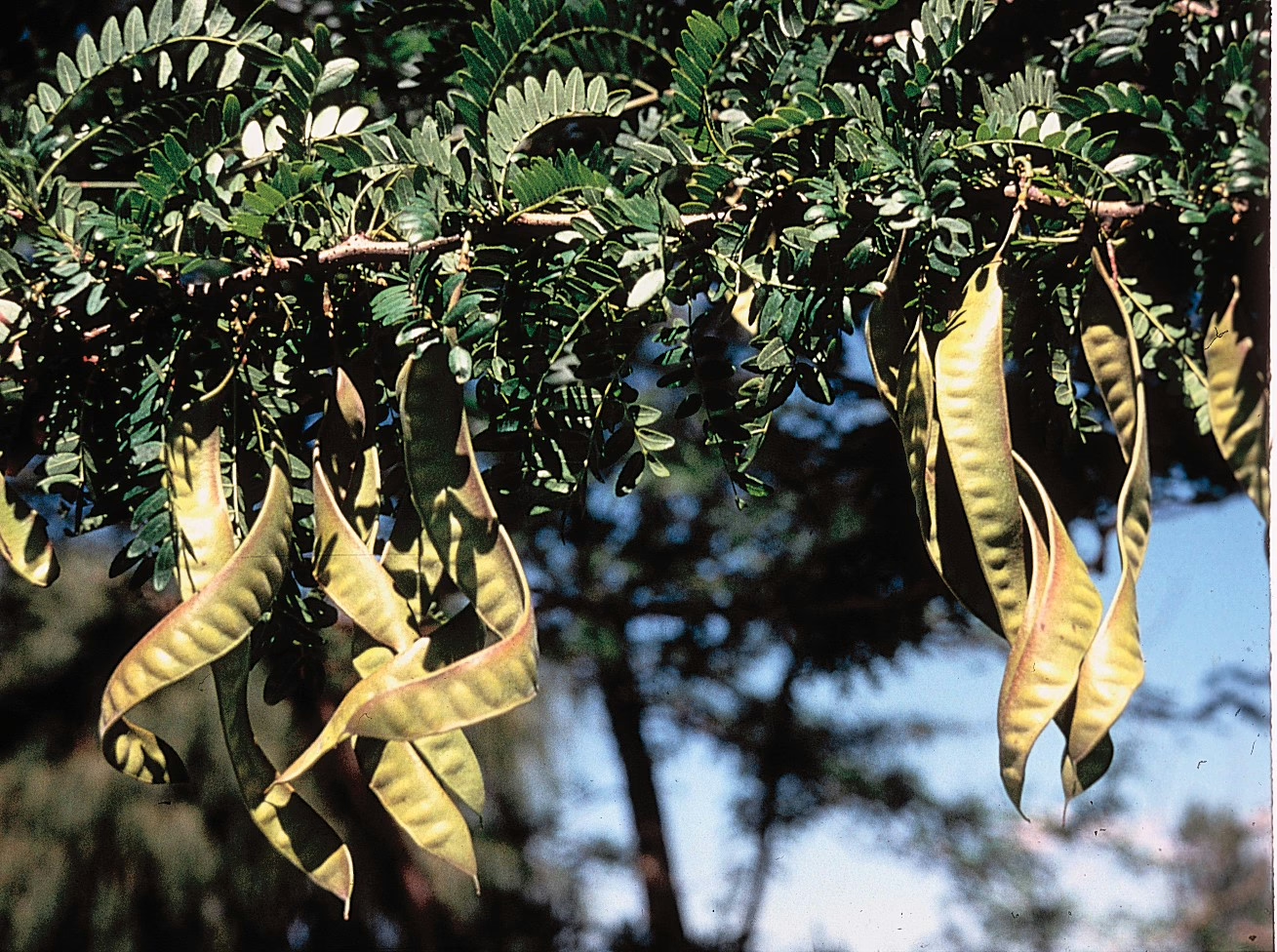
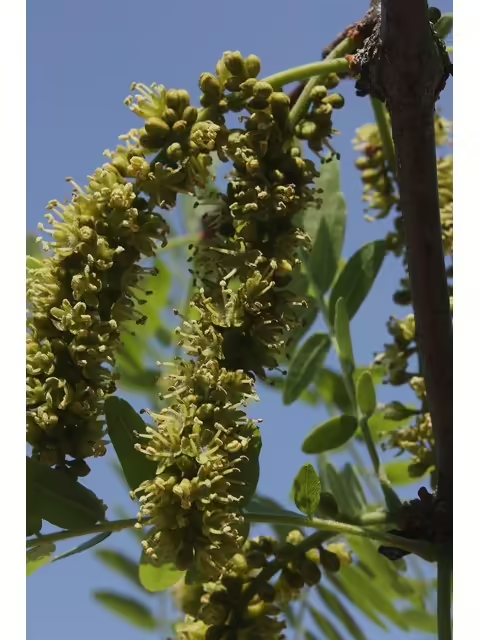
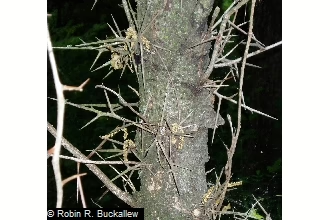
Blooms May-June. An airy form with large, branched spines on the trunk. Feathery, yellow-green, pinnately compound leaves. Produces fragrant, narrow, hanging clusters of small greenish inconspicuous flowers. The fruit is a twisted pod that turns red-green to maroon-brown as they mature. Browsers like to eat the sweet pods. Larval Host: Silver-spotted Skipper, Bicolored Honey Locust Moth, Bisected Honey Locust Moth.
Previous Scientific Name(s): Gleditsia triacanthos var. inermis
Material Treatment Method Collection References
Seed Scarification Summary: Preferred temperature for germination: 70-85 degrees F Time required for germination: 6-8 weeks. Method: Bring water just to boiling in a heat-proof container (water volume should be 3 to 4 times the volume of the seeds you are treating). Remove water from heat source and let stand for one minute (if you have a thermometer, water temperature should be about 190°F). Pour seeds into hot water. Then allow water to cool to room temperature. Remove seeds after they begin to swell; seeds can be allowed to swell up to 3 times their normal size. Plant seeds immediately after boiling water treatment; do not store. Alternatively, vigorously rub the seeds on a piece of medium or fine sandpaper or a file, then plant. Fill your pot or other container with soil or potting mix; water thoroughly, let the soil settle, and refill to bring the soil level up to within 1/2" to 1" of the top. Be sure that holes in the pot are adequate to allow quick drainage of extra water. Plant seeds in moist soil 1/2" to 3/4" deep and cover with soil. Seed orientation does not matter. More than one seed can be planted in a pot to ensure that at least one germinates (space well apart). A clear plastic bag or plastic wrap can be placed loosely over the top of the pot to help keep moisture and warmth in. Puncture the plastic in several places to allow some heat to escape. Place the pot on a waterproof tray or dish in a sunny spot. Keep away from radiators or heat registers that might get the germinating seeds too warm. Germination and shoot emergence should take 10 to 14 days (could take up to 21 days). Remove plastic as soon as shoot emerges and snip off the weakest shoot with scissors if both seeds germinate. Water before and after germination when the soil just below the surface begins to dry. Soil should remain moist but not waterlogged. If the tree remains in the pot for longer than a month or so you should use a liquid fertilizer solution occasionally to keep it healthy. Follow directions on the fertilizer package. Plant in the fall or the next spring (tree can over-winter with its pot buried in the garden). Near planting time if tree has been inside move outside to a protected location to "harden off". Dig a hole as deep as the pot and 2-3 times as wide. Then carefully remove the pot and place the intact root ball in the hole, backfilling with native soil around the sides and tamping gently. Water thoroughly and care-for as you would any other tree. Time of year to collect seed: Autumn 1) https://hort.ifas.ufl.edu/database/lppi/sp176.shtml#:~:text=Common%20name(s):%20Honey,for%20germination:%206%2D8%20weeks 2) chrome-extension://efaidnbmnnnibpcajpcglclefindmkaj/https://extension.usu.edu/forestry/files/resources/plant-and-take-care-of-honeylocust-tree.pdf
Stem Cutting Cuttings can be taken from young, healthy branches and rooted in a well-draining soil mix. Propagation is best done in the spring or early summer. Mix a low-fertility rooting medium of 50-percent sterile perlite and 50-percent peat moss. Fill your container to 1 inch below its lip. Water the medium so it remains evenly moist during potting. Strip the leaves from the cutting's lower half to keep them from contaminating the rooting medium and to minimize the cutting's transpiration, or water loss. Sprinkle a small pile of rooting hormone powder into a saucer. Make a shallow indentation in the pile with a florist's stick. Dip the base of the cutting into the shallow indentation and tap it to remove the excess. Dispose of the leftover powder. Insert a florist's stick into the growing medium to a depth of half the cutting's length. Using this premade hole prevents the rooting powder from rubbing off when you pot the cutting. Position the cutting in the container with the cut end down. Gently tamp medium around the edge of the hole. Water again if your container is less than 3 inches deep. Cover the cutting with a clear glass jar to provide essential humidity and room to grow. Inserting florist's sticks in the medium around the cutting, sliding a clear plastic bag up over the sticks and tying it shut also works. Move the container to an area with indirect light. Lift or open the covering for two minutes every other day to ventilate the plants and mist the medium with the spray bottle of water. Watch the cutting for the new growth, indicating root development. When you're satisfied it can be moved, slowly remove the rooting medium until the cutting lifts without resistance. Transfer it to a container of regular potting soil in bright light away from direct sun. Continue regular watering and gradually increase the honey locust's sun exposure as it grows. Harvest your branch cutting on an early spring or summer morning while the tree is actively growing. Carry a dark plastic bag containing two wet paper towels with you. Look for a branch with healthy twigs that break easily when bent. Make a sharp cut just beneath a leaf, 4 to 5 inches from the branch's growing tip. Store the cutting in the wet paper towels inside the dark plastic bag to keep it moist before potting. 1) https://earthone.io/plant/gleditsia%20triacanthos 2) https://www.weekand.com/home-garden/article/grow-honey-locust-branch-18057279.php

About the Region

Fall Symposium 2025 Logo - Teach for the Future

Salado, the location of our Fall 2025 Symposium, lies at the intersection of two ecoregions: the Edwards Plateau (Limestone Cut Plain) and Blackland Prairie (Northern Blackland Prairie).

The Edwards Plateau area is also called the Hill Country; however, this general term covers a much larger area extending farther north. Spring-fed creeks are found throughout the region; deep limestone canyons, rivers, and lakes (reservoirs) are common. Ashe juniper is perhaps the most common woody species found throughout the region. Additional woody species include various species of oak, with live oak (Quercus fusiformis) being the most common. Sycamores (Platanus occidentalis) and bald cypress (Taxodium distichum) border waterways. This area is well known for its spring wildflower displays, though they may be viewed in spring, late summer, and fall, as well. According to Texas Parks and Wildlife, average annual rainfall in the Edwards Plateau ranges from 15 to 34 inches.

The Blackland Prairie extends from the Red River south to San Antonio, bordered on the west by the Edwards Plateau and the Cross Timbers, and on the east by the Post Oak Savannah. Annual rainfall averages 30 to 40 inches, with higher averages to the east. This region is dominated by prairie species. The most common grass species include little bluestem (Schizachyrium scoparium) and Indian grass (Sorghastrum nutans) in the uplands and switchgrass (Panicum virgatum) in the riparian areas and drainages. Common herbaceous flowering plants include salvias, penstemons, and silphiums. This area has suffered greatly from overgrazing and agricultural use. Few intact areas remain, though many of the plants can be found along county roadsides throughout the region.

Our fall Symposium host chapter, the Tonkawa Chapter, includes both of these ecoregions.

Source: Wildflowers of Texas by Michael Eason