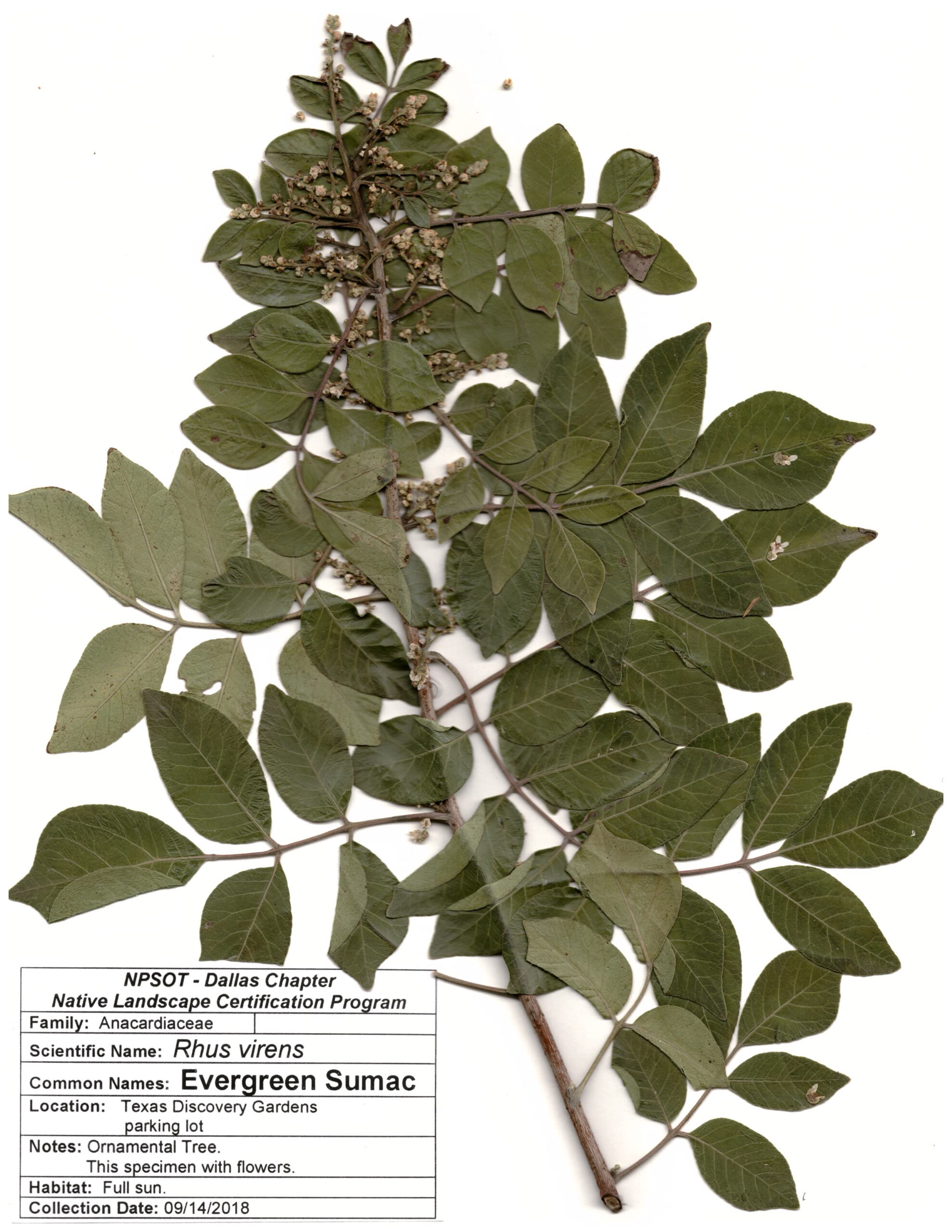
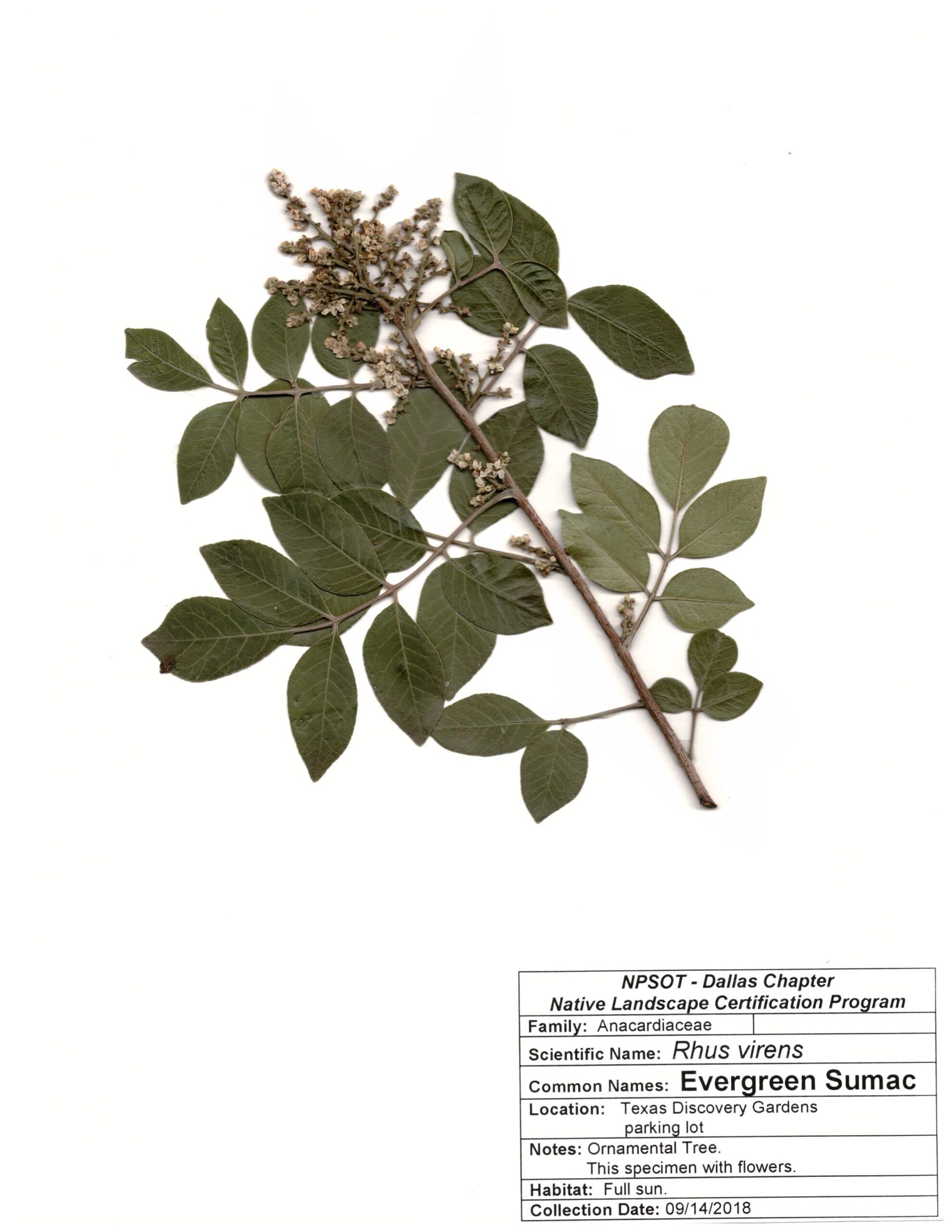


Evergreen Sumac

Rhus virens

Other common name(s):

Tobacco Sumac, Lambrisco, Lentrisco

Family:

Anacardiaceae (Sumac Family)

Plant Ecoregion Distribution Map

This map uses data from the US EPA. EPA  servers have been offline frequently so maps may not display. We are working on a solution.

Chihuahuan Deserts, Cross Timbers, Edwards Plateau
Chihuahuan Basins and Playas, Chihuahuan Desert Grasslands, Chihuahuan Montane Woodlands, Low Mountains and Bajadas, Stockton Plateau
Limestone Cut Plain
Balcones Canyonlands, Edwards Plateau Woodland, Llano Uplift, Semiarid Edwards Plateau

Plant Characteristics

Growth Form

Shrub

Height

8
to
10
ft.

Spread

6
to
8
ft.

Leaf Retention

Evergreen

Lifespan

Perennial

Habitat and Care Requirements

Soil Type(s)

Rocky, Limestone, Well Drained, Dry

Light Requirement

Sun, Part Shade

Water Requirement

Low

Native Habitat

Woodland

Bloom and Attraction

Bloom Color

White

Bloom Season

Summer, Fall

Seasonal Interest

Fruit, Forage, Nectar, Pollen, Nesting Material

Wildlife Benefit

Browsers, Butterflies, Birds, Small Mammals, Bees

Maintenance

Ornamental, hedge or screen. Moderate to fast growth rate. Give lots of room to grow or prune to fit the garden space if needed. Needs good drainage. Drought tolerant, do not overwater in summer or branches can get leggy and lay on the ground or get heavy and break. Wet soils can result in fungal infections, especially in warm temperatures. Although its native habitat in Texas is rocky bluffs, slopes, banks, and dry hillsides in the Edwards Plateau and Trans-Pecos Ecoregions, it has gained popularity in gardens throughout the state. Propagation: seed, root cutting.

Comments

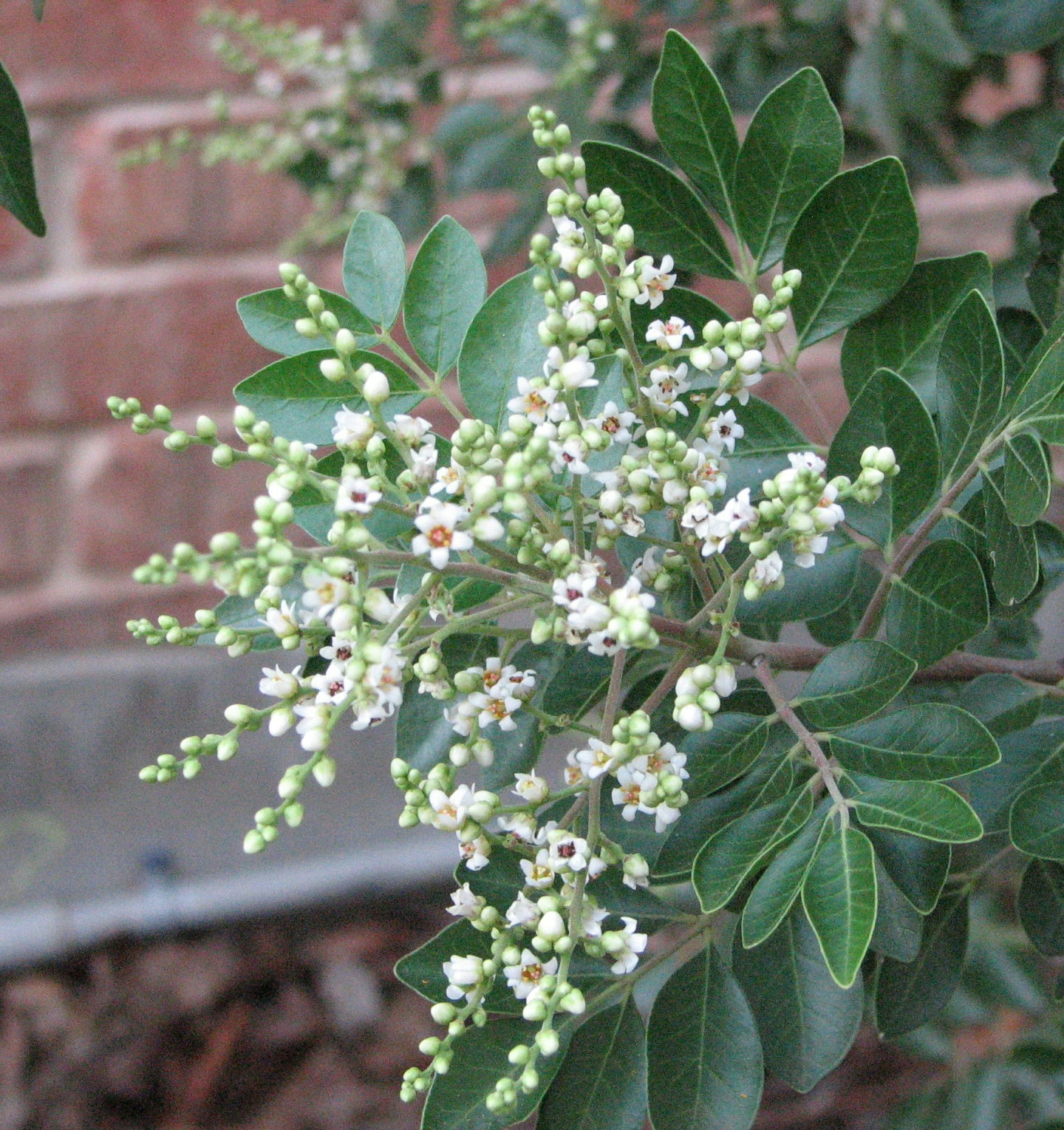
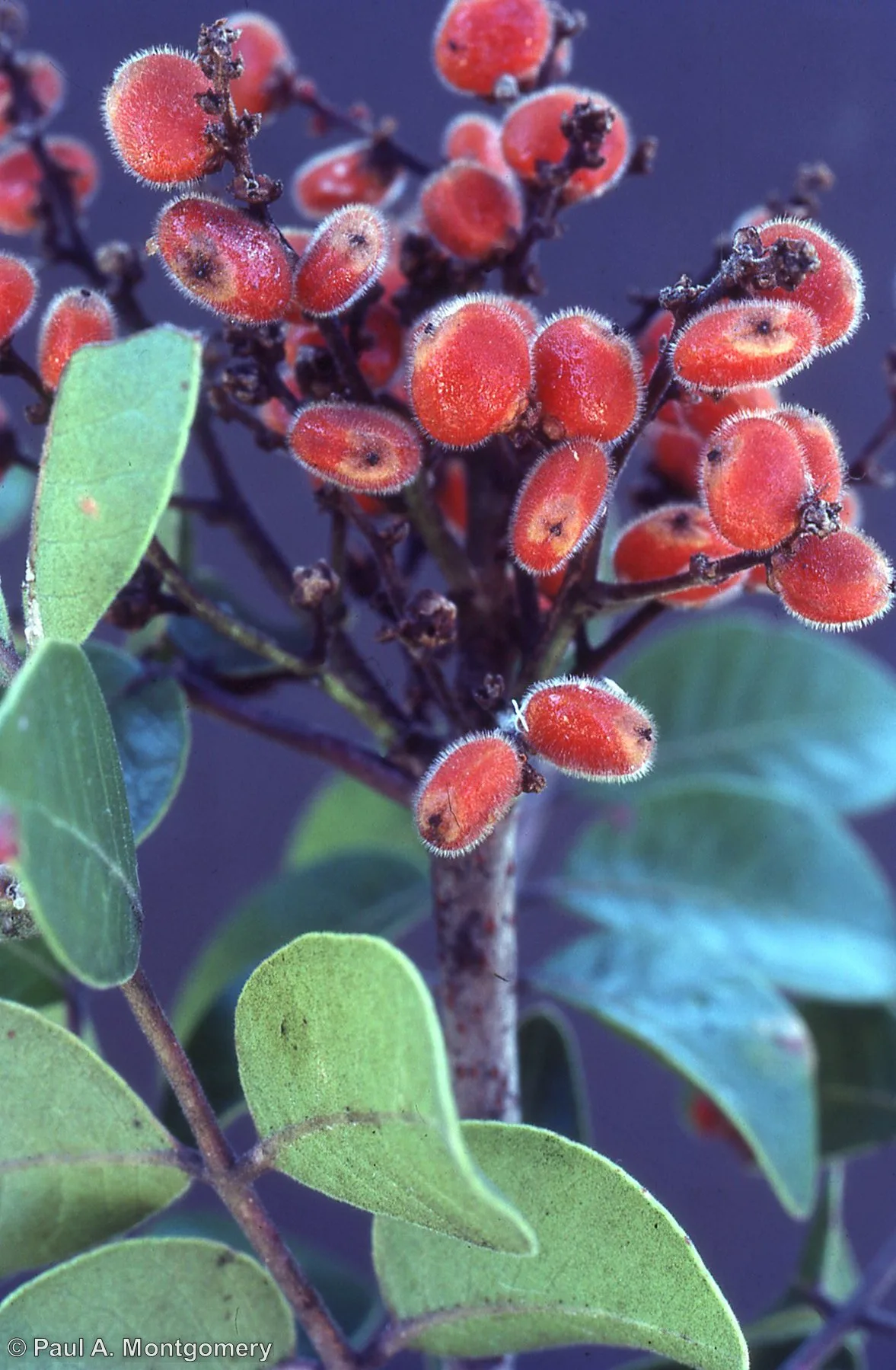
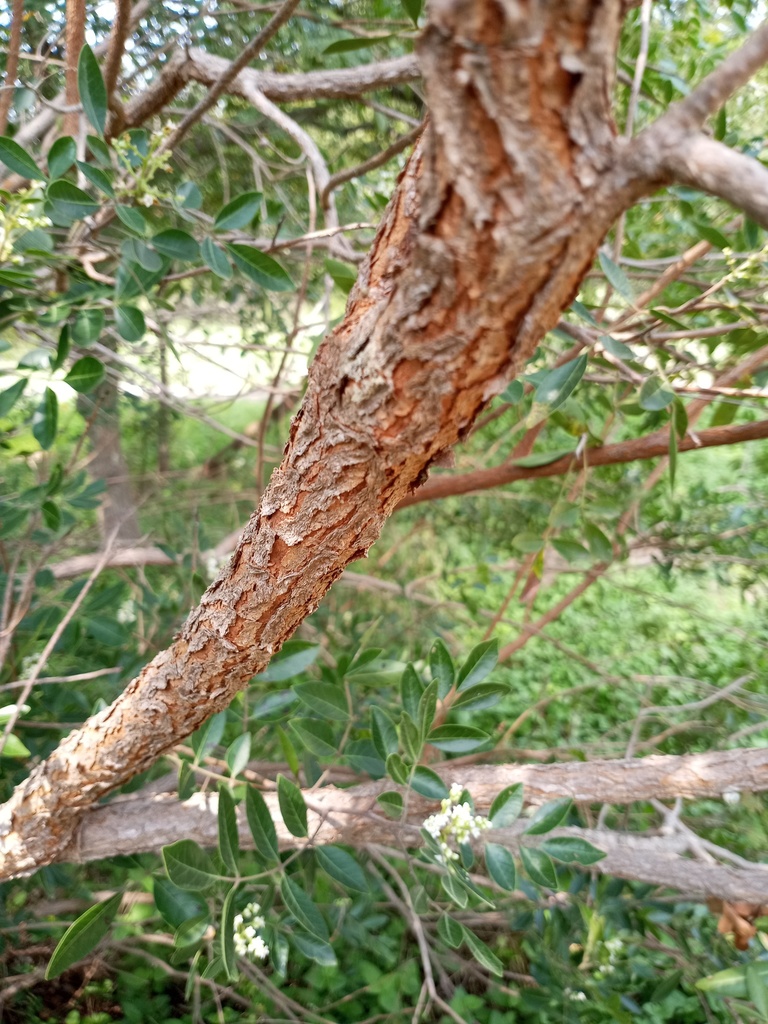
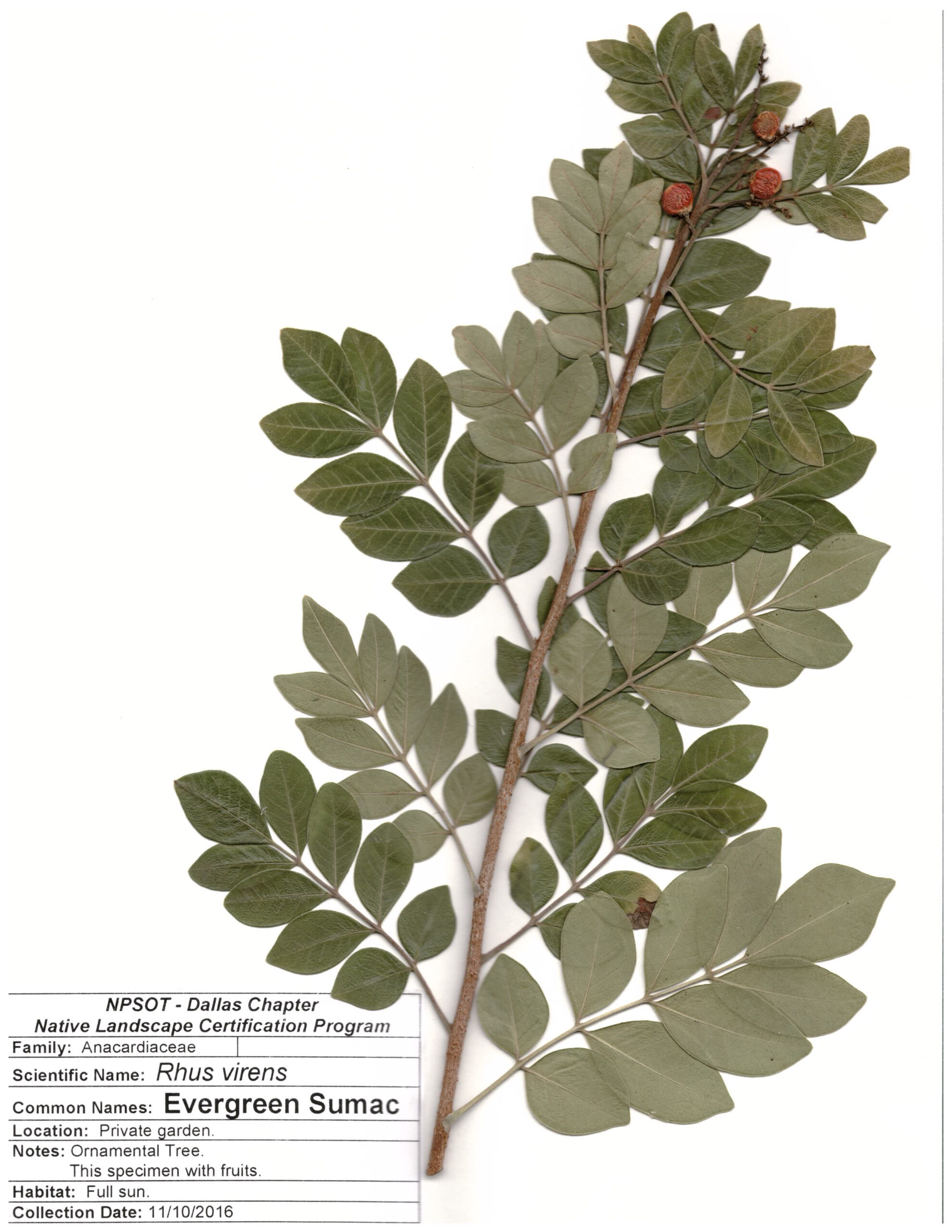
Blooms June-November. A large multi-trunked shrub with rough, reddish-brown bark, and spreading branches. Leaves are compound, with 5-9 large, leathery, shiny leaflets, with pointed tips. Tiny, white, flowers appear in clusters. The fruit is a fuzzy berry. Replaces non-natives: Scarlet Firethorn, Pyracantha, and Large-Leaf Privet.

References

1) Griffith, Bryce, Omernick & Rodgers (2007). Ecoregions of Texas. 2) Miller, George O., Landscaping with Native Plants of Texas 2nd Ed., 2013, pg 48. 3) Wasowski and Wasowski, Native Texas Plants Landscaping Region by Region, 1991, pg. 300-301. 4) https://www.wildflower.org/plants/result.php?id_plant=RHVI3. 5) https://portal.torcherbaria.org/portal/taxa/index.php?taxon=Rhus+virens&formsubmit=Search+Terms. 6) http://bonap.net/TDC/Image/Map?taxonType=Species&taxonId=871&locationType=County&mapType=Normal, 7) https://www.itis.gov/servlet/SingleRpt/SingleRpt?search_topic=TSN&search_value=504757#null, 8) Native and Adapted Landscape Plants, City of Austin and Texas A&M, 2014., 9) https://gardenoracle.com/images/rhus-virens.html
Material Treatment Method Collection References
Seed Scarification Remove the seeds from the fruit and soak them in water for 24 hours (scarification). Some sources specify soaking in hot water starting at a temperature of 80 - 90c and allowing it to cool, prior to sowing in order to leach out any germination inhibitors. Rhus virens seeds also require a period of cold stratification. (see below) After stratification, sow the seeds in pots filled with well-draining potting mix. Place the pots in a sunny location and keep the soil consistently moist. Germination can take up to 6-8 weeks. Gather mature, red fruit clusters during the fall. 1) https://propagate.one/how-to-propagate-rhus-virens/ 2) https://pfaf.org/User/Plant.aspx?LatinName=Rhus+virens
Seed Stratification Place the soaked seeds in a moist mix of peat moss and sand and store them in a refrigerator for 60-90 days. sow the seeds in pots filled with well-draining potting mix. Place the pots in a sunny location and keep the soil consistently moist. Germination can take up to 6-8 weeks. 1) https://propagate.one/how-to-propagate-rhus-virens/ 2) https://pfaf.org/User/Plant.aspx?LatinName=Rhus+virens

About the Region

Fall Symposium 2025 Logo - Teach for the Future

Salado, the location of our Fall 2025 Symposium, lies at the intersection of two ecoregions: the Edwards Plateau (Limestone Cut Plain) and Blackland Prairie (Northern Blackland Prairie).

The Edwards Plateau area is also called the Hill Country; however, this general term covers a much larger area extending farther north. Spring-fed creeks are found throughout the region; deep limestone canyons, rivers, and lakes (reservoirs) are common. Ashe juniper is perhaps the most common woody species found throughout the region. Additional woody species include various species of oak, with live oak (Quercus fusiformis) being the most common. Sycamores (Platanus occidentalis) and bald cypress (Taxodium distichum) border waterways. This area is well known for its spring wildflower displays, though they may be viewed in spring, late summer, and fall, as well. According to Texas Parks and Wildlife, average annual rainfall in the Edwards Plateau ranges from 15 to 34 inches.

The Blackland Prairie extends from the Red River south to San Antonio, bordered on the west by the Edwards Plateau and the Cross Timbers, and on the east by the Post Oak Savannah. Annual rainfall averages 30 to 40 inches, with higher averages to the east. This region is dominated by prairie species. The most common grass species include little bluestem (Schizachyrium scoparium) and Indian grass (Sorghastrum nutans) in the uplands and switchgrass (Panicum virgatum) in the riparian areas and drainages. Common herbaceous flowering plants include salvias, penstemons, and silphiums. This area has suffered greatly from overgrazing and agricultural use. Few intact areas remain, though many of the plants can be found along county roadsides throughout the region.

Our fall Symposium host chapter, the Tonkawa Chapter, includes both of these ecoregions.

Source: Wildflowers of Texas by Michael Eason