
Azure Sage

Salvia azurea

Other common name(s):

Pitcher Sage, Big Blue Sage, Giant Blue Sage, Blue Sage

Family:

Lamiaceae (Mint Family)

Plant Ecoregion Distribution Map

This map uses data from the US EPA. EPA  servers have been offline frequently so maps may not display. We are working on a solution.

Central Great Plains, Chihuahuan Deserts, Cross Timbers, East Central Texas Plains, Edwards Plateau, Gulf Coast Prairies and Marshes, Southwestern Tablelands, Texas Blackland Prairies, Western Gulf Coastal Plain
Broken Red Plains, Limestone Plains
Stockton Plateau
Carbonate Cross Timbers, Eastern Cross Timbers, Grand Prairie, Limestone Cut Plain, Western Cross Timbers
Bastrop Lost Pines, Floodplains and Low Terraces2, Northern Post Oak Savanna, Northern Prairie Outliers, San Antonio Prairie, Southern Post Oak Savanna
Balcones Canyonlands, Edwards Plateau Woodland, Llano Uplift
Floodplains and Low Terraces4, Laguna Madre Barrier Island and Coastal Marshes, Mid-Coast Barrier Islands and Coastal Marshes, Northern Humid Gulf Coastal Prairies, Southern Subhumid Gulf Coastal Prairies, Texas-Louisiana Coastal Marshes
Canadian/Cimarron Breaks
Floodplains and Low Terraces1, Northern Blackland Prairie, Southern Blackland Prairie
Flatwoods, Floodplains and Low Terraces3, Pleistocene Fluvial Terraces, Red River Bottomlands, Southern Tertiary Uplands, Tertiary Uplands

Plant Characteristics

Growth Form

Herbaceous

Height

3
to
6
ft.

Spread

2
to
3
ft.

Leaf Retention

Deciduous

Lifespan

Perennial

Habitat and Care Requirements

Soil Type(s)

Sand, Loam, Clay, Limestone, Well Drained, Dry

Light Requirement

Sun, Part Shade

Water Requirement

Low

Native Habitat

Grassland

Bloom and Attraction

Bloom Color

White, Blue

Bloom Season

Fall

Seasonal Interest

Nectar, Pollen, Larval Host

Wildlife Benefit

Butterflies, Moths, Bees

Maintenance

Grows easily from seed in perennial gardens or shortgrass meadows. Tends to flop over if the soil is too rich: cut back in mid summer or stake. Also helps to grow near other plants that can support it. Requires extra water its first year to establish. Deer and rabbit resistant. Propagation: seed.

Comments

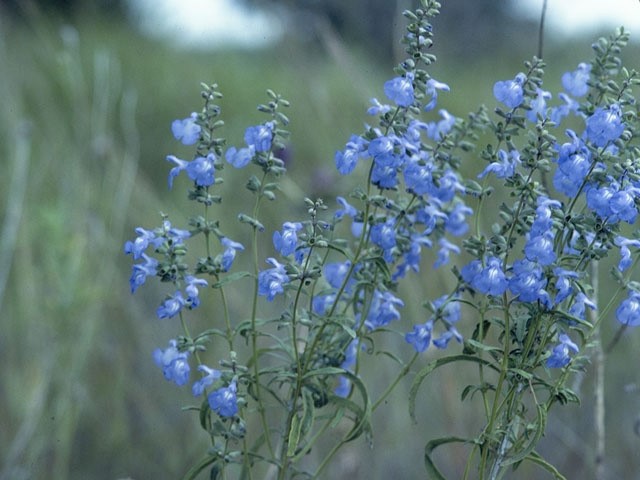
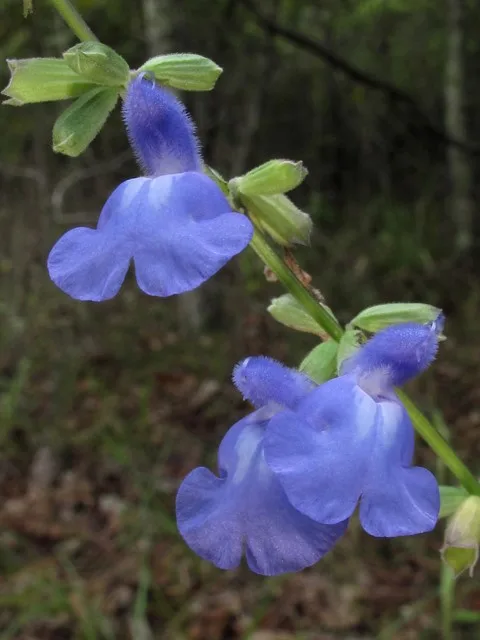
Blooms July-November. A tall square-stemmed plant with lance-shaped to oval, grayish-green, aromatic leaves. Flowers are blue, 2-lipped, forming a terminal spike-like cluster. The fruit is a nutlet. Larval host: Hermit Sphinx Moth.
Material Treatment Method Collection References
Seed Scarification Soak the seeds in water for 24 hours before planting. Sow them about 1/4 inch deep in seed trays or pots filled with a quality seed-starting mix. Germination usually occurs within 14-30 days, provided you maintain optimal conditions. Keep an eye on them during this period to ensure they’re thriving. Opt for a light, well-draining mix. A combination of peat moss, vermiculite, and perlite works wonders. Aim for a pH level between 6.0 and 7.0 for the best results. Avoid heavy soils, as they can retain too much moisture and lead to damping-off disease. Your seedlings will need 12-16 hours of bright, indirect light each day. Utilize grow lights or place them in a sunny window to meet this requirement. Keep the soil consistently moist but not waterlogged. A spray bottle is perfect for gentle watering. As your seedlings grow, thin them out to prevent overcrowding once they develop their first true leaves. Wait until the flower heads turn brown and dry, then collect the seeds for storage. Store these seeds in a cool, dry place within an airtight container to maintain their viability. https://greg.app/propagate-big-blue-sage/
Stem Cutting Prepare your cuttings by removing the lower leaves. This step prevents rot and directs energy toward root development. Cut the stems at a 45-degree angle to maximize moisture absorption. Allow the cuttings to callous for 1-2 hours before planting; this helps prevent rot when they go into the soil. Applying rooting hormone can significantly enhance root development. Choose either a powder or gel form and follow the manufacturer's instructions for application. Using rooting hormone increases your chances of successful sage propagation. Use a well-draining potting mix, such as a blend of perlite and peat moss. Maintaining humidity levels around 70% is crucial, so consider using a humidity dome or a plastic bag to create a mini greenhouse effect. Provide indirect sunlight and keep temperatures between 70°F to 75°F (21°C to 24°C) for optimal rooting conditions. This environment will help your cuttings thrive and establish roots effectively. Select stems that are 4-6 inches long from healthy, mature plants. Aim for semi-hardwood stems, ideally taken in late spring or early summer, and ensure each cutting has at least 2-3 leaf nodes for optimal rooting. https://greg.app/propagate-big-blue-sage/
Clump division Division Carefully dig around the base of the plant to lift it from the soil. Shake off excess soil and inspect the root system. Use a knife to divide the root ball into sections, ensuring each section has roots and shoots. Replant divisions immediately in well-draining soil, spacing them 1-2 feet apart. The best times to divide your Big Blue Sage are early spring or fall. During these seasons, the plant is actively growing, making it easier for the divisions to establish. Look for signs of overcrowding or reduced flowering as indicators that it's time to divide. If your sage seems cramped or isn't blooming as vibrantly, it’s a good signal to take action. https://greg.app/propagate-big-blue-sage/
Seed No Treatment Direct sow in late fall, pressing into the surface of the soil since this plant needs light to germinate. For spring planting, mix Azure Blue Sage seeds with moist sand and store in the refrigerator for 30 days before planting. Keep the soil lightly moist until germination, which usually takes 1-2 weeks. https://www.everwilde.com/store/Salvia-azurea-WildFlower-Seed.html

About the Region

Fall Symposium 2025 Logo - Teach for the Future

Salado, the location of our Fall 2025 Symposium, lies at the intersection of two ecoregions: the Edwards Plateau (Limestone Cut Plain) and Blackland Prairie (Northern Blackland Prairie).

The Edwards Plateau area is also called the Hill Country; however, this general term covers a much larger area extending farther north. Spring-fed creeks are found throughout the region; deep limestone canyons, rivers, and lakes (reservoirs) are common. Ashe juniper is perhaps the most common woody species found throughout the region. Additional woody species include various species of oak, with live oak (Quercus fusiformis) being the most common. Sycamores (Platanus occidentalis) and bald cypress (Taxodium distichum) border waterways. This area is well known for its spring wildflower displays, though they may be viewed in spring, late summer, and fall, as well. According to Texas Parks and Wildlife, average annual rainfall in the Edwards Plateau ranges from 15 to 34 inches.

The Blackland Prairie extends from the Red River south to San Antonio, bordered on the west by the Edwards Plateau and the Cross Timbers, and on the east by the Post Oak Savannah. Annual rainfall averages 30 to 40 inches, with higher averages to the east. This region is dominated by prairie species. The most common grass species include little bluestem (Schizachyrium scoparium) and Indian grass (Sorghastrum nutans) in the uplands and switchgrass (Panicum virgatum) in the riparian areas and drainages. Common herbaceous flowering plants include salvias, penstemons, and silphiums. This area has suffered greatly from overgrazing and agricultural use. Few intact areas remain, though many of the plants can be found along county roadsides throughout the region.

Our fall Symposium host chapter, the Tonkawa Chapter, includes both of these ecoregions.

Source: Wildflowers of Texas by Michael Eason