

Organization: Big Bend

Grand Opening of Patty Manning Pollinator Garden
Uncategorized

Grand Opening of Patty Manning Pollinator Garden

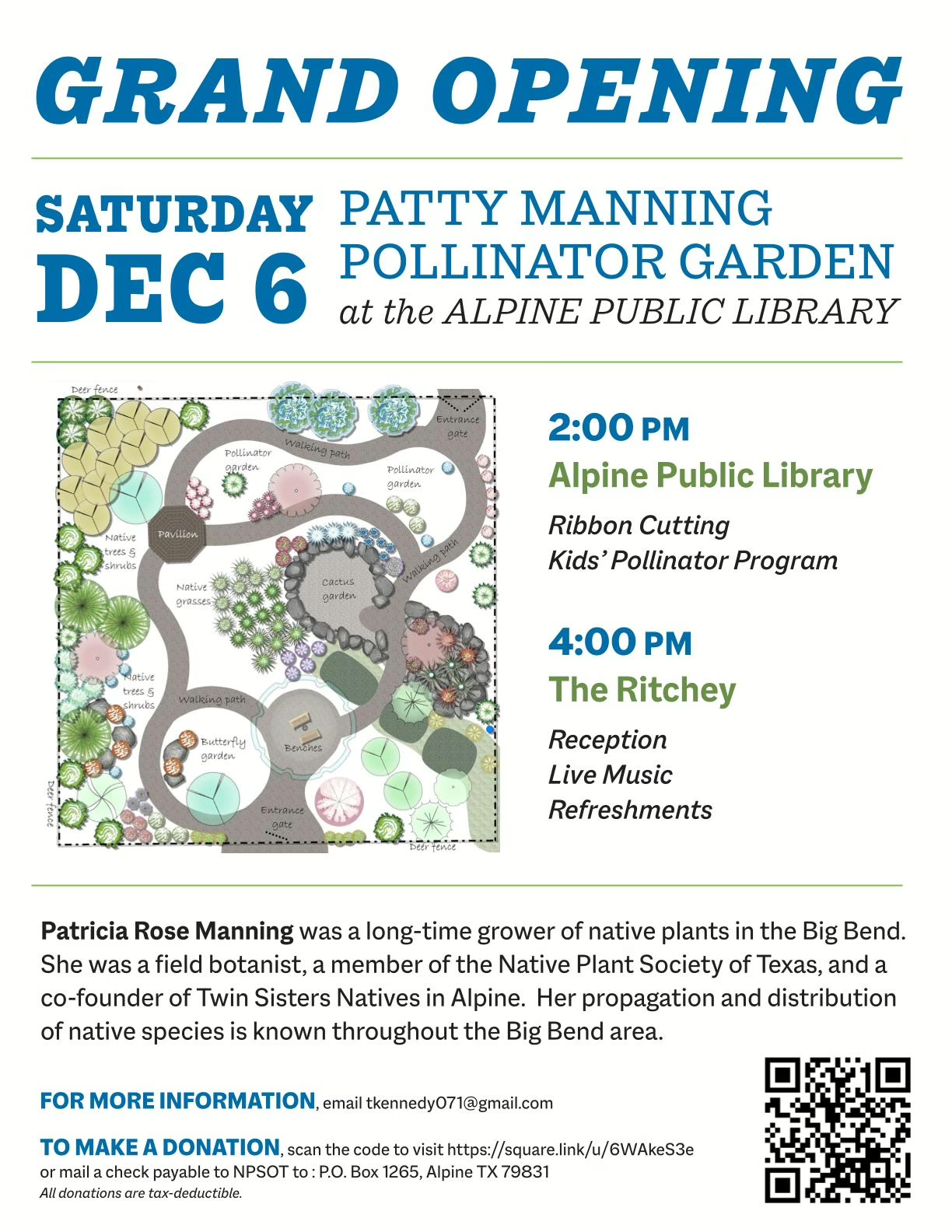
When: Saturday, December 6 at 2:00pm (Ribbon Cutting and Kids Pollinator program)Where: Alpine Public Library Reception atThe Ritchey4:00pmwith live music and refreshments Please see the attached flyer or click on

Texas Native Seeds logo
programs

Program: Texas Native Seeds

The Big Bend Chapter of the Native Plant Society of Texas will hold this month’s program on Saturday January 18 at 1:00 PM in the AEP room of the Alpine

Flyer outlining information concerning the proposed Patty Manning Pollinator Garden, its design and how to donate
Uncategorized

Patty Manning Pollinator Garden

The Big Bend Chapter of the Native Plant Society of Texas in conjunction with the Texas Master Naturalist Tierra Grande Chapter, Rio Grande Joint Venture and others are in the

Photo of Shelby Green
Uncategorized

Scholarship Awards: 2024 Patty Manning Scholarships

Patricia Rose Manning 2024 Undergraduate Scholarship Awards The Big Bend Chapter of the Native Plant Society of Texas Scholarship Committee is excited to announce our 2024 Patricia Rose Manning Undergraduate

Photo of Bill, Walter, and Albert Miller on the Miller Ranch
programs

Notes on the Miller Ranch tour

Twenty-five NPSOT Big Bend and other community members visited the Miller ranch west of Valentine on October 19. Albert, Walter, Bill and Jill Miller gave us a warm welcome at

Flyer for the Patricia Rose Manning Undergraduate Scholarship Award – Scholarship provided by NPSOT Big Bend Chapter
Recogition

Big Bend Chapter Scholarship Announcement

The Big Bend Chapter of the Native Plant Society of Texas is pleased to announce the first annual Patricia Rose Manning undergraduate scholarship awards. Patty Manning is a long-time grower

Photo of Pioppino mushrooms from Big Bend Fungi Company
programs

Program: Big Bend Fungi Company, Saturday, August 24

[Photo of Pioppino mushrooms, courtesy of Cody McCollum, Big Bend Fungi Company] Program/Presenter: Cody McCollum, Big Bend Fungi CompanyDate/Time: Saturday, August 24, 2024 at 1:00pmLocation: AEP room of the Alpine

Big Bend Plant Sale April 27

The Big Bend Chapter plant sale is coming up on April 27, 2024. For more information and a list of available plants please see our Plant Sale page.

About the Region

Fall Symposium 2025 Logo - Teach for the Future

Salado, the location of our Fall 2025 Symposium, lies at the intersection of two ecoregions: the Edwards Plateau (Limestone Cut Plain) and Blackland Prairie (Northern Blackland Prairie).

The Edwards Plateau area is also called the Hill Country; however, this general term covers a much larger area extending farther north. Spring-fed creeks are found throughout the region; deep limestone canyons, rivers, and lakes (reservoirs) are common. Ashe juniper is perhaps the most common woody species found throughout the region. Additional woody species include various species of oak, with live oak (Quercus fusiformis) being the most common. Sycamores (Platanus occidentalis) and bald cypress (Taxodium distichum) border waterways. This area is well known for its spring wildflower displays, though they may be viewed in spring, late summer, and fall, as well. According to Texas Parks and Wildlife, average annual rainfall in the Edwards Plateau ranges from 15 to 34 inches.

The Blackland Prairie extends from the Red River south to San Antonio, bordered on the west by the Edwards Plateau and the Cross Timbers, and on the east by the Post Oak Savannah. Annual rainfall averages 30 to 40 inches, with higher averages to the east. This region is dominated by prairie species. The most common grass species include little bluestem (Schizachyrium scoparium) and Indian grass (Sorghastrum nutans) in the uplands and switchgrass (Panicum virgatum) in the riparian areas and drainages. Common herbaceous flowering plants include salvias, penstemons, and silphiums. This area has suffered greatly from overgrazing and agricultural use. Few intact areas remain, though many of the plants can be found along county roadsides throughout the region.

Our fall Symposium host chapter, the Tonkawa Chapter, includes both of these ecoregions.

Source: Wildflowers of Texas by Michael Eason