Organization: Collin County

e-Newsletters

The Collin County Chapter’s monthly newsletter is provided to inform our members and guests of events, volunteer opportunities, and local native plant news. Click here for an archive of our

Native Plants

Heard Museum Native Plant Sale

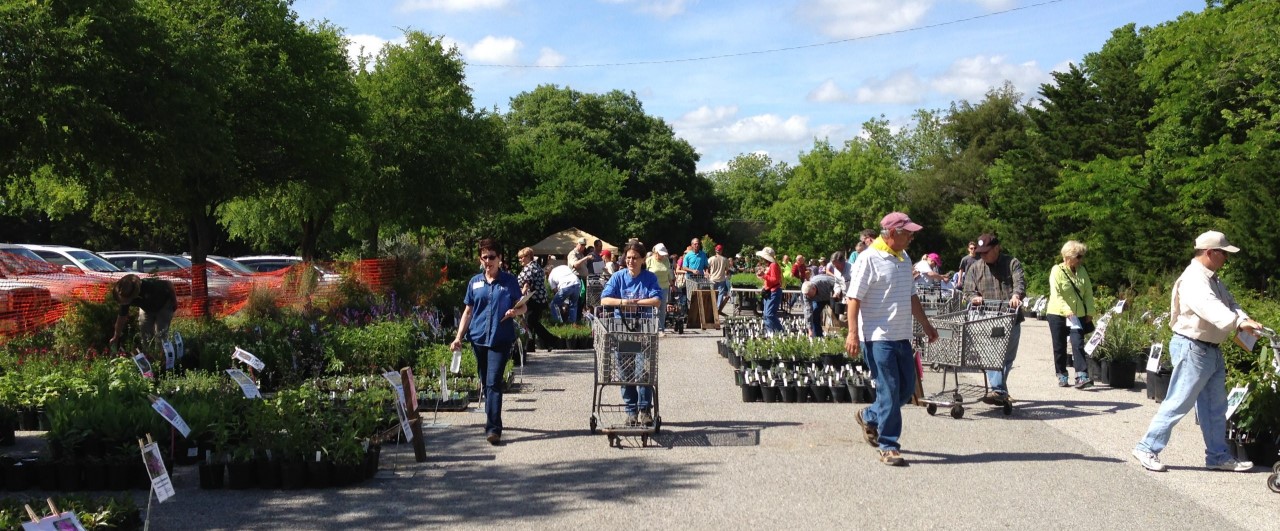
​The Heard Natural Science Museum & Wildlife Sanctuary will soon be holding its 36th Annual Spring Native Plant Sale, a must-visit event for both seasoned gardeners and beginners looking to

Biography

Harold Laughlin: A Life Dedicated to Nature and Education

While looking through one of our chapter’s old scrapbooks, I found a fascinating article on Harold Laughlin, a noted naturalist, and after Bessie Heard, the most influential person in the Heard Natural Science Museum and Wildlife Sanctuary’s history. His contributions extended beyond the Heard—he was deeply involved with the Native Plant Society of Texas, helping to advance the understanding and appreciation of native plants.

Volunteers

Monarch Waystation Help Needed

Seeking Volunteers On Saturday February 15 there will be a workday at the Hill County rest area monarch waystations. This effort is part of a NPSOT project to maintain monarch

Chapter Meeting

Virtual-only Chapter Meeting – February 4

Gardening for Birds with Native Plants Reminder that our next chapter meeting on Tuesday February 4 at 6:30 is virtual-only – no in-person gathering at the Heard. To join via

Native Plants

8 Native North Texas Grasses to Simplify Your Landscaping

Homeowners seeking native plant landscaping options that are attractive, low-maintenance, and environmentally-friendly need to consider our native North Texas grasses. These grasses will simplify your yard maintenance with minimal need

Native Plants

A Step-by-Step Guide to a Thriving Native Texas Landscape

Any time is a great time to plan and add native plants to your landscape. But the New Year adds a symbolic element of renewal, and winter is the perfect season to prepare for planting. For North Texans, the diversity of our native plants provides plentiful options for building a beautiful home landscape.

About the Region

Fall Symposium 2025 Logo - Teach for the Future

Salado, the location of our Fall 2025 Symposium, lies at the intersection of two ecoregions: the Edwards Plateau (Limestone Cut Plain) and Blackland Prairie (Northern Blackland Prairie).

The Edwards Plateau area is also called the Hill Country; however, this general term covers a much larger area extending farther north. Spring-fed creeks are found throughout the region; deep limestone canyons, rivers, and lakes (reservoirs) are common. Ashe juniper is perhaps the most common woody species found throughout the region. Additional woody species include various species of oak, with live oak (Quercus fusiformis) being the most common. Sycamores (Platanus occidentalis) and bald cypress (Taxodium distichum) border waterways. This area is well known for its spring wildflower displays, though they may be viewed in spring, late summer, and fall, as well. According to Texas Parks and Wildlife, average annual rainfall in the Edwards Plateau ranges from 15 to 34 inches.

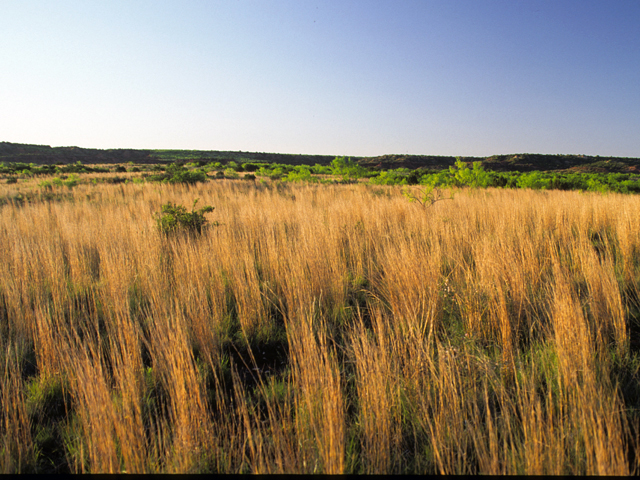
The Blackland Prairie extends from the Red River south to San Antonio, bordered on the west by the Edwards Plateau and the Cross Timbers, and on the east by the Post Oak Savannah. Annual rainfall averages 30 to 40 inches, with higher averages to the east. This region is dominated by prairie species. The most common grass species include little bluestem (Schizachyrium scoparium) and Indian grass (Sorghastrum nutans) in the uplands and switchgrass (Panicum virgatum) in the riparian areas and drainages. Common herbaceous flowering plants include salvias, penstemons, and silphiums. This area has suffered greatly from overgrazing and agricultural use. Few intact areas remain, though many of the plants can be found along county roadsides throughout the region.

Our fall Symposium host chapter, the Tonkawa Chapter, includes both of these ecoregions.

Source: Wildflowers of Texas by Michael Eason