

In Texas, we are fortunate to have many fascinating native trees in our woodlands. Among them, Hercules Club (Zanthoxylum clava-herculis) stands out with its unique bark and resilience. This native North Texas species thrives in Texas and serves as an important food and shelter source for various insects and birds.
A Tree of Many Names
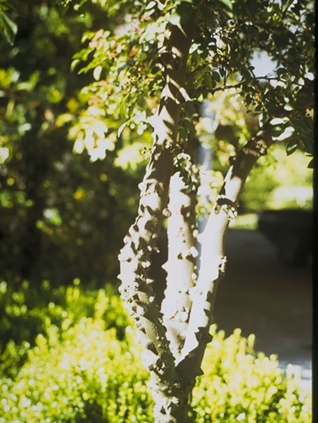
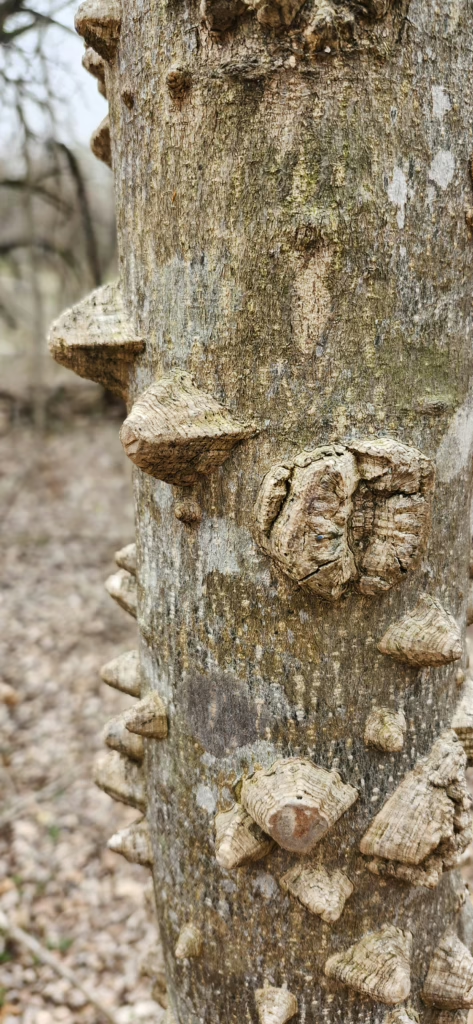
The defining feature of Hercules Club is its wart-like projections on the bark. When young, the tree develops sharp spines on the bark. Unlike thorns or spines found on many other plants for protection from mammals, as the tree ages, they develop into corky, pyramidal bases and eventually lose their sharpness. They can vary in size and density, sometimes covering the entire trunk and extending onto major branches. These protuberances create an appearance reminiscent of the lethal club belonging to the mythological hero — Hercules.
Another of its colorful common names, “Toothache Tree“, is due to the bark being used as a remedy to deaden toothache pain. The twigs and inner bark contain alkaloids and essential oils, which act as mild anesthetics and, when chewed, produce numbness or a tingly feeling in the mouth.
It is also termed “Prickly Ash” because early settlers associated its compound leaves with those of Ash trees. However, it is unrelated to Ash trees and thus is in no danger from the invasive and highly damaging Emerald Ash Borer.
A Pioneer Species
Hercules Club is native to the southern United States, including Texas, Oklahoma, Louisiana, and Arkansas. It thrives in sandy, well-draining soils and is often found in open woodlands and along riverbanks. With a knack for adapting to disturbed soils, the tree plays a key role as a pioneer species, flourishing in environments where other trees struggle.
An understory tree, it often has a gnarled, irregular shape, especially when growing in more open spaces. Typically growing to 15 – 25 feet tall, the tree can reach up to 50 feet in ideal conditions. Its unique nature and resilience make Hercules Club an unorthodox option as an accent tree in wildscapes.
A Relic of an Ancient Lineage
Surprisingly, Zanthoxylum clava-herculis belongs to the Rutaceae family, which includes citrus trees. It shares some of their characteristics, particularly the presence of aromatic oils. Crushing its leaves releases a distinct citrus-like fragrance. A recent study on the genetics of Zanthoxylum clava-herculis revealed its ancient lineage and adaptability. Researchers found it has a high level of genetic diversity, shaped by its evolution over time in varying environmental conditions. This broad genetic variation may explain its success in a variety of soil types.
In addition, fossil evidence suggests that ancestors of the Zanthoxylum species migrated back and forth across the Bering Land Bridge millions of years ago, adapting to changing climates before settling in their modern-day ranges.
Wildlife Benefits
Hercules Club plays a vital role in supporting local North Texas wildlife. The tree produces small, yellow-green flowers from late spring to early summer. These flowers attract various pollinators, including the Giant Swallowtail Butterfly that relies on the tree as a larval host plant. Its caterpillars have developed a clever defense mechanism, mimicking bird droppings to deter predators.
After flowering, the tree develops small, dark berries, which serve as a food source for birds, including mockingbirds and cardinals. Plus, its dense, thorny branches create safe havens for birds and small mammals.
A Rugged Symbol of Texas Woodlands
Hercules Club’s resilience, intriguing lineage, and prehistoric-looking trunk make it a symbol of adaptation and survival. With its rich ecological history, this fascinating tree is an important part of North Texas ecosystems. When exploring our woodlands, Hercules’ Club is an unmistakable sight that reminds us of nature’s wonder.

