
Organization: North Central

Plant Sale Gallery

SPRING PLANT SALE  •  MAY 2, 2026 Click on a plant to view details.  Click the back button on your browser to return to the North Central Chapter Plant Gallery.

Join North Central Chapter

Become a Member To join our chapter, please select North Central as your home chapter when you join NPSOT. Member Perks Become part of the native plant community and start

Palo Pinto Mountains State Park

Drive about 75 miles west of the Dallas / Fort Worth Metroplex and you’ll enter the Palo Pinto Mountains. Just north of the freeway lies 4,871 acres of former ranch

Clark Gardens

The mission of Clark Gardens is to inspire and demonstrate the many rich horticulture and nature-based possibilities of North Texas to tourists and residents alike. This breathtaking 50-acre oasis awakens

Fort Worth Nature Center & Refuge

The Fort Worth Nature Center & Refuge is a nature center located between Lakeside and Lake Worth, Texas within Fort Worth, Texas city limits. It consists of prairies, forests, and

Uncategorized

NICE Summer Plant of the Season

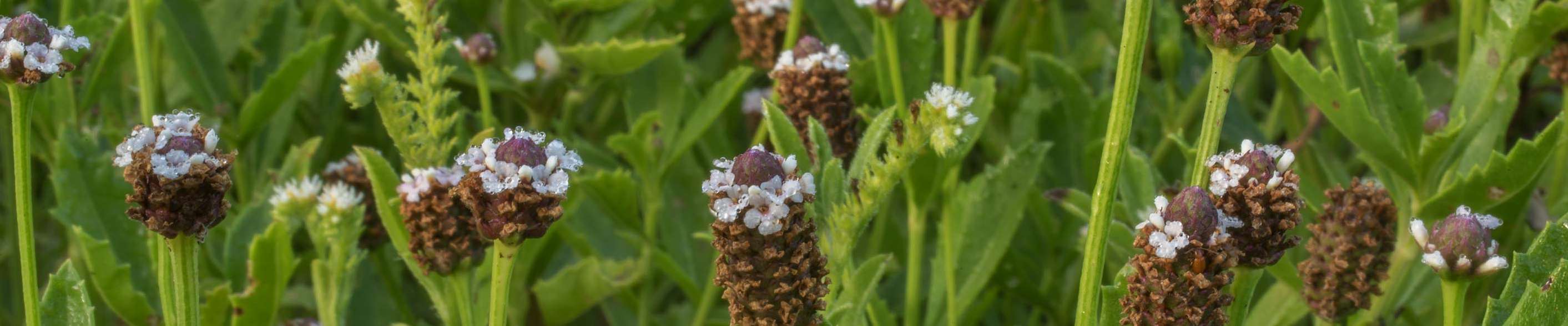
Frogfruit: Flowering Groundcover and Butterfly Caterpillar Host Frogfruit, Phyla nodiflora (Lippia nodiflora), also called Texas Frogfruit, or Sawtooth Frogfruit, is a member of the verbena family. Frogfruit is a rapid

Resources

LBJ National Grasslands

Lyndon B. Johnson National Grassland is a national grassland located near Decatur, and within an hour’s drive from Fort Worth. It is primarily used for recreation, such as hiking, camping,

About the Region

2026 Fall Symposium Logo

This low-elevations region of Texas extends inland from the barrier islands, about 60 or so miles, and stretches from Brownsville to Louisiana. In total, it covers about 9.5 million acres, with a high point of 150 feet in elevation. More than 1000 species of plants can be found in this region. On the southern end, species more common in Mexico (such as Sabal mexicana) and Central America occur.

The barrier islands provide us with dune systems, and clay flats to the inland side, which have species found in these areas alone. Many plants here, such as Ipomoea pes-caprae (beach morning glory), can be found throughout tropical regions of the globe. I’ve encountered the same species on the beaches of Guam.

Once inland, vast marshes and wet prairies occur. Occasionally, oak (Quercus fusiformis) groves can be found. Common grasses include species of Bothriochloa, Paspalum, and Sporobolus; eastern gamagrass (Tripsacum dactyloides); and switchgrass (Panicum species). Many rivers and creeks cut through the Gulf Prairies, and along these riparian areas various species of trees, Sabal minor, and other plants adapted to clay soils can be found. Due to overgrazing, farming, and fire suppression, woody species such as mesquite (Prosopis glandulosa) and huisache (Acacia farnesiana), and invasive species such as chinaberry (Melia azedarach), Brazilian pepper (Schinus terebinthifolius), and Chinese tallow (Sapium sebiferum) have increased and displaced our native flora.

Source: Wildflowers of Texas by Michael Eason