Clear Lake Chapter

Plant of the Month: Partridge Pea

Presented by Helen Lane
November 9, 2020

Botanical name: Chamaecrista fasciculata
Common names: Partridge Pea, Sleepingplant, Sensitive Plant
Family: Ebenaceae (Ebony)


[MUSIC—EASY AND FUN]

[HELEN] My name is Helen Lane and the Plant of the Month is Chamaecrista fasciculata, a native legume.

It grows dry and sandy soil and especially in disturbed areas. This photo was taken along 146 in Kemah where there is construction. The soil that was on the side of the road is very sandy. The recent rains helped green the area.

The Partridge Pea is found in most of the eastern parts of the United States, and generally grows in full sunlight to one- and one-half feet tall. Although likes dry soil, rains are important too. The plant has bright yellow flowers until the first frost.

This slide lists the many names for this flower. It is considered an herb, as it produces seeds like our traditional snap pea plant.

The plant is primarily pollinated by various species of bees, including honeybees. I found the plants become slightly bushy, too. My photo shows the size of the flowers compared to the orange. They are very bright, but small.

As you can see from this slide, the seed pod is small compared to the orange. There are generally about three or four seeds per pod and dry out and break open. These seeds are consumed by birds. If collecting seeds, cold stratification assists in the germination process.

The leaves consist of 10 to 15 pairs of small narrow leaflets, alternating. They’re delicate to the touch, and I think quite pretty.

I took this photo along Sims Bayou. For flood control, the sides were terraced, and grasses, sedges, trees, and Partridge Pea were planted to hold the soil. As you can see, they grow profusely. They are planted for prevention of erosion as well as for the birds, such as ground birds.

This is a lovely flower that we can enjoy all summer long. That’s it!

[MUSIC—AND THAT’S IT]

Related Posts

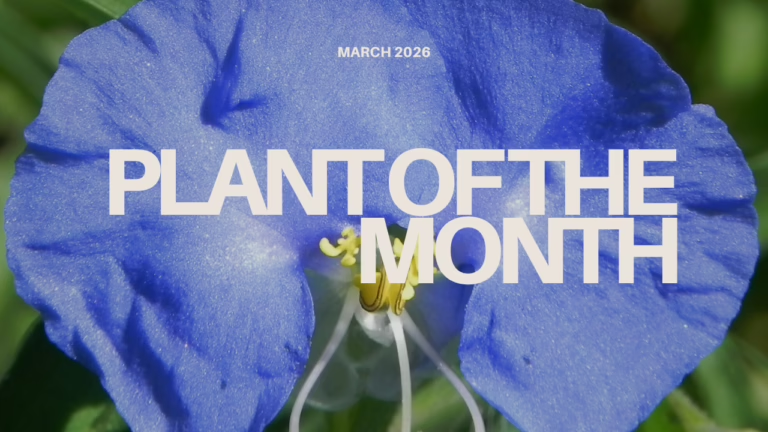
Clise up of Dayflower with text reading Plant of the Month

Plant of the Month: Dayflower

Our plant of the month for March 2026 has bright‑blue “butterfly wings.”
Botanical name: Commelina erecta
Common name(s): Dayflower, White Mouth Dayflower, Slender Dayflower, Widow’s Tears

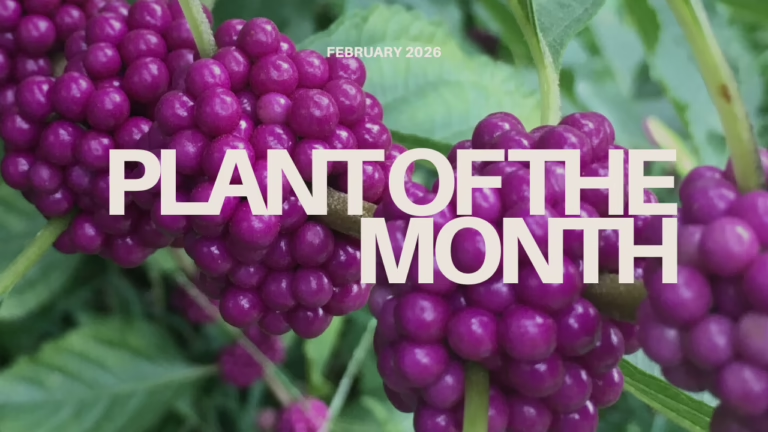
Clise up of American Beautyberry berry clusters with text reading Plant of the Month

Plant of the Month: American Beautyberry

Our plant of the month for February 2026 makes a wonderful jelly!
Botanical name: Callicarpa americana
Common name(s): French Mulberry, Sourbush, Bunchberry, Purple Beauty-berry

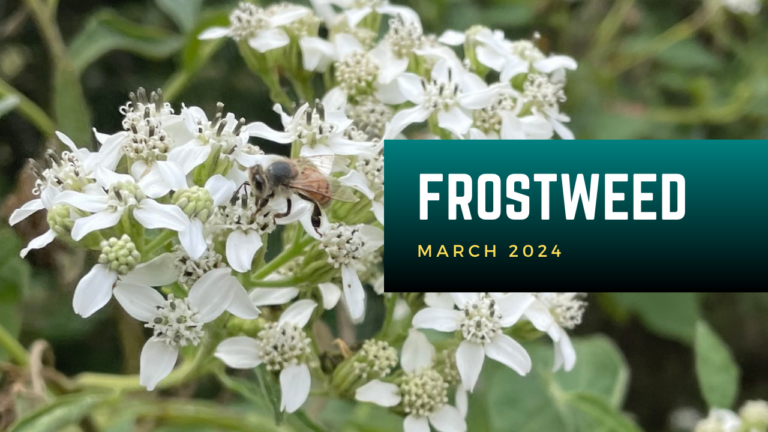
Frostweed

Plant of the Month: Frostweed

Our plant of the month for March 2024 is a little bit icy.
Botanical name: Verbesina virginica
Common name(s): Frostweed, White Crownbeard, Iceplant, Iceweed, Virginia Crownbeard, others

About the Region

2026 Fall Symposium Logo

This low-elevations region of Texas extends inland from the barrier islands, about 60 or so miles, and stretches from Brownsville to Louisiana. In total, it covers about 9.5 million acres, with a high point of 150 feet in elevation. More than 1000 species of plants can be found in this region. On the southern end, species more common in Mexico (such as Sabal mexicana) and Central America occur.

The barrier islands provide us with dune systems, and clay flats to the inland side, which have species found in these areas alone. Many plants here, such as Ipomoea pes-caprae (beach morning glory), can be found throughout tropical regions of the globe. I’ve encountered the same species on the beaches of Guam.

Once inland, vast marshes and wet prairies occur. Occasionally, oak (Quercus fusiformis) groves can be found. Common grasses include species of Bothriochloa, Paspalum, and Sporobolus; eastern gamagrass (Tripsacum dactyloides); and switchgrass (Panicum species). Many rivers and creeks cut through the Gulf Prairies, and along these riparian areas various species of trees, Sabal minor, and other plants adapted to clay soils can be found. Due to overgrazing, farming, and fire suppression, woody species such as mesquite (Prosopis glandulosa) and huisache (Acacia farnesiana), and invasive species such as chinaberry (Melia azedarach), Brazilian pepper (Schinus terebinthifolius), and Chinese tallow (Sapium sebiferum) have increased and displaced our native flora.

Source: Wildflowers of Texas by Michael Eason