Clear Lake Chapter

Plant of the Month: Swamp Sunflower

Presented by Victoria Leal
September 12, 2022

Botanical name: Helianthus angustifolius
Common name(s): Swamp Sunflower, Narrowleaf Sunflower, Narrow-leaved Sunflower
Family: Asteraceae (Aster)


[MUS—EASY AND FUN]

[VICTORIA] Hello, my name is Victoria Leal, and I will be presenting the plant of the month. This month we have the Swamp Sunflower, also known as Helianthus angustifolius.

It is a perennial plant. As you can see on this picture the plant has very narrow leaves. This plant does not have its flower yet. The only things that you can see right now are the leaves. And there are very little hairs on the leaves and on the stems. It’s hard to tell with this picture but there’s that, and it’s a dark green. It can grow up to three feet when it’s fully grown, but in this picture, it’s only about one foot, one foot and a half at most. The flowers can be up to two inches.

It likes a medium amount of water. It also likes partial shade, so try putting it under a tree or maybe with some shade with a roof or something where it’s being hit half of the day, and then the other half it’s just being in the shade. It also likes any soil that’s kind of sandy, loam or clay-based.

It’s suggested that you add it to your landscape between May and July in Zone 8, which is like Hill Country, Austin, San Antonio area, and between April and August in Zone 9, which is our area in the coastal prairies.

Leave space—between 18 to 24 inches—because these plants do tend to spread to each other and make a little system underground, but once they shoot up from the ground you’re able to just dig them up and move them. Put them wherever you want, give them to friends, whatever you’d like.

This is a Florida native so it’s able to tolerate our heat and humidity quite easily. They’re very low maintenance and they’ll thrive if you give them a little extra fertilizer. They don’t need it to survive though. They’re only really susceptible to powdery mildew and spittle bugs, but they rarely ever do extensive damage to the plant.

As you can see on this map, they range anywhere from New York to Florida, all the way to Texas. They are, like their name indicates, a swamp sunflower so they’ll be found in swampy wet areas. It’s down here because we tend to be very humid. It also likes the shade, so it’s found in forests.

The benefit it has is that it is very good for the ecosystem. It is very important for bees and it’s very important for the Silvery Checkerspot butterfly, where it’s its host. And the butterfly will lay eggs under the leaves and then the caterpillars will hatch and have immediate food from the leaves. And they’ll spend their whole life cycle just… And they’ll create a cocoon. And then they’ll leave. And they’ll lay their eggs there again.

The Swamp Sunflower also attracts songbirds, quail and deer. And they’re able to use the seeds as nutrients and fat rich foods in the late fall and winter.

They are considered threatened in Illinois, New York and Pennsylvania. The Swamp Sunflower is considered a facultative wetland plant. And it is not a weed or invasive, so do not pull these out.

And that is all. Thank you for listening to my presentation.

[MUS—AND THAT’S IT]

Sources

Related Posts

Plant of the month for August is Splitbeard Bluestem, Andropogon ternarius, and also called Feather Bluestem or Paintbrush Bluestem. It is a native. It's a warm season grass. It's a perennial. It's a bunchgrass. By warm season, it means that it's dormant in the winter and starts growing in the spring as the weather warms up. A bunchgrass tends to stay in a small circle or a bunch. The grass has numerous thin basal leaves, which usually stay about 12 or 15 inches tall, which makes it ideal in our home landscapes. It grows best in part shade to full sun. And this grass will be available at our plant sale on October 20 and 21. It prefers to grow in sand or well-drained soil, which we kind of struggle with here, but it does do well. It's shade tolerant and drought tolerant. I know the camera has a hard time focusing on those light hairy little seeds. The bloom time is from August to November. In late summer, it will send up its bloom stalk, which may be up to three feet tall. And, as the seeds on the long slender stalk mature, they'll split into two tiny stems about two inches long, each with seeds of fluffy white tufts. The seeds are wind distributed. The plants may be started from seed or another way is to dig your mature plant and with your shovels, cut it into maybe four sections, which then can be replanted in other places in your yard or shared with some of your neighbors. It's an easy plant to grow. Splitbeard can be found on the prairie with Little Bluestem and it's great when it's seen in the afternoon sun en masse; reminds me of snowflakes on the branches. And it can be used in a winter dried arrangement in the house. Native bees can use Splitbeard Bluestem for nesting materials. And until their bloom stalk is sent up, the narrow basal leaves are hard to distinguish from other bunchgrasses such as Sideoats Grama. And there it is. And you note how the seeds are all on one side, thus its name. We don't have any of this one for sale at our fall sale. Maybe we will in the spring, in April. But it was interesting, I thought, when I looked for Splitbeard Bluestem in the Wasowski book of Native Texas Plants these two bunchgrasses were on the same page. So, that is the story of the Sideoats Grama and the Splitbeard Bluestem.

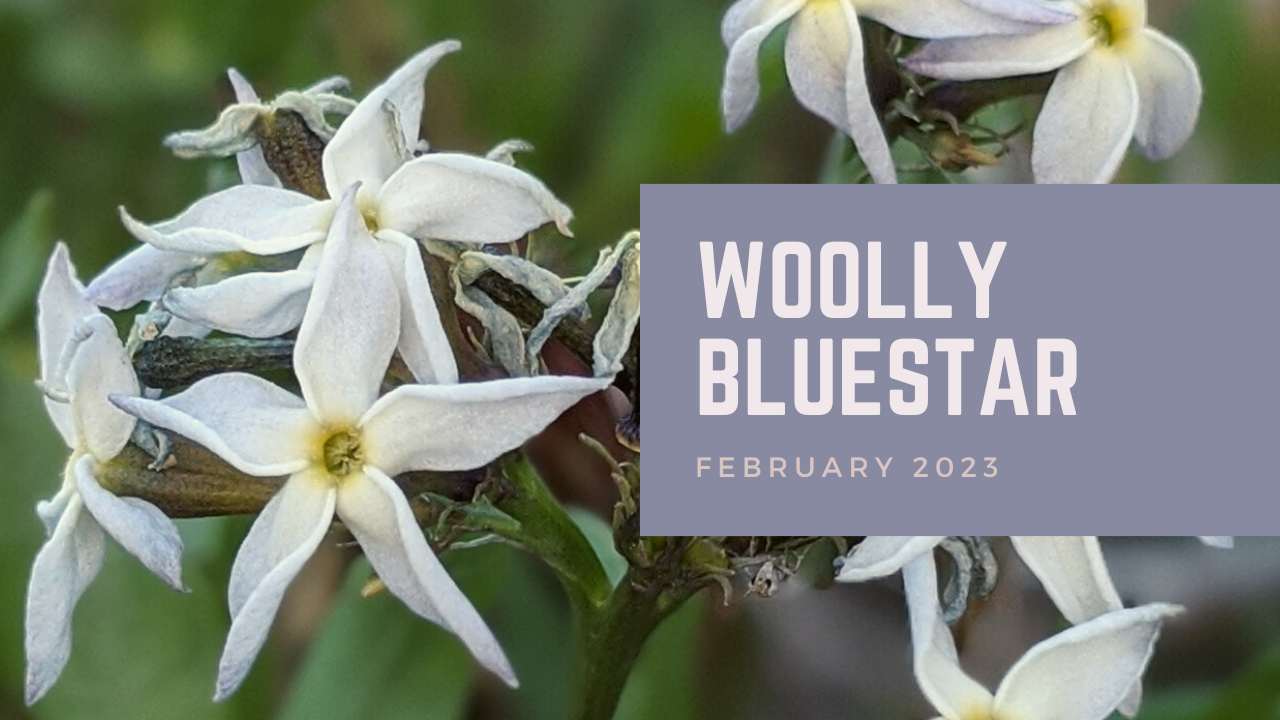
Plant of the Month: Woolly Bluestar

Our Plant of the Month for February 2023 is Amsonia tomentosa, commonly known as Woolly Bluestar, Woolly Amsonia, Small Leaved Amsonia, or Gray Amsonia.

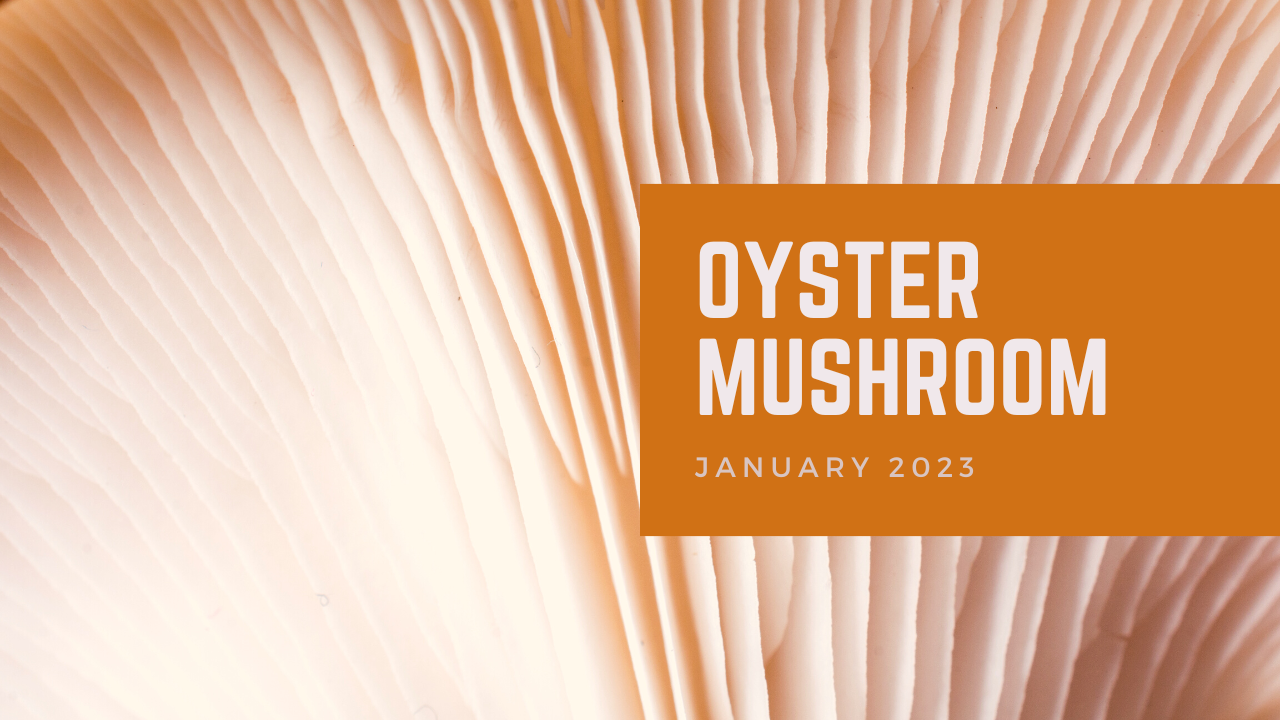
Oyster Mushroom

Plant of the Month: Oyster Mushroom

Our plant of the month for January isn’t a plant at all, it’s a fungus!
Botanical name: Pleurotus ostreatus
Common name(s): Oyster Mushroom, Pearl Oyster Mushroom

About the Region

2026 Fall Symposium Logo

This low-elevations region of Texas extends inland from the barrier islands, about 60 or so miles, and stretches from Brownsville to Louisiana. In total, it covers about 9.5 million acres, with a high point of 150 feet in elevation. More than 1000 species of plants can be found in this region. On the southern end, species more common in Mexico (such as Sabal mexicana) and Central America occur.

The barrier islands provide us with dune systems, and clay flats to the inland side, which have species found in these areas alone. Many plants here, such as Ipomoea pes-caprae (beach morning glory), can be found throughout tropical regions of the globe. I’ve encountered the same species on the beaches of Guam.

Once inland, vast marshes and wet prairies occur. Occasionally, oak (Quercus fusiformis) groves can be found. Common grasses include species of Bothriochloa, Paspalum, and Sporobolus; eastern gamagrass (Tripsacum dactyloides); and switchgrass (Panicum species). Many rivers and creeks cut through the Gulf Prairies, and along these riparian areas various species of trees, Sabal minor, and other plants adapted to clay soils can be found. Due to overgrazing, farming, and fire suppression, woody species such as mesquite (Prosopis glandulosa) and huisache (Acacia farnesiana), and invasive species such as chinaberry (Melia azedarach), Brazilian pepper (Schinus terebinthifolius), and Chinese tallow (Sapium sebiferum) have increased and displaced our native flora.

Source: Wildflowers of Texas by Michael Eason