Dallas Chapter

Welcome to the Dallas Chapter

Welcome to the Dallas Chapter of NPSOT. 

Use the menus in the bar above to get more information relevant to our area, including plant sale info, activities, and more.

Please join us at a meeting at the Gaston Christian Center the third Monday of every month. 

Calendar - North Texas Chapters

Dallas, North Central, Collin County,
Trinity Forks and Cross Timbers

Also see NPSOT’s full calendar


NPSOT Dallas Chapter Meeting: April 20, 2026 at 7pm (Social time starts at 6:30pm)

Location: Gaston Christian Center’s Fellowship Hall – 8515 Greenville Avenue, Dallas, TX 75243 Google map link: https://goo.gl/maps/f56RmuSnjn9Z6RQQ6

ZOOM INFO: If you can’t join in person, log on using this link:
https://us02web.zoom.us/j/83725236133?pwd=MnRoZlRWMEd4ZENkaXdjalpkRFFIdz09
If needed, use:
Meeting ID: 837 2523 6133
Passcode: 882399a*

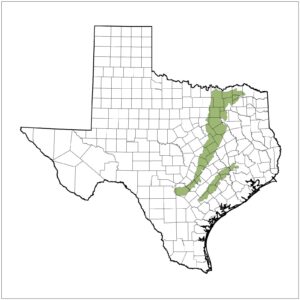
Map of Texas with Blackland Prairie shown

The Blackland Prairie

The Dallas Chapter of NPSOT includes all of Dallas County and the twenty-two cities within its boundaries. 

We are in the Blackland Prairie Ecoregion:  Average rainfall 28-40 inches with peak rainfall usually in May, Hardiness Zone 8A, average annual minimum temps 15-10 degrees.

Wildflower Planting dates for our area are:
Spring – January 15th thru March 1st
Fall – October 1st thru December 1st

Check this link for a PDF of the USDA’s Hardiness Zone Map for Texas: https://ftp.dot.state.tx.us/pub/txdot-info/library/pubs/cit/hardiness_district.pdf.

Our area is predominately an urban landscape, and the Dallas Chapter’s primary goal is to educate homeowners, businesses, and municipalities on the benefit of planting native landscapes. Each meeting, newsletter, field trip and activity will strive to achieve this goal.

Plant Propagation Guide – A basic guide to sharing your native plants with others through plant propagation. (PDF, 1.33 MB)
Inviting Nature Back Home – A complete guide to updating your landscape for Birds, Bees and Butterflies. (PDF, 2 MB)
see more planting info on our Plant Info page

Stay in touch with the Dallas Chapter – sign up for our Newsletter, check out our Facebook page for more details and information.  Additionally, lots of great information can be found in our Newsletter Archives.

About the Region

2026 Fall Symposium Logo

This low-elevations region of Texas extends inland from the barrier islands, about 60 or so miles, and stretches from Brownsville to Louisiana. In total, it covers about 9.5 million acres, with a high point of 150 feet in elevation. More than 1000 species of plants can be found in this region. On the southern end, species more common in Mexico (such as Sabal mexicana) and Central America occur.

The barrier islands provide us with dune systems, and clay flats to the inland side, which have species found in these areas alone. Many plants here, such as Ipomoea pes-caprae (beach morning glory), can be found throughout tropical regions of the globe. I’ve encountered the same species on the beaches of Guam.

Once inland, vast marshes and wet prairies occur. Occasionally, oak (Quercus fusiformis) groves can be found. Common grasses include species of Bothriochloa, Paspalum, and Sporobolus; eastern gamagrass (Tripsacum dactyloides); and switchgrass (Panicum species). Many rivers and creeks cut through the Gulf Prairies, and along these riparian areas various species of trees, Sabal minor, and other plants adapted to clay soils can be found. Due to overgrazing, farming, and fire suppression, woody species such as mesquite (Prosopis glandulosa) and huisache (Acacia farnesiana), and invasive species such as chinaberry (Melia azedarach), Brazilian pepper (Schinus terebinthifolius), and Chinese tallow (Sapium sebiferum) have increased and displaced our native flora.

Source: Wildflowers of Texas by Michael Eason