Adam Foster, “Groundwater Management in Texas”
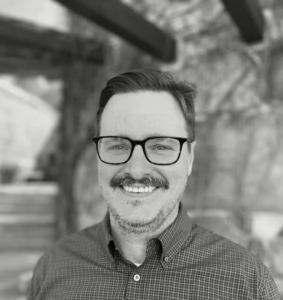
Adam Foster, Executive Director, Texas Alliance of Groundwater Districts, Austin
Topic: Groundwater Management in Texas
Description: This presentation will provide an overview of the current state of groundwater in Texas, including challenges and trends. It will also cover the role of Groundwater Conservation Districts and how groundwater is managed across the state through locally driven, science-based approaches.
About: Adam has almost 20 years of experience in groundwater science, policy, and regulation. He currently serves as Executive Director of the Texas Alliance of Groundwater Districts (TAGD), a 501(c)(3) organization dedicated to promoting and supporting the sound management of groundwater based on local conditions and good science. In this role, he oversees the organization’s day-to-day operations and serves as the primary point of contact for TAGD members, the Texas Legislature, state agencies, and other organizations on groundwater-related issues.
Adam holds a Master of Science in Chemistry from Texas State University, where he also earned dual Bachelor of Science degrees in Chemistry and Mathematics. When he’s not working, he enjoys camping, hiking, and traveling with his family.
Ashley Landry, “Saving SGCNs and Moving Prairie: The Native Plant Rescue Project”
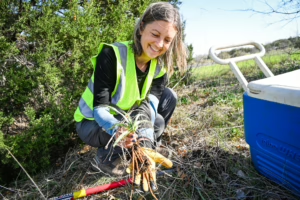
Ashley Landry, President, Native Plant Rescue Project, Central Texas
Topic: Saving SGCNs and Moving Prairie: The Native Plant Rescue Project
Description: Learn about NPRP’s recent successes in locating and saving Species of Greatest Conservation.
About: Ashley Landry is the founder of the Native Plant Rescue Project (NPRP), which is a Central Texas-based nonprofit that coordinates plant rescues prior to construction. She was the 2024 Nancy Benedict Memorial Award winner and has been featured in Wildflower magazine, Grist, The Austin Chronicle, Vibrante, NPAT’s Prairie People and on Central Texas Gardener. Ashley is an avid iNaturalist user and enjoys spending her free time botanizing.
Austin R. Kelly, “Plant ID Competition as a Tool for Cultivating Botanical Knowledge & Passion”
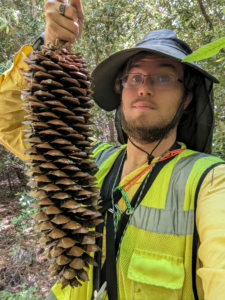
Austin R. Kelly, President/Lead Botanist of ARK Ecological Consulting & PhD Student at Texas A&M University
Topic: Plant ID Competition as a Tool for Cultivating Botanical Knowledge & Passion
Description: This lecture will explore the powerful role of plant identification competitions in fostering botanical education among youth and young adults, particularly in light of the diminishing access to formal botanical studies for these age groups. Drawing on my experience as both a former contestant and coach of a collegiate plant ID team, I will discuss various competition types, from high school 4-H and FFA events to collegiate challenges, highlighting their effectiveness in sparking and nurturing a passion for plants. The presentation will showcase successful models of engagement and then outline actionable ways NPSOT members and chapters can directly support and participate in these vital educational initiatives, ensuring the future of native plant appreciation.
About: Austin R. Kelly is President and Lead Biologist for ARK Ecological Consulting, a botanical and environmental consulting group that works across the US focused on plant and wildlife inventories and conservation, invasive species control, and sustainable private-land management practices. Austin is also an instructor and PhD student at Texas A&M University studying plant ecology, particularly rangeland ecosystem management in the Edwards Plateau, including grazing, burning, and ecohydrology. Austin has taught 9 different undergraduate courses in botany and ecology over 8 years. He was the coach for the Texas A&M Plant Identification Team for 4 years, and his team placed 2nd in the US in 2025. Austin is also a Research Associate with the S.M. Tracy Herbarium where he conducts research on Texas plant biogeography and floristics. He is also on the Board of Directors for the Society of Ecological Restoration and is passionate about environmental education, working with many youth organizations teaching about plants and ecosystems.
Cullom Simpson, “Grassland Restoration-From Beginning to End"
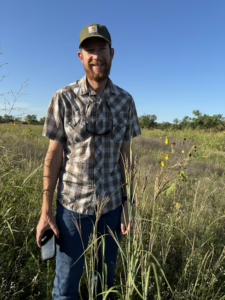
Cullom Simpson, Wildlife Biologist, Bell and Williamson County
Topic: Grassland Restoration-From Beginning to End
Description: This presentation will look at the process of converting landscapes back to native grasses following land disturbances. These land disturbances can include non-native grasses, mechanical brush control, oil field activities, overgrazing, erosion, or agricultural practices. This presentation will be interactive and we will evaluate challenges, applaud successes, and ruminate on the process of grassland restoration.
About: Coming Soon
Gil Eckrich, “Native Plants are for the Birds”
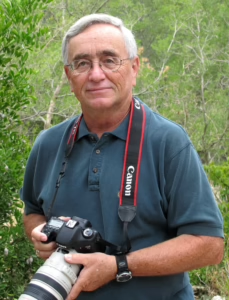
Gil Eckrich
Topic: Native Plants are for the Birds
Description: I will address the vital importance of native plants to Texas birds, both resident and migrants.
About: Gil Eckrich was born in Germany and came to Texas in 1964. Upon graduation from college in 1970, he entered the U.S. Army as an officer in the Infantry. Twenty years later, and assignments around the globe, he retired in Central Texas. Since then, he taught state and federal government courses for Central Texas College until retiring from that position in August 2009. Until his most recent retirement in March of 2013, Gil had also been a wildlife biologist in Fort Cavazos’s Natural Resources Management Branch for 22 years. He has been an active member of Twin Lakes Audubon Society for over 30 years. Gil is an enthusiastic nature photographer, concentrating on birds and their habitats, and continues to chase those ever-elusive ‘perfect’ shots. This year he has travelled to Honduras, Ecuador and Costa Rica; but, he most enjoys the nature all around him, here, in Central Texas.
Haeley Giambalvo, “Bringing Native Plants to Texas Schools”
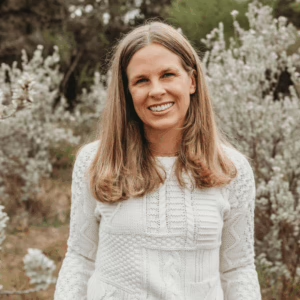
Haeley Giambalvo, VP of Communications, Chair of Native Plants in Schools Committee
Topic: Bringing Native Plants to Texas Schools
Description: Hear about all the exciting things the Native Plants in Schools committee is working on to bring more native plants to Texas schools. We’ll share the results of our first annual Force of Nature native plant research contest for middle schoolers, and discuss a pilot pocket prairie project we’re working on with six schools around Texas for the 2025-26 school year. If you want to get involved with your local schools, we’re here to help set you up for success!
About: Haeley Giambalvo is a member of the San Antonio chapter of the Native Plant Society of Texas. In addition to being the new Communications VP, she currently chairs the Native Plants in Schools Committee and serves on the HEB Initiative Committee. She has been a native plant enthusiast ever since becoming a Texas Master Naturalist in 2019. A professional blogger and online content creator for the past decade, Haeley launched ckyards.com in 2020 to encourage people to help the Earth from their own yards by growing native plants. Over the last five years, Haeley has transformed her San Antonio backyard with Texas native plants and turned it into a haven for butterflies, bees, and birds while helping thousands of native plant newbies make small but impactful changes to their own yards. Her book Native Plant Gardening for Beginners is available on Amazon. Haeley has a degree in Marketing from the Wharton School at the University of Pennsylvania and worked as a management strategy consultant before starting her family. She and her husband Ross are now busy with two teenagers – Stella (15) and Hazel (13).
John Macey Ph.D., Co-Presenter, “Prescribed Fire/Habitat Restoration for Endangered Species”
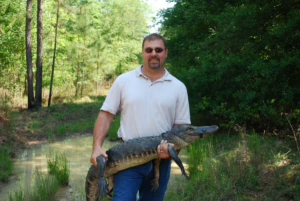
John Macey Ph.D, Natural Resource Specialist, Fort Hood, TX
Topic: Habitat Restoration for Endangered Species
Description: The key to successful wildlife management is habitat management Habitat restoration and management for endangered species is pivotal for mitigating biodiversity loss and bolstering ecosystem resilience. This talk synthesizes lessons learned from decades of practical experience and research, emphasizing a multifaceted strategy that integrates an understanding of prehistoric ecological baselines with innovative, adaptive management practices. By using insights from historical ecosystem conditions, restoration efforts can more accurately target degraded landscapes, reconstruct original habitat complexity, and foster natural recovery processes.
About: John N. Macey earned his BS and MS from Stephen F. Austin State University in Nacogdoches, Texas, and his Ph.D. from Texas A&M University in College Station. With over 20 years of experience as a wildlife biologist, he has dedicated his career to natural resource management while specializing in endangered and protected species, restoration ecology, population ecology, and movement ecology. His extensive work spans diverse regions—from the coastal areas of Georgia and throughout the southeastern United States to west Texas.
Julie Ann Fineman, “The Constellation of Living Memorials: Scaling a Statewide Movement”

Julie Ann Fineman, President of Friends of the Warren Ferris Cemetery ,a 501c3, 1649 St. Francis Ave, Dallas, Tx 75218 and Co-Creator of the Constellation of Living Memorials
Topic: The Constellation of Living Memorials: Scaling a Statewide Movement
Description:
Join us for a one-hour lecture introducing the Constellation of Living Memorials, a groundbreaking initiative that transforms neglected historic cemeteries into thriving native landscapes and vibrant community learning spaces. In this session, we will share lessons learned from our two-year pilot program and outline our plan to scale across Texas through partnerships with the Native Plant Society of Texas, Texas A&M AgriLife Master Gardeners, and Texas Master Naturalists. Discover how restoring forgotten green spaces can build ecological resilience, honor cultural heritage, and inspire communities statewide.
About: Julie Ann Fineman is an environmental advocate, Master Naturalist, and photographer turned ecosystem restorer. She leads the nonprofit Friends of the Warren Ferris Cemetery as President, and is a co-creator of the Constellation of Living Memorials program.
With over 33 years of professional experience, she has woven together her background in entertainment advertising photography, healthy living, and wildlife conservation into her current mission.
After spending decades as a successful photographer—with works housed in the Academy of Motion Picture Arts & Sciences archive—she shifted gears, drawn to ecological rehabilitation.
In 2018 she embarked on restoring the historic Warren Ferris Cemetery near her home in East Dallas, transforming overgrown ground into a native prairie and wildlife habitat.
Building from that success, she helped launch the Constellation of Living Memorials pilot program to replicate that model across other neglected historic cemeteries, integrating restoration with community engagement, native landscape design, and ecological corridors.
Through Constellation, she has procured grants and facilitated partnerships to support restoration work and documentation of native flora/fauna.
She emphasizes the dual goals of honoring cultural heritage (those interred in these cemeteries) and rewilding land to support biodiversity and climate resilience.
Laura Zárate, Co-Presenter, “Cultivating Community Engagement with Native Plant Art Contests”
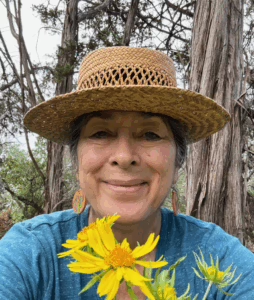
Laura Zárate, Arte Sana (art heals) founding director
Topic: Cultivating Community Engagement with Native Plant Art Contests
Description: Art contests are an organic way to promote education and conservation of Texas native plants to a wide-reaching audience, including artists of all ages, teachers, parents, families, art patrons, conservation partners, and more. This session will spotlight successful contests providing overviews of physical and online exhibitions, working with school-age and adult participants, and inspiration and tools for chapters interested in running their own contests
Featuring:
- Marilyn Blanton will speak about the “Texas Native Plant Art Exhibition,” an annual collaborative project sponsored by the Trinity Forks Chapter of the Native Plant Society of Texas, the Elm Fork Chapter of the Texas Master Naturalist and Texas Woman’s University, College of Arts and Sciences. The purpose of the project is to raise awareness of the importance of native plants and educate students about the role of native plants in conservation and our natural heritage. The project began in 2009 with one school in recognition of Texas Native Plant Week. The art exhibition has grown over the years to include all Denton ISD elementary schools. Hundreds of pictures of Texas native plants are created by fourth grade students and submitted each year. The artwork is judged then featured in traveling displays from November through April.
- Laura Zárate will speak about the Texas-grown PlantArte national native plant art contest, a collaboration model for channeling the power of art to raise awareness and mobilize individuals to support native plant conservation and restoration efforts. The success of PlantArte has depended on partnerships with local, state, and national groups such as the Native Plant Society of Texas, Defenders of Wildlife, Hill Country Alliance, Biodiversity Works, and Native American Seed. Through this handmade native plant art contest (with six specific plant art themes) and online exhibit, participating artists are helping address Plant Awareness Disparity (or plant blindness) and raise awareness of the role of native plants in preserving the biodiversity of our ecoregions. Over 27 native plants were listed in the inaugural PlantArte art submissions by self-taught and professional botanical artists ages 14 to 77. Both online exhibits include wonderful native plant art and inspiring messages.
- Renata Lucia will give a short overview of free software to help manage contest submissions.
About: Laura Zárate’s love of plants began with her abuela’s gardens in Brownsville, Texas and her childhood visits to a local curandera. Laura has over 34 years of nonprofit experience promoting Spanish language training and replicable national campaigns. As a native plant photographer and member of NPSOT since 2019, she has volunteered with different NPSOT community outreach groups, developed resources to promote its mission; like the dual language Texas Native Plant Week proclamation template, #TexasNativePlantWeek social media campaign (2022) and NPSOT’s 2023 National Native Plant Month dual language endorsement statement. Laura was a regional ambassador for the 10th Latino Conservation Week, and in 2024 she launched the PlantArte native plant art contest collaboration as part of Arte Sana’s Plants & People initiative. Laura is also a native plant artist who earned a bachelor’s degree in psychology from the University of Texas at Austin.
Laurel Robertson, “March of the Microorganisms - Plant Succession and Associated Changes in Soil Biology”
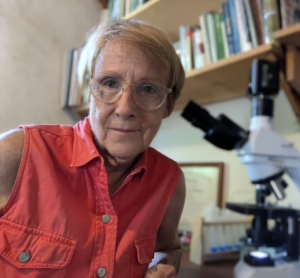
Laurel Robertson
Topic: March of the Microorganisms – Plant Succession and Associated Changes in Soil Biology
Description: We’re all familiar with the food chain and how it maintains balance and diversity in the natural world. But did you know that a similar system – the Soil Food Web – controls the supply of plant nutrients in the soil? If we can identify the key players in this underground ecosystem, learn the specific roles they play in the soil food web, and understand how together they create a rich environment where plants can thrive, we can foster soils that are specifically suited to the plants we want to grow. This presentation will introduce the various members of the Soil Food Web in photos and videos, offer methods to nurture their growth, and detail what balance of soil organisms will best promote the growth of different plant groups.
About: Knowing that good soil is the foundation for all healthy plants, Laurel Robertson dove headlong into learning about the rapidly developing world of soil biology. After three years of intensive study with the Soil Food Web School, she’s learned a lot – most notably about how much there still is to discover in the teeming world directly beneath our feet. Using shovels, compost, and a microscope, she digs into this exciting world more every day.
Marilyn Blanton, Co-Presenter, “Cultivating Community Engagement with Native Plant Art Contests”
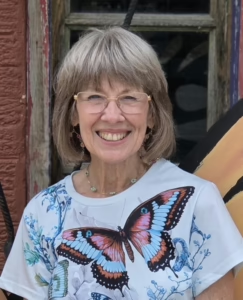
Marilyn Blanton, Trinity Forks Chapter Member, NPSOT
Topic: Cultivating Community Engagement with Native Plant Art Contests
Description: Art contests are an organic way to promote education and conservation of Texas native plants to a wide-reaching audience, including artists of all ages, teachers, parents, families, art patrons, conservation partners, and more. This session will spotlight successful contests providing overviews of physical and online exhibitions, working with school-age and adult participants, and inspiration and tools for chapters interested in running their own contests
Featuring:
- Marilyn Blanton will speak about the “Texas Native Plant Art Exhibition,” an annual collaborative project sponsored by the Trinity Forks Chapter of the Native Plant Society of Texas, the Elm Fork Chapter of the Texas Master Naturalist and Texas Woman’s University, College of Arts and Sciences. The purpose of the project is to raise awareness of the importance of native plants and educate students about the role of native plants in conservation and our natural heritage. The project began in 2009 with one school in recognition of Texas Native Plant Week. The art exhibition has grown over the years to include all Denton ISD elementary schools. Hundreds of pictures of Texas native plants are created by fourth grade students and submitted each year. The artwork is judged then featured in traveling displays from November through April.
- Laura Zárate will speak about the Texas-grown PlantArte national native plant art contest, a collaboration model for channeling the power of art to raise awareness and mobilize individuals to support native plant conservation and restoration efforts. The success of PlantArte has depended on partnerships with local, state, and national groups such as the Native Plant Society of Texas, Defenders of Wildlife, Hill Country Alliance, Biodiversity Works, and Native American Seed. Through this handmade native plant art contest (with six specific plant art themes) and online exhibit, participating artists are helping address Plant Awareness Disparity (or plant blindness) and raise awareness of the role of native plants in preserving the biodiversity of our ecoregions. Over 27 native plants were listed in the inaugural PlantArte art submissions by self-taught and professional botanical artists ages 14 to 77. Both online exhibits include wonderful native plant art and inspiring messages.
- Renata Lucia will give a short overview of free software to help manage contest submissions.
About: Marilyn Blanton has been a member of the Native Plant Society of Texas for 35 years. She received the Benny Simpson Fellows Award in 2018. She has served in various positions in the Trinity Forks Chapter, including president and currently serves as the education chair. She has been a Texas Master Naturalist for 26 years and is also active with iNaturalist. She is enthusiastic about sharing her love of the natural world, particularly native plants. The Texas Native Plant Art Exhibition provides an opportunity for young students to learn about native plants through art.
Mike Pecen, "Meeting Design Challenges with Native Plant Solutions"
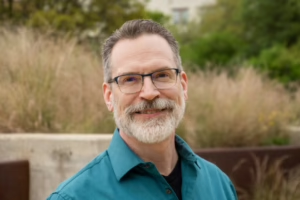
Mike Pecen, Associate, Rialto Studio, San Antonio
Topic: Meeting Design Challenges with Native Plant Solutions
Description: The built environment is challenging, creating dry and cold spots, glare and excessive heat. Native plants can help us address these issues and enrich our cities with a sense of their region. We’ll discuss a number of design concerns around native plants and explore how various built projects have addressed them. Although most of the example projects will be in Central Texas, the design lessons are universal.
About: Mike Pecen is a registered Texas Landscape Architect and an Associate at Rialto Studio in San Antonio. He is responsible for design, consultant coordination, construction documentation, and construction administration for many types of projects, including parks, campuses and civic facilities. He is a member of the American Society of Landscape Architects and the Native Plant Society of Texas, as well as being accredited in LEED. He enjoys gardening and horticulture, as well as all the planting, composting, rainwater harvesting and nurturing that comes with it—which directly informs his work. He was a gardener long before studying Landscape Architecture, and his personal experience—growing more than 500 varieties and species—enables Mike to specify plants with confidence that they will succeed in challenging situations. When he is not getting dirty, he likes finding ways to make landscapes greener and more engaging for people and wildlife, from planting design to regulatory compliance.
Ricky Linex, “Salado Creek, Thru the Years 1870 – 2025”
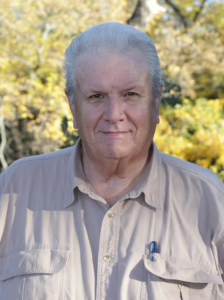
Ricky Linex, President, Native Plant Society of Texas; Consulting Wildlife Biologist
Topic: Salado Creek, Thru the Years 1870 – 2025
Description: From the first historical photos of Salado Creek and the bridges across the creek forward in time to the current year we will see the impacts humans have had upon the native riparian vegetation that has protected the creek for centuries. A creek or river has but one job, the transporting of water and sediment. The way humans influence the vegetation of the uplands and riparian areas can put stresses upon the creek. Salado Creek is one of the most photographically documented creeks in Texas and we will share this history and see the rise and fall of vegetation in this presentation.
About: Ricky Linex is a wildlife biologist having retired from the Natural Resources Conservation Service where he worked 38.5 years. Over the previous 18 years Ricky served 52 counties in north-central Texas. Ricky is the author of Range Plants of North Central Texas, A Land User’s Guide to their Identification, Value and Management. His assistance to landowners and managers involves mutual education on how to better manage rangelands for sustainable use by livestock and wildlife. Knowing the plants and how to manage them is critical for success as a land steward.
Dr. Sean Griffin, “Growing in a Drier World”
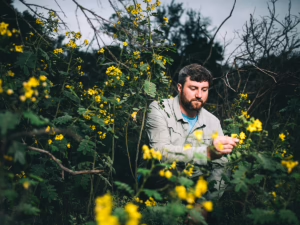
Dr. Sean Griffin, Director of Science and Conservation, Lady Bird Johnson Wildflower Center
Topic: Growing in a Drier World
Description: Extreme drought is increasing in Texas, leading to unprecedented changes in plant communities across the state. Using 25 years of observations from a unique experimental landscape at the Lady Bird Johnson Wildflower Center, we examine the winners and losers in these new, drier conditions, and discuss ways to protect our native plants in the face of climate change.
About: Dr. Griffin received his Ph.D. from Michigan State University in 2019, studying the response of plants and pollinators to habitat corridors, prescribed burning, and other management techniques across restored grasslands in Illinois and Michigan. A year later, he began working with Wildflower Center staff and volunteers as a post-doctoral researcher with the Jha Lab at the University of Texas at Austin. In this capacity, he led a study of the long-term effects of burning and seeding across the Cross Timbers ecoregion of northern Texas and Oklahoma.
As the Center’s first Director of Science and Conservation, Dr. Griffin is charged with increasing the Center’s capacity to positively impact Texas landscapes by creating new opportunities for university students, researchers, and land stewards throughout the state.
Scott Summers, Co-presenter: "Prescribed Fire/Habitat Restoration for Endangered Species”
Ted Smith, “Building a Better Future Through Students and the Community”
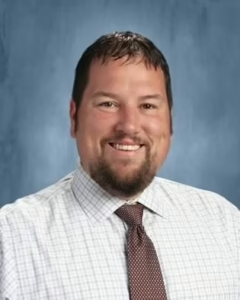
Ted Smith, Chief Operating Officer, Salado ISD
Topic: Building a Better Future Through Students and the Community
Description: Our presentation highlights the partnerships that have supported student growth and increased awareness of the importance of taking care of our natural resources.
About: Ted Smith serves as the Chief Operating Officer of Salado ISD, where he plays a pivotal role in overseeing district operations to ensure the smooth and effective functioning of all support services. With a strong foundation in both science and education, Dr. Smith brings a unique blend of analytical thinking and instructional insight to his leadership role. He holds a Bachelor of Science degree in Biology and Chemistry from the University of Mary Hardin–Baylor, as well as a Master of Education in Administration from the same institution. Furthering his commitment to educational excellence, he earned a Doctorate in Curriculum and Instruction from Baylor University. With a career rooted in education and a passion for student success, Dr. Smith is dedicated to advancing the mission of Salado ISD through operational excellence and strategic leadership