

Native plants are vital in sustaining the delicate balance of our North Texas ecosystem. Their presence creates biodiversity, offers shelter and sustenance to wildlife, mitigates soil erosion, and assists in regulating the water table.
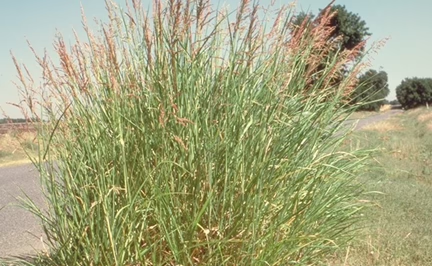
Our region’s ecosystems, along with many others in North America, are threatened by a wide variety of invasive plants. One of the most damaging is the highly destructive Johnsongrass (Sorghum halepense).
Johnsongrass threatens our few remaining native prairie remnants and restoration projects. While Johnsongrass is a relatively mild pest in urban and suburban areas, the plant is very damaging to native prairie habitats. They also can flourish in fields, disturbed sites, roadsides, and cropland.
Johnsongrass – How We Got Here
Johnsongrass was first introduced to the US from Turkey in the early 1800s. Ranchers were seeking a new forage crop for their livestock. At the time, it was considered a reliable alternative to hay or sorghum, especially during droughts.
After initially being brought to South Carolina, it spread to Texas and other states. It did not take long to witness the destruction this exotic plant can inflict on native ecosystems and agriculture. In 1900, it was the first species targeted for a federal grant specifically for weed control. It is now found in 48 states (Alaska and Minnesota are the exceptions) and is most prevalent in the southern and western US.
What Makes Johnsongrass Such a Formidable Invasive?
The perennial grass can grow very tall, up to 10 feet, with long lance-shaped leaves. Its seed heads resemble a plume of feathers and contain a multitude of tiny seeds. The plant’s characteristics allow it to outcompete most native plants and create monocultures. Below are a few of the reasons why Johnsongrass is so problematic:
- Rapid Growth: With its exceptionally fast growth rate, it overwhelms other plants for sunlight, water, and nutrients. It can grow up to three feet in one month.
- Robust Root System: Johnsongrass has an immense and interconnected rhizome system. The underground stems enable the plant to easily spread horizontally, making it difficult to control. As a result, even if the stems are cut down, the rhizomes will likely send up new shoots.
- Prolific Seed Production: The large white plumes of seeds can hold thousands on an individual plant. The seeds are spread by wind, water, and small mammals, making it challenging to curtail their spread, and they can remain viable for many years.
- Adaptability: It can thrive in various soil types and endure drought conditions, making it highly adaptable to nearly all environments.
- Allelopathy: Another weapon in its arsenal is its allelopathy properties. By secreting chemicals, it inhibits the growth of nearby plants, giving it a further edge in the battle for resources.
These characteristics have resulted in significant reductions in the health and plant diversity of native prairies. Most alarmingly, the extensive use of herbicides against Johnsongrass has resulted in the independent evolution of herbicide-resistant strains.
How to Control Johnsongrass?
A multifaceted approach is required to combat the invasive Johnsongrass and mitigate its impact on North Texas ecosystems. Below are some of the most common methods:
- Mowing: While mowing can be effective for controlling Johnsongrass, it must be done regularly and timely. You must time your mowing prior to seed production to avoid spreading the seeds. Repeated close-cropped mowing is unlikely to kill mature plants. Still, it will weaken the plant by reducing rhizome growth, slowing the regrowth of sprouts, and preventing seed production. In addition, mowing can kill seedlings.
- Herbicides: There are many views on using herbicides in controlling Johnsongrass. If herbicides are used, it should be done carefully, and only used as a last resort. Also, consider professional assistance for large infestations.
- Native Alternatives: The best approach when managing a Johnsongrass invasion is to pair the above approaches with planting native Texas grasses. This helps to stabilize the soil, replace the dead Johnsongrass, and add a native plant that will enhance the ecosystem, not degrade it. Below are some of the native North Texas perennial grasses that should be considered:
- Buffalo Grass (Bouteloua dactyloides) – A low-growing, hardy, and drought-resistant native grass. It spreads by stolon and seeds, forming a turf-like mat.
- Indiangrass (Sorghastrum nutans) – Has an upright growing habit (3 – 8 feet high) and a strong root system that is helpful against erosion control.
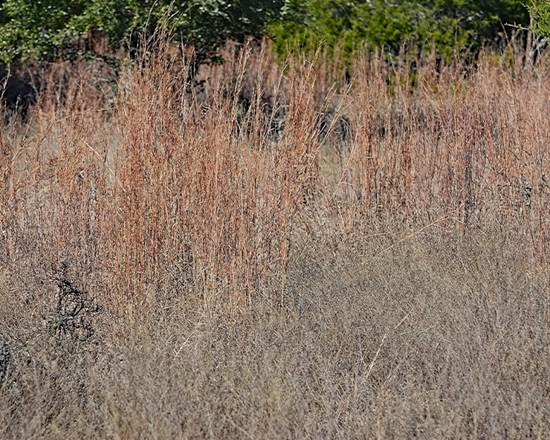
- Little Bluestem (Schizachyrium scoparium) – Colorful grass that forms dense mounds of stems up to two feet tall.
Using the above methods, you can help control infestations and stop Johnsongrass from becoming established in new areas.
Awareness is Key to Halting the Destruction
Even though you may not live on a ranch or ranchette, the scourge of Johnsongrass impacts everyone in North Texas. By displacing our native plants on prairies it disrupts our ecosystems and reduces our biodiversity. If Johnsongrass is a problem on your acreage, while tackling the problem on your own is undoubtedly an option, due to the seriousness and difficulty in controlling, you should consider contacting a qualified professional for advice and assistance. Awareness of the destructive capabilities of Johnsongrass is vital in controlling and reducing its impact on our native prairies.
