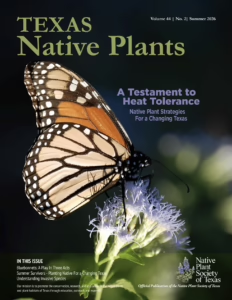
Shepherding Texas’ Pollinators
Members of the Society are constantly surprising us with their dedication to improving the health of our great state. Whether it’s performing cleanups of public lands or working with HOAs to incorporate native plants—both of which we featured in the last issue—or raising awareness of the importance of native species, our dedicated members are fully committed.
Pines and Prairies Chapter member Elizabeth White Olsen has just released a book designed to help the public attract pollinators to their property through native planting, and it has received a ringing endorsement from Professor Douglas Tallamy, no less.
Bringing Butterflies Home – Gardening With Native Plants to Heal Our Yards and Ourselves can be found on Amazon and is a testament to the efforts of Society members in raising awareness of the importance of our native flora and fauna.
-Elizabeth White Olsen, Pines and Prairies Chapter
Bringing Life to Community Spaces
My passion for gardening is rooted in the belief that we have a responsibility to nurture the land that sustains us. I got to express my love of the land recently through a community service project I took part in, where I had the opportunity to design five distinct gardens showcasing Texas native plants for St. Andrew’s Episcopal Church in Farmers Branch.
My primary goal was to prove that sustainability and aesthetic beauty are not mutually exclusive. I selected a palette of native plants that would thrive in our intense heat while supporting local pollinators. One of the most rewarding aspects of the project was the collaborative

design process—some introduced species were included to accommodate personal preferences, since I wanted to show that environmental stewardship and personal tradition can bloom side-by-side.
I integrated some of the church members’ favorite non-native plant selections such as chrysanthemums,
roses, hostas and agapanthus in shadier areas of the garden beds. In the sunnier area we installed Texas native species such as Mexican Plum (Prunus mexicana), Texas Mountain Laurel (Dermatophyllum secundiflorum), Gregg’s Mistflower (Conoclinium greggii), and Lanceleaf Coreopsis (Coreopsis lanceolata).

There is profound joy in knowing that these gardens will continue to grow and provide a sanctuary for both wildlife and people for years to come, and I hope this inspires visitors to transform their own outdoor spaces.
I want to thank Native Texas Nursery, Newton Nurseries and Joss Growers for their beautiful plant selections, and Alfredo Rico for assisting with this wonderful project.
-Guadalupe Bueno, Dallas Chapter
NLCP Service Providers
Finding a dependable landscaper can be a tricky proposition at the best of times. Finding one who has a comprehensive knowledge of native plants and the ability to create sustainable, water-wise landscapes is trickier still.
To make your search easier, we have created on our website a database of individuals and businesses who have successfully completed the Native Landscape Certification Program (NLCP) offered by the Society. Each has chosen to be listed as a certified provider committed to designing, installing, or maintaining landscapes that emphasize native Texas plants.
Browse the NLCP Service Providers directory
Annual Cemetery Grants
Through the Constellation of Living Memorials (CLM) program, historic cemeteries are being restored with native plants, transforming sacred spaces into thriving habitats that honor both cultural heritage and Texas’ natural landscapes. Originally launched in North Texas by the Friends of the Warren Ferris Cemetery,
CLM’s mission is to broaden this model statewide and nationally.
In partnership with the Society, this program provides:
Reimbursement restoration grants (up to $500)
Native plant guidance and eco-region alignment
Volunteer engagement support
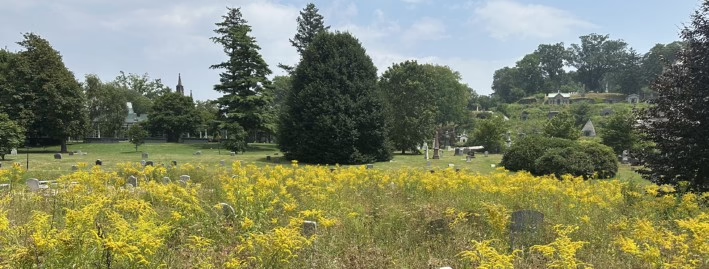
More information about the Annual Cemetery Grant Program is available here.
Did you like this article? It’s from our Summer 2026 Texas Native Plants magazine. Read more here