Clear Lake Chapter

Native Pollinator Habitat Grant Program

Application Deadline: September 1 and March 1

The Clear Lake Chapter of the Native Plant Society of Texas awards grants to nature centers, schools, educational groups and others to help fund development and maintenance of pollinator habitats using native plants, shrubs or trees on public sites in Brazoria, Galveston or Harris Counties of Texas. Priority is given to projects located in Brazoria Co., Galveston Co., and the southeast quadrant of Harris Co.

The goals of this program are to:

  • Educate members of the Society and the public about pollinator conservation,
  • Build or restore pollinator habitats in order to support and increase pollinator populations and diversity,
  • Promote the research, conservation and utilization of native plants and plant habitats of Texas through education, outreach and example.

Education Committee

The Education Committee of the Clear Lake Chapter serves as the grant administration committee. The committee’s duties include evaluating grant applications and awarding grants. Evaluations will be based on each plan’s

  • Completeness – has every question been answered, including a garden design plan,
  • Feasibility – better to start smaller with future expansion planned,
  • Benefit to the community – which part of the community will benefit, and
  • How well the proposed project meets the program’s goals.


The Education Committee will oversee the project’s progress through periodic site visits and submitted status reports. A final project evaluation report is required. Awardees may be asked to prepare a presentation for the chapter.

Questions for the education committee can be sent at any time during the process to clear-lake-chapter@npsot.org.

Pollinator Habitat Qualities

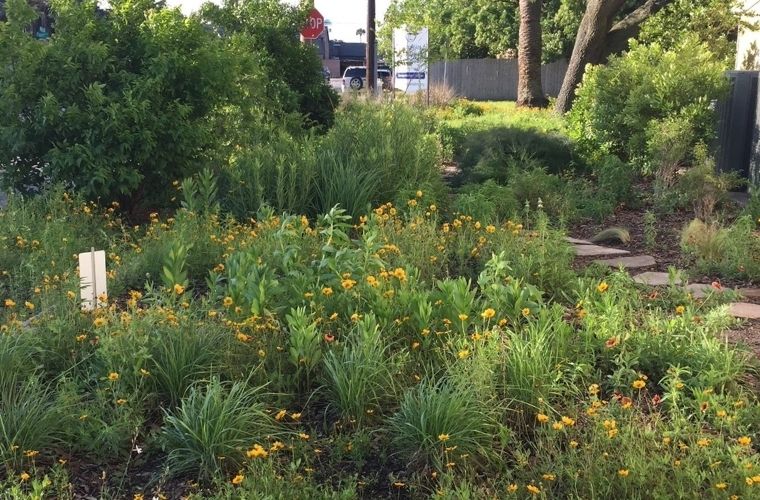
  • Use native plants, shrubs or trees that provide nectar and pollen sources and larval host plants
  • Provide a water source
  • Are located in a sunny area or partly sunny area
  • Create large pollinator targets with clusters of native or non-invasive plants
  • Establish continuous blooms throughout the growing season
  • Plan for at least two years maintenance
  • Provide signage describing the garden project


Note
: A habitat may also contain non-native nectar and pollen plants, but no invasive plants, and grant funds cannot be used to purchase non-native plants.

Amount and Source of Funds

Grants are funded by the Clear Lake Chapter. The total amount to be budgeted for this program varies from year to year. Individual grants of up to $500 may be awarded and the grantee is not required to match the amount of the grant awarded.

Approved Types of Expenditures

Funds must be used to purchase only native plants for our ecoregion or seeds for these plants. Applications will be accepted for new habitats or for improvement and maintenance of established pollinator habitats. Plants can be replaced, or native plants can be added.

Grant funds cannot be used for signage, hardscape features, barriers, soil, pesticides, amendments or any other non-plant items. Under no circumstance can NPSOT grant funds be used for Tropical Milkweed (Asclepias curassavica).

Apply for a Grant

Funded Sites

Resources

Recommended Books

Eierman, Kim. The Pollinator Victory Garden: Win the War on Pollinator Decline with Ecological Gardening: How to Attract and Support Bees, Beetles, Butterflies, Bats, and Other Pollinators. Beverly, MA: Quarry Books, 2020.

Lee-Mäder Eric. Attracting Native Pollinators: Protecting North America’s Bees and Butterflies: the Xerces Society Guide. North Adams, MA: Storey Pub., 2011.

Tallamy, Douglas W. Bringing Nature Home: How You Can Sustain Wildlife with Native Plants. Portland, OR: Timber Press, 2016.

Related Posts

About the Region

2026 Fall Symposium Logo

This low-elevations region of Texas extends inland from the barrier islands, about 60 or so miles, and stretches from Brownsville to Louisiana. In total, it covers about 9.5 million acres, with a high point of 150 feet in elevation. More than 1000 species of plants can be found in this region. On the southern end, species more common in Mexico (such as Sabal mexicana) and Central America occur.

The barrier islands provide us with dune systems, and clay flats to the inland side, which have species found in these areas alone. Many plants here, such as Ipomoea pes-caprae (beach morning glory), can be found throughout tropical regions of the globe. I’ve encountered the same species on the beaches of Guam.

Once inland, vast marshes and wet prairies occur. Occasionally, oak (Quercus fusiformis) groves can be found. Common grasses include species of Bothriochloa, Paspalum, and Sporobolus; eastern gamagrass (Tripsacum dactyloides); and switchgrass (Panicum species). Many rivers and creeks cut through the Gulf Prairies, and along these riparian areas various species of trees, Sabal minor, and other plants adapted to clay soils can be found. Due to overgrazing, farming, and fire suppression, woody species such as mesquite (Prosopis glandulosa) and huisache (Acacia farnesiana), and invasive species such as chinaberry (Melia azedarach), Brazilian pepper (Schinus terebinthifolius), and Chinese tallow (Sapium sebiferum) have increased and displaced our native flora.

Source: Wildflowers of Texas by Michael Eason