NICE! Plant of the Month
(Erythrina herbacea)
Family: Papilionaceae
Other Common Names: Cherokee Bean, Red-cardinal, Cardinal Spear.
Type: Large shrub.
Natural Habitat: Native to sandy woods along the coast of Texas. Adapted as far north as Dallas.
Growth: In the Hill Country, most likely 4′-5′ in height. [Hybrids are available in the nursery trade and may grow much taller.] Can grow to 6′ x 4′ in more favorable conditions. May freeze to woody base but will re-grow in warm season
Deer Resistance: Not known.
Wildlife: Attracts hummingbirds, bees and butterflies.
Light Tolerance: Part shade, full sun.
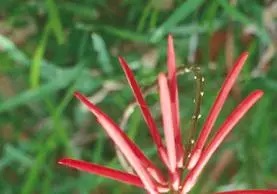
Flowers: Bright red waxy, showy flowers on 8-12 inch spikes.
Bloom Period: May to June.
Fruit: Legumes – bright red berries that remain on plant and add to beauty.
Leaves: Glossy, deltoid or heart shaped with a pointed tip on thorny stems.
Water Requirements: Drought tolerant. Water requirements are low but not arid.
Soil Requirements: Sandy to calcareous black clay, well draining soils.
Planting Instructions: Dig a hole at least two times wider than, but the same depth as the root ball in the nursery container. Sides of the hole should be irregular, not smooth. Remove plant from container, taking care to support the root ball. Loosen exterior roots gently with your fingers. If the plant is root-bound and cannot be loosened by hand, the outer roots may be cut in several places. Lift the plant by the root ball and place into the hole. Backfill hole, using soil that was dug out.. Do not add any soil to the top of the root ball. Gently firm the soil with your hands, but do not tamp it down. Place 3-4 inches of mulch over the bare soil around, but not touching the base of the plant.
Watering Instructions: Water deeply after planting to settle soil around roots. Then every 7-10 days, as needed, during the first growing season. Before watering, check for soil moisture at a depth of an inch or two at the edge of the root ball. Skip a watering after a rainfall of ½ to 1 inch. Maintain this watering schedule until the first fall. Reduce watering during the cool fall and winter months. In a “normal” year, no watering may be necessary during the fall and winter, but during a dry period, monthly watering may be needed. Second Spring and thereafter: Water monthly only during periods of drought. Once established, natives will survive with little supplemental irrigation.
NICE! Tip: Great for hot sunny sites. Plant as a focal specimen in the landscape or as a background plant. Very tropical looking – plant instead of non-native hibiscus.
Look for the NICE! Plant of the Month signs and information sheets on your next visit to a participating Boerne nursery. And thank you for supporting native plants by using them in your landscapes.