

It is Time to Safeguard our Unique, Quirky Flora and Fauna
“Prairies are like people. Each one has similar characteristics, but each one is also unique as a snowflake. When we spend time on different prairies, we discover they all have their own quirks, Individuality, and charm.”
Cindy Crosby, “The Tallgrass Prairie: An Introduction”
Growing up as a kid, I never paid any attention to the “fields” across the street from our house in Arlington. I remember running through the fields with the tall yellow flowers, catching “horny toads” and grasshoppers. (Any tall, yellow flowering plant was a sunflower, at least in my eyes). It did not bother me much when the city bulldozed the sea of yellow flowers to create a park with a swimming pool. It just meant there would not be anymore snakes and bugs for the gray bird with a mask to snatch and pin to the barbs on the fence. I do remember the “horny toads” were harder to find, but at least the ground was flat, and did not have all those holes to trip on.
Texas Blackland Prairies
It would be a quarter of a century later before I would realize these fields, with cracks in the dry black dirt, which would swallow a small child, or when it was wet, the black gooey stuff would stick to my shoes, doubling my weight, were prairies. Texas Blackland Prairies to be exact. It would still take me another twenty years or so to realize how special these prairies are.
Before the 1800’s, the Texas Blackland Prairie, stretching from the Red River south to San Antonio, totaled about 13 million acres. By the 2000’s, we have a little more than 10,000 acres. Period! How did this happen? It happened because it is (was) some of the most fertile soils in the world. The steel plow has reduced the prairie to 0.01% of its original self.
What unique, quirky flora/fauna/microbes did we lose? According to the Native Prairies Association of Texas (NPAT), a square-foot of prairie can contain more than 45 species of plants. There are 43,560 square-feet in an acre. We had 13 million of these acres! What secrets did we lose? We do not know what questions to even ask because we do not know what we lost. All these “fields” may look the same, but like snowflakes, they are quite different, with secrets to uncover.
Parkhill Prairie Crayfish

A great example is our own Parkhill Prairie in northeast Collin County. In the late 1980’s, Ken Steigman was doing research on a species of snake at Parkhill. He and his team kept noticing crayfish burrows in the prairie, on a hill not near water. This is quirky. Refocusing his research on these crayfish, he and his team discovered a new species of crayfish. The Parkhill Prairie Crayfish (Procambarus steigmani) is endemic to the North Texas Blackland Prairies. If these 400 acres at Parkhill been plowed, we may have never known about this crayfish. What don’t we know about the other 12.95 million acres which were lost?
Every little parcel of native prairie is worth protecting and preserving – no matter if it is a pocket prairie to the largest parcel left. Which brings me to my point. The largest tract of Blackland Tallgrass Prairie, the Smiley-Woodfin Prairie (2,100 acres) in Lamar County is endanger of being lost forever.
Silveus’ Dropseed Prairie
This endangered Silveus’ Dropseed Prairie has been leased to an energy
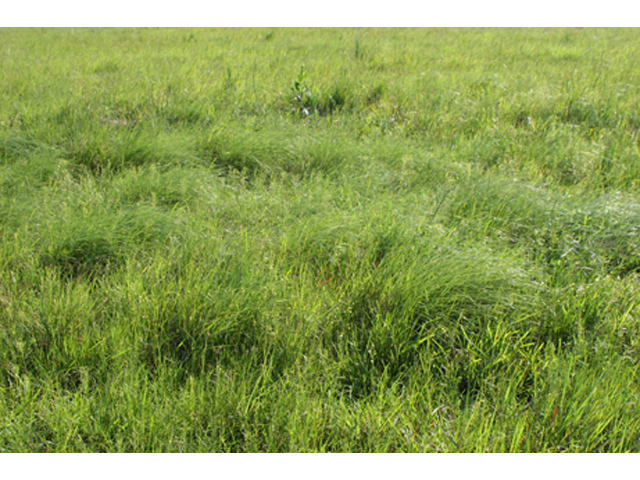
company with plans of installing a solar farm on the prairie. Really? Of all the hundreds of thousands of acres of wasted farmland in North Texas, did they have to choose these 2,000 acres of biological relevance?
I do not know if there is time to save this prairie; a petition has been started by Nick Kowalske at www.change.org. I encourage you and everyone you know to sign this petition. (One just needs to sign the petition – you can donate to support change.com but money does not go towards saving the prairie). Maybe signing the petition will help save some or all of the Smiley-Woodfin Prairie, will shall see.
But the bigger picture is we must be passionate of the natural areas we love.
More Vigilant and Proactive
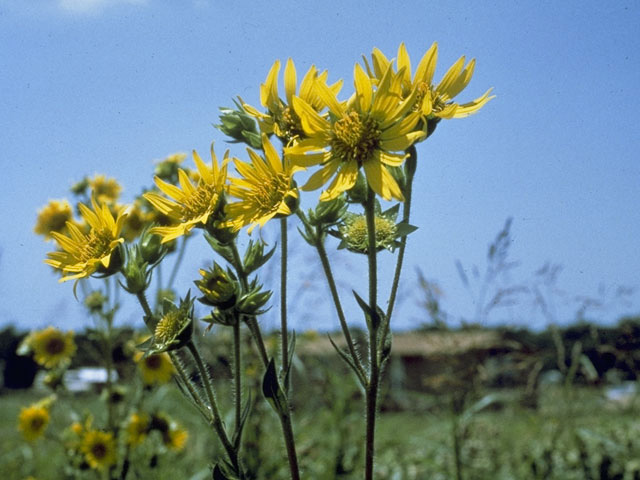
We need to be vigilant and proactive in safeguarding our native prairie before the final 10,000 acres succumbs to “progress”. And this is not just for our pleasure. We need to protect these sacred, unique habitats for our children, grandchildren, great-grandchildren and beyond. Because we do not want to see the day when there will be no one to ask the question, “What is a Loggerhead Shrike or a Horned Lizard?” Or a Compass Plant? Or a Prairie Crayfish? Or Silveus’ Dropseed? Or simply, “What is a prairie?”
I leave you with this passage from “A Sand County Almanac” by Aldo Leopold:
“What a thousand acres of Silphiums looked like when they tickled the bellies of the buffalo is a question never to be answered, and perhaps not even asked.”
We still have time to get some answers. Think about it.
