Houston Chapter

2025 Wildscapes Workshop

Discover the magic of native habitats as night falls...

Our beloved one-day event returns with a fresh theme, exploring the fascinating intersection of native plants and nocturnal life—from pollinators on the move to creatures of the canopy.
Join us for a day of engaging speakers, community connections, and a lush array of native plants ready to bring biodiversity to your backyard.
Save the date—and keep an eye out! We’ll be sharing speaker highlights, sneak peeks, and updates here as the stars align.
 

Where?
Northside Columbus Club Hall
607 E. Whitney Street
Houston, Texas, 77022


Want to know more?

Uncategorized

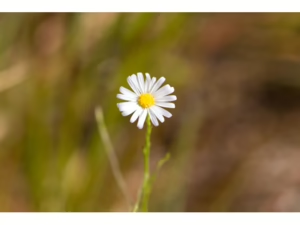
Plant Sale Preview – Take Home the Wild!

Don’t leave Wildscapes empty-handed! Our curated plant sale features a variety of native species perfect for Houston gardens. Quantities are limited, and the best selections go fast — so come early, ask questions, and bring home a piece of the wild.
Read More »
Uncategorized

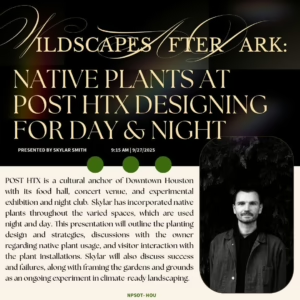
Wildscapes Workshop Speakers

Preview the speakers presenting at our event! We have a great lineup featuring landscape design, toad conservation, bat at work, and lighting the night right.
Read More »
Uncategorized

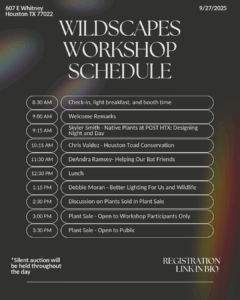
Wildscapes Workshop Lineup

Check out the lineup of activities for the day and get yourself registered. We will be selling yard signs, NPSOT merch, books, and of course native plants! There will be a silent auction and raffle throughout the day, and exhibitors on hand to include native landscape design firms and other like-minded non-profit organizations.

Read More »
Uncategorized

Sponsor Wildscapes Workshop

Your sponsorship will help fuel our mission to restore native ecosystems through education, outreach, and example. In addition to this annual workshop, we host monthly speaker events, offer wildscaping grants, and sponsor invasive species removal efforts throughout the Houston area.
Read More »

About the Region

Fall Symposium 2025 Logo - Teach for the Future

Salado, the location of our Fall 2025 Symposium, lies at the intersection of two ecoregions: the Edwards Plateau (Limestone Cut Plain) and Blackland Prairie (Northern Blackland Prairie).

The Edwards Plateau area is also called the Hill Country; however, this general term covers a much larger area extending farther north. Spring-fed creeks are found throughout the region; deep limestone canyons, rivers, and lakes (reservoirs) are common. Ashe juniper is perhaps the most common woody species found throughout the region. Additional woody species include various species of oak, with live oak (Quercus fusiformis) being the most common. Sycamores (Platanus occidentalis) and bald cypress (Taxodium distichum) border waterways. This area is well known for its spring wildflower displays, though they may be viewed in spring, late summer, and fall, as well. According to Texas Parks and Wildlife, average annual rainfall in the Edwards Plateau ranges from 15 to 34 inches.

The Blackland Prairie extends from the Red River south to San Antonio, bordered on the west by the Edwards Plateau and the Cross Timbers, and on the east by the Post Oak Savannah. Annual rainfall averages 30 to 40 inches, with higher averages to the east. This region is dominated by prairie species. The most common grass species include little bluestem (Schizachyrium scoparium) and Indian grass (Sorghastrum nutans) in the uplands and switchgrass (Panicum virgatum) in the riparian areas and drainages. Common herbaceous flowering plants include salvias, penstemons, and silphiums. This area has suffered greatly from overgrazing and agricultural use. Few intact areas remain, though many of the plants can be found along county roadsides throughout the region.

Our fall Symposium host chapter, the Tonkawa Chapter, includes both of these ecoregions.

Source: Wildflowers of Texas by Michael Eason