

February 2021 Meeting – Adam Black with “Chasing Elusive Blackland Prairie Plants for Ex-Situ Conservation”
**ARCHIVED POST ** Join us on Zoom for our February meeting on the 15th at 6:30 for social time, 7:00 for quick announcements, then our program. This month we’ll have horticulturalist, Adam Black with “Chasing Elusive Blackland Prairie Plants for Ex-Situ Conservation”. Register in order to get the meeting link via https://us02web.zoom.us/meeting/register/tZUkf-yupzMvHtYOejDKDUM4iB87ZzlbKPx6

Plant of the Month: Coralbean
February 2021 Plant of the Month
Botanical name: Erythrina herbacea
Common names: Coralbean, Cherokee Bean, Red Cardinal
Bexar Roots January 2021
**ARCHIVED POST ** from 2021-02-08 Click Here **ARCHIVED POST** **ARCHIVED POST LINKS & PICTURES MAY NOT WORK** **ARCHIVED POST AUTHOR: aawalt **
How We Are Restoring a Tall Grass Black Land Prairie
**ARCHIVED POST ** from 2021-02-07 7:00 pm – Meeting and program February 2021 How We Are Restoring a Tall Grass Black Land Prairie Presenter: Don Kirchoff of Kirchoff Family Farm, LLC Don Kirchoff, of Kirchoff Family Farm LLC Is our speaker for February. Don will describe how he is restoring

In Memory of Marie-Theres Herz
The Collin County Chapter of the Native Plant Society of Texas extends our condolences to Marie-Theres Herz’s family. Marie-Theres was active with the Dallas Chapter of the NPSOT and was an affiliate member of the Collin County Chapter.
Reflections on the importance and appreciation of native plants during my long career
A working career in a field you enjoy or perhaps love is a goal of most individuals in the work force. I must say that I truly had a job that I loved.
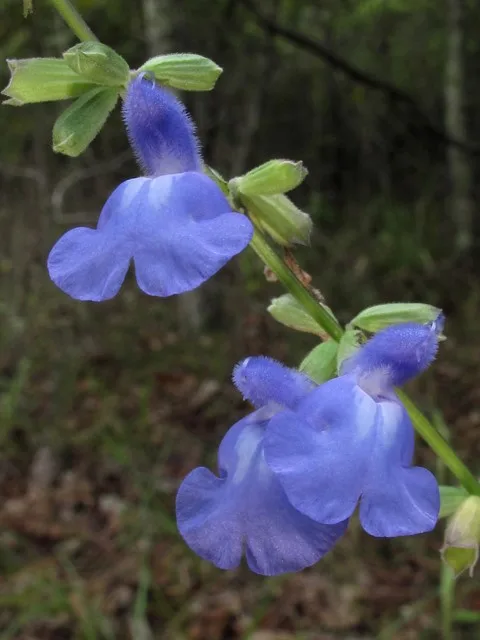
Azure Sage (Salvia azurea)
Fall-blooming perennial Description: Azure Sage, Salvia azurea, also called Sky Blue Sage, Blue Sage, and Pitcher Sage, is a prairie plant from the mint family, native to the grasslands of the Great Plains. In landscapes, it is equally at home in a cottage garden, a rock garden, meadow garden, or
January 2020 Newsletter
**ARCHIVED POST ** JANUARY 2020 NEWSLETTER What an amazing winter wonderland we just had! I’m choosing to use this event as my official start to 2021 with a more optimistic, hopeful image in my mind than the craziness that has surrounded us. What a wonderful Sunday to have snow fall
January 2021 Meeting – How does your garden grow?
**ARCHIVED POST ** Join us on Zoom for our January meeting on the 18th at 6:30 for social time, 7:00 for quick announcements, then program. This month the floor will be open to discuss your gardening efforts in the last year. Register in order to get the meeting link via https://us02web.zoom.us/…/tZIkd…
Remembering Marie-Theres Herz
At the 2019 fall symposium she was honored for collecting and preserving Texas native plants for public education by providing an outstanding contribution of herbarium vouchers.
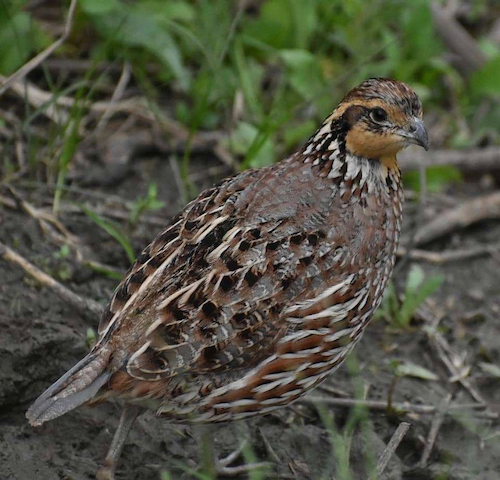
Quail Habitat Restoration
Our friends at the Prairie and Timbers Audubon Society have an upcoming meeting that intersects with native plants. The January 26 virtual meeting is on local Quail habitat restoration projects. For more information on joining, please visit their website.

Plant of the Month: Texas Bluebells
January 2021 Plant of the Month
Botanical name: Eustoma exaltatum
Common names: Texas Bluebells, Prairie Gentian, Showy Prairie Gentian
