NICE! fall color — the understory factor
Author: Bill Ward In the recent newsletter of the Boerne Chapter of the Native Plant Society of Texas, Jack Morgan wrote a good piece on how lucky we are to live in bigtooth maple country. He is so right! This fall especially, the bigtooth maples are living up to their
Remembering Kate Hillhouse
Kate found a calling later in life when she began teaching others what she’d taught herself about botany. She created a workshop to instruct gardeners across Texas on how to use dichotomous keys for plant identification
Mistletoe is long associated with Yule
Delve into all the research and you’ll find at least a dozen reasons why mistletoe is associated with the Yule season.
Lacey oak
**ARCHIVED POST ** A happy surprise for me several years ago when I began paying more attention to the trees of the Hill Country was “discovering” the Lacey oak (Quercus laceyi). I especially was struck by the graygreen foliage, which in some lights has a bluish cast. In fact, many
November-December 2008
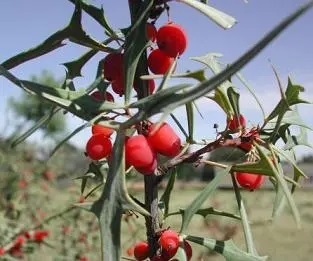
NICE! Plant of the Month (Berberis trifoliolata) Family: Barberry Other Common Names: Algerita, Wild Currant, Paisano Bush Type: Evergreen perennial shrub Natural Habitat: Rocky limestone soil from coastal south Texas north to central, north and west Texas, also southern Arizona, New Mexico, and Mexico. Growth: 3-6 feet. Deer Resistance: High.
Awards presented in Jasper
The Society rewarded achievements in the field of native plants at the Awards Banquet in Jasper during its 2008 Fall Symposium
Mr. Texas Bluebonnet: the Carroll Abbott story
Wildflowers were the passion of Carroll Abbott’s life, but the printed word and the spoken word would be the vehicles he would use so effectively. He was equally persuasive with both.
Mealy sage provides a patch of blue
Mealy sage is a long-blooming, drought-tolerant, deer-resistant perennial, which provides a welcome patch of blue in the landscape.
The kinder, gentler yucca
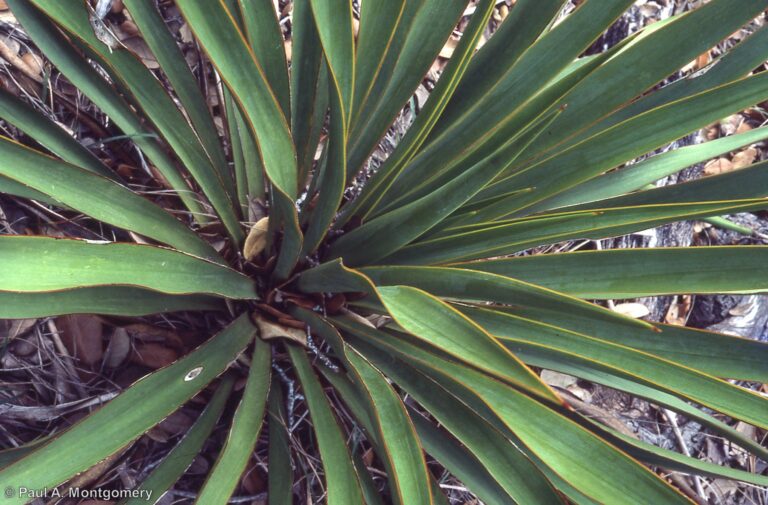
It is the flexible wavy leaves, some with a helical twist, that make twist-leaf yucca (Yucca rupicola) an attractive landscape plant.
Texas betony
**ARCHIVED POST ** Texas betony might be called Texas tough. In my yard it survives dry periods, poor soil, deer browsing, and general neglect. Its scarlet-red blooms look good among the bluebonnets in our front yard.
History of the Society
The Native Plant Society of Texas was started in the Fall of 1980 by Carroll Abbott, of Kerrville
Trip to the “Cielo” of Native-Plant Diversity
Author: Bill Ward “Cielo” usually means sky or heaven or paradise, sometimes roof or canopy. Every one of these translations probably could apply to some aspect of El Cielo Biosphere Reserve in the state of Tamaulipas, Mexico. I think probably “paradise” is the best meaning to use for this region,