

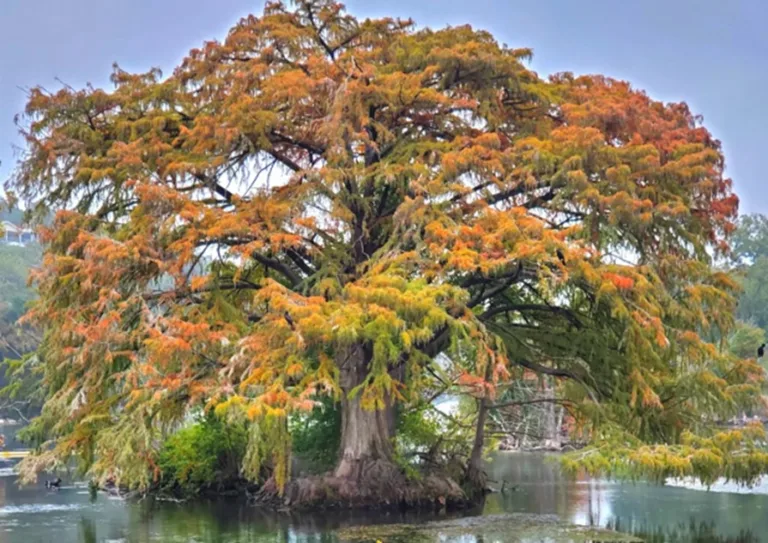
Annual awards announced for 2024
Every year the Native Plant Society of Texas recognizes organizations and individuals that advance our mission. These are the award winners for 2024.

Composting with Gary Johnstone
Gary Johnstone, a Master Gardener, explains the basics of composting.
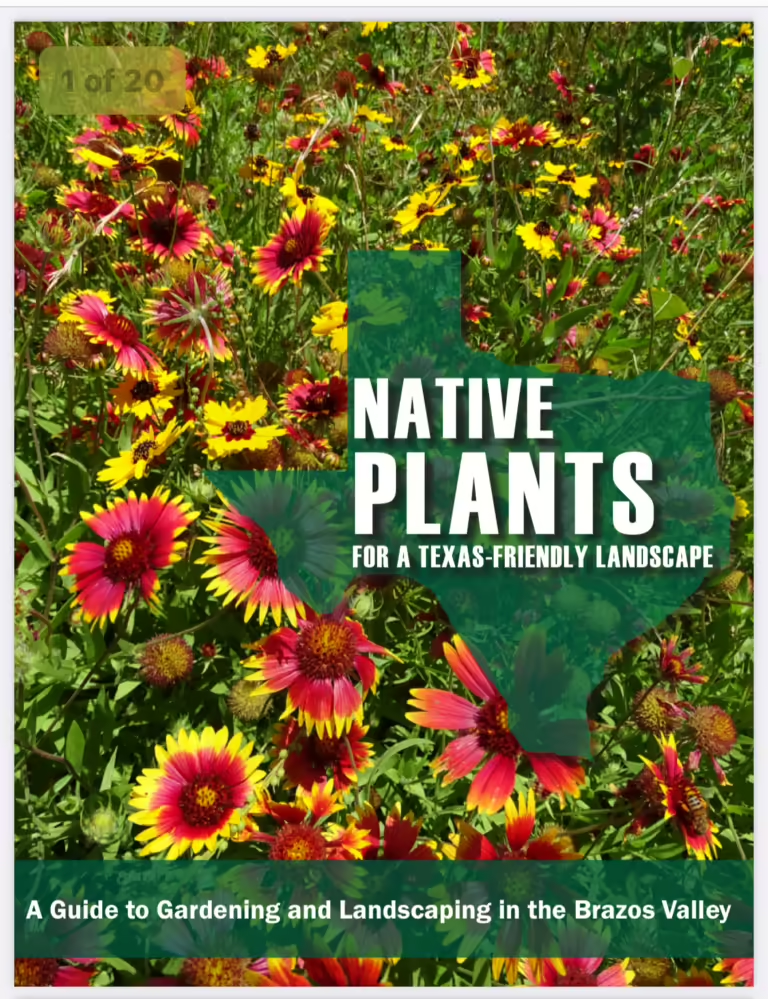
Native Plants for a Texas Friendly Landscape – A Guide to Gardening and Landscaping in the Brazos Valley – https://tinyurl.com/msr7a2kv
Native Plants-A Guide to Gardening and Landscaping in the Brazos Valley

Boerne Chapter Meeting, Tuesday, November 5
The meeting will start with a social time at 6:00pm, at Hunke Gathering Hall at Herff Farm, 33 Herff Road, Boerne. Announcements will begin at 6:45pm, followed by the presentation. For the social time, please bring any snacks/appetizers/desserts that you would like to share. Our presentation topic is Land Stewardship for
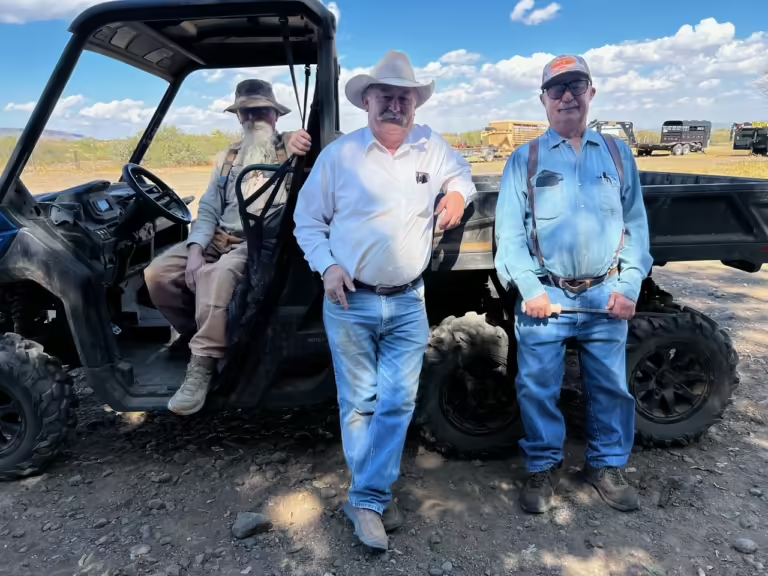
Notes on the Miller Ranch tour
Twenty-five NPSOT Big Bend and other community members visited the Miller ranch west of Valentine on October 19. Albert, Walter, Bill and Jill Miller gave us a warm welcome at the ranch headquarters, where we were also met by a number of good-natured ranch dogs. It was a beautiful day
Bird City College Station- check out efforts to protect birds and their habitats
In 2023, the Parks and Recreation Department, in partnership with the Conservation Advisory Group, launched the Bird City initiative. College Station is working towards becoming an official designation as a Bird City by Texas Parks and Wildlife and Texas Audubon. Community science birding, bird-friendly education programs, and College Station’s Lights
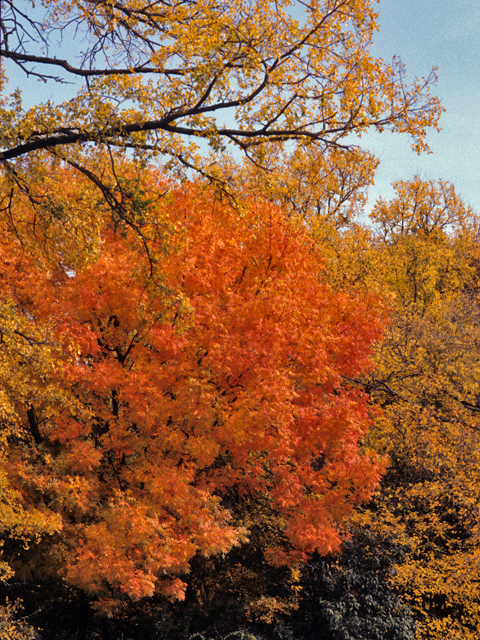
Texas Arbor Day – November 1
Plant a North Texas Native Tree “We make an immense mistake when we think of trees as solely an aesthetic member of a community. They cut pollution, they cool the air, they prevent erosion, they muffle sound, they produce oxygen. Then, after all that, they look good.” Dr. Richard Leakey

10 More Reasons Why Bois d’Arc is the Most Interesting North Texas Native Species
From Thomas Jefferson to Martha Stewart, Bois d’Arc (Maclura pomifera) trees have had many fans over the years. These enthusiasts are usually intrigued by its unusual fruit, durable yellow wood, and eye-of-the-beholder beauty. But some people are not sure what to make of them.
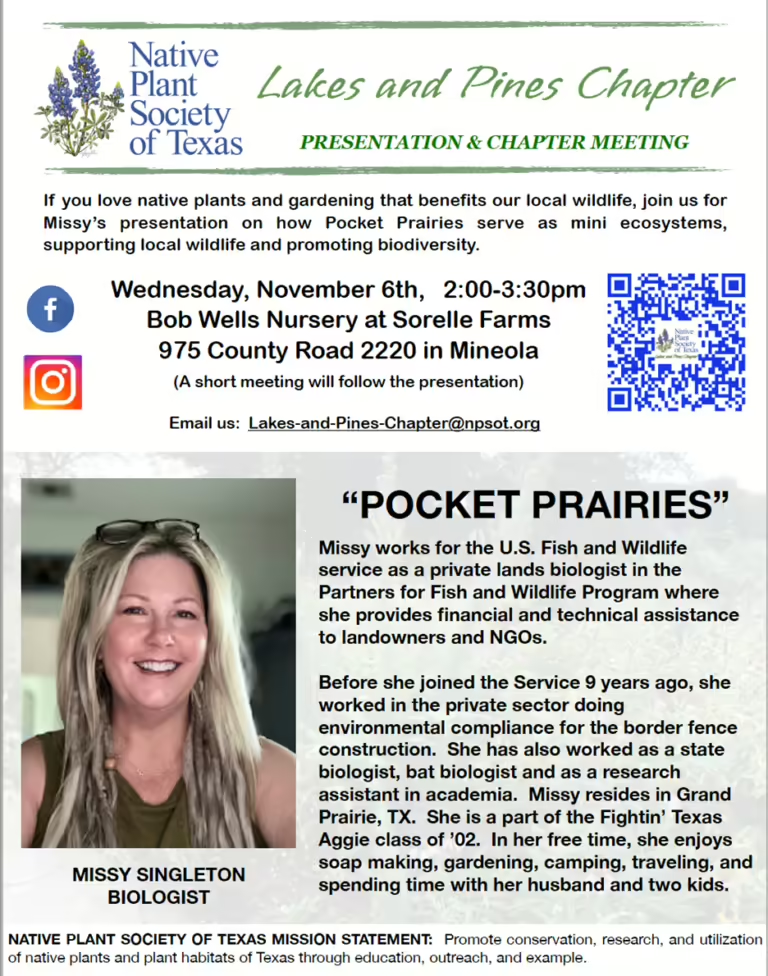
November 6: Lakes & Pines Chapter Meeting – “Pocket Prairies” with Missy Singleton
If you love native plants and gardening that benefits our local wildlife, join us for Missy’s presentation on how Pocket Prairies serve as mini ecosystems supporting local wildlife and promoting biodiversity.
It’s a Great Time to Become a NPSOT Member
As we near the end of 2024, it is the perfect time to join The Native Plant Society of Texas (NPSOT). With 4 levels of memberships to choose from – Individual, Family, Senior/Student/Limited Income, and Supporter – there is an option for everyone. Members receive the quarterly Texas Native Plants
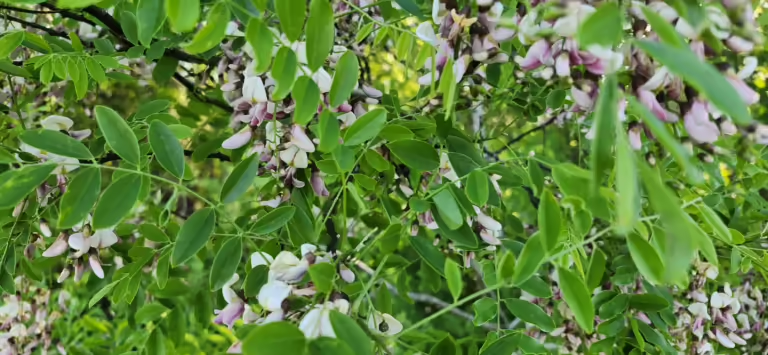
Nature’s Jewelry: The Beauty of Eve’s Necklace
Eve’s Necklace (Styphnolobium affine) is an under-the-radar but eye-catching native tree that thrives in North Texas. Its graceful branches, pink and white flowers, and striking black seed pods offer beauty and ecological value to any landscape. As Texas Arbor Day approaches, it is a perfect time to consider adding this
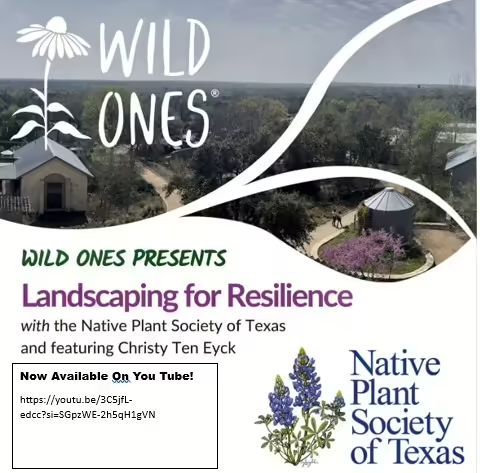
NOW AVAILABLE ON YOU TUBE! Landscaping for Resilience with Christy Ten Eyck & The Native Plant Society of Texas
NOW AVAILABLE ON YOU TUBE! Landscaping for Resilience with Christy Ten Eyck & The Native Plant Society of Texas
