News and Events

News and announcements from our committee chairs, board members, and chapter leaders. Subscribe to our mailing list to stay up to date. For chapter news, visit Chapters. If you are looking for a calendar of events, see our Events Calendar.

  • Chapter or Committee

Native Plant Society of Texas Fall Symposium 2024 Logo, designed by Nate Krytal
State

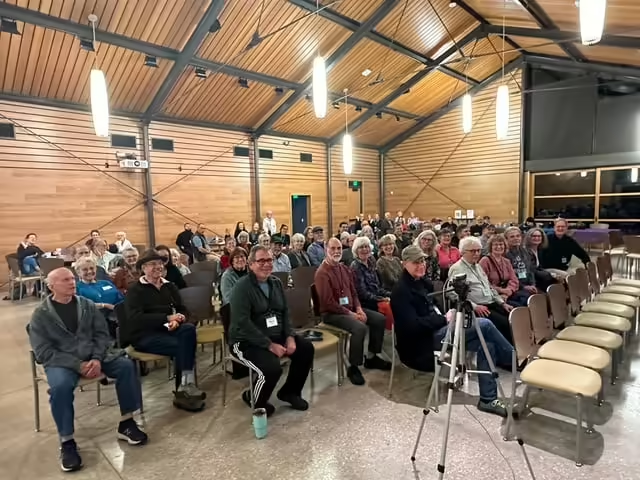
NPSOT 2024 Fall Symposium – New Braunfels – October 10-12, 2024

Our annual gathering with three days of field trips, presentations, camaraderie and more. Over 20 presentations will explore the challenges created by urban growth and what we all can do to reverse this trend. Learn more: 2024 Symposium In-Person or Virtual Attendance: Registration Symposium events include:• “Meet and Greet” Reception

Read More »
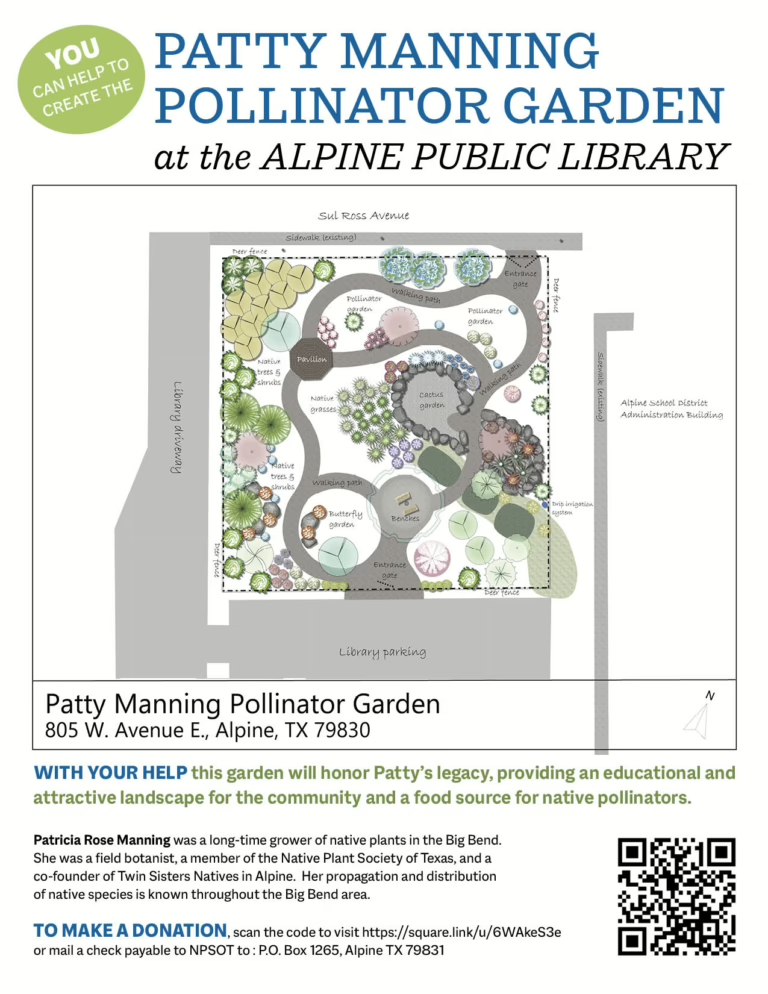
Flyer for the Patricia Rose Manning Undergraduate Scholarship Award – Scholarship provided by NPSOT Big Bend Chapter
Big Bend

Big Bend Chapter Scholarship Announcement

The Big Bend Chapter of the Native Plant Society of Texas is pleased to announce the first annual Patricia Rose Manning undergraduate scholarship awards. Patty Manning is a long-time grower of native plants in the Big Bend, a field botanist, a NPSOT member and a co-founder of Twin Sisters Nursery.

Read More »
Bastrop

August 2024 Plant of the Month

This month, we are celebrating the vibrant Turk’s Cap (Malvaviscus arboreus), a stunning native plant that you are surely going to want to add to your garden. It blooms from June through November, has bright red hibiscus-like flowers that never fully open, is loved by hummingbirds and butterflies, it thrives

Read More »
The Monarch Butterfly Migration; Its Rise and Fall
San Antonio

The Monarch Butterfly Migration; Its Rise and Fall

September 2024 Presentation by Monica Maeckle. The Monarch Butterfly Migration; Its Rise and Fall. The Monarch Butterfly Migration Its Rise and Fall – a newly published book by Chapter Member, Monika Maeckle.  In this informative and interesting book, we learn about the natural history of the monarch butterfly migration from

Read More »
State

Accepting Grant Applications: Sept 1 – Oct 15 2024

The Native Plant Society of Texas offers the following research grant to graduate students at Texas universities who are performing academic research related to Texas native plants and/or to the conservation and restoration of native plant habitats of Texas: Ann Miller Gonzalez Graduate Research Grant This research grant is named in

Read More »
State

Summer 2024 Member Magazine

Tips for Working with Your HOA | Lawn-Free Living – The Art of Natural Landscaping | Creating Sanctuary In A Serene Woodland Retreat | From Urban Lawn To Natural Habitat | From Ashes And Flames, A Wildlife Haven Comes Alive | Your Favorite Flora Revealed | Musings On Starting Two Society Chapters | Rio Grande Valley Chapter to Manage Native Plant Center | Transforming Urban Spaces With Native Garden | The Hidden Perks of Native Plants in Cities | Transform Eyesores Into Micro Meadows With Native Plants

Read More »

Boerne Chapter Meeting, September 3, 6:00 pm – 8:15 pm

Chapter Meeting, September 3. The meeting will start with a social time at 6:00pm, at the Cibolo Nature Center Auditorium. Announcements will begin at 6:45pm, followed by the presentation. For the social time, please bring any snacks/appetizers/desserts that you would like to share. Our presentation topic is Coexistence – Native Plants, Reptiles,

Read More »
Fredericksburg

View: Land Stewardship for Birds

Nearly 50 years of data tells us that bird populations are declining at an alarming rate. Author Rufus Stephens, co-author of the book, Land Stewardship for Birds: A Guide for Central Texas, will speak about conserving and enhancing local habitats to produce the cover, food, and water needed for thriving bird populations.

Read More »

About the Region

Fall Symposium 2025 Logo - Teach for the Future

Salado, the location of our Fall 2025 Symposium, lies at the intersection of two ecoregions: the Edwards Plateau (Limestone Cut Plain) and Blackland Prairie (Northern Blackland Prairie).

The Edwards Plateau area is also called the Hill Country; however, this general term covers a much larger area extending farther north. Spring-fed creeks are found throughout the region; deep limestone canyons, rivers, and lakes (reservoirs) are common. Ashe juniper is perhaps the most common woody species found throughout the region. Additional woody species include various species of oak, with live oak (Quercus fusiformis) being the most common. Sycamores (Platanus occidentalis) and bald cypress (Taxodium distichum) border waterways. This area is well known for its spring wildflower displays, though they may be viewed in spring, late summer, and fall, as well. According to Texas Parks and Wildlife, average annual rainfall in the Edwards Plateau ranges from 15 to 34 inches.

The Blackland Prairie extends from the Red River south to San Antonio, bordered on the west by the Edwards Plateau and the Cross Timbers, and on the east by the Post Oak Savannah. Annual rainfall averages 30 to 40 inches, with higher averages to the east. This region is dominated by prairie species. The most common grass species include little bluestem (Schizachyrium scoparium) and Indian grass (Sorghastrum nutans) in the uplands and switchgrass (Panicum virgatum) in the riparian areas and drainages. Common herbaceous flowering plants include salvias, penstemons, and silphiums. This area has suffered greatly from overgrazing and agricultural use. Few intact areas remain, though many of the plants can be found along county roadsides throughout the region.

Our fall Symposium host chapter, the Tonkawa Chapter, includes both of these ecoregions.

Source: Wildflowers of Texas by Michael Eason