NICE! Plant of the Month
Prunus serotina var. eximia
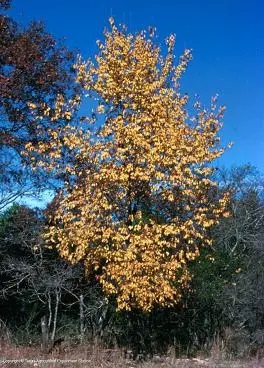
Family: Rosaceae (Rose family)
Other Common Names: Edwards Plateau Black Cherry
Type: Attractive, upright, relatively fast growing tree.
Natural Habitat: Sub-species specific to Edwards Plateau (eximia), usually found in moist sites near streambeds, in canyons or on slopes. Adaptable to many situations if it has very good drainage.
Growth: 35 to 55 ft with 35 ft crown spread
Deer Resistance: Browsed when young by deer; protect by caging.
Wildlife: Flowers attract hordes of insects including bees and butterflies. Fruits enjoyed by over 35 species of birds and many small mammals and is a host plant for the Red-spotted Purple, Eastern Tiger Swallowtail, Spring Azure, Viceroy, and Henry’s Elfin Butterflies; Columbia Silkmoth, Promethea moths, Small-eyed Sphinx Moth, Wild Cherry Sphinx Moth, Banded Tussock Moth, Spotted Apatelodes.
Light Tolerance: Full sun to slight shade
Flowers: Late winter-early spring as leaves appear, slightly fragrant, white, five petal flowers to ¼ in. each, arranged in graceful, elongated drooping racemes 4-6 inches long.
Fruit: Small pea sized drupe, fleshy to dry, dark red to black when ripe in late summer to early fall; edible if cooked to destroy the prussic acid, otherwise toxic. After the first frost fruit ferments and birds may become tipsy. Wilted leaves and twigs can be fatal to livestock, if consumed.
Leaves: 1-2 inches wide by 2-5 inches long, blunt serrated edges, dark shiny green on top, lighter underneath, alternate, simple, deciduous.
Water Requirements: Xeric once established; water during establishment period.
Soil Requirements: Sand, loam, clay, but limestone preferred; well-drained sites only.
Planting Instructions: Space plants 20 feet apart. Dig a hole at least two times wider than, but the same depth as the root ball in the nursery container. Sides of the hole should be irregular, not smooth. Remove plant from container, taking care to support the root ball. Loosen exterior roots gently with your fingers. If the plant is root-bound and cannot be loosened by hand, the outer roots may be cut in several places. Lift the plant by the root ball and place into the hole. Backfill hole, using soil that was dug out. Do not add any soil to the top of the root ball. Gently firm the soil with your hands, but do not tamp it down. Place 3-4 inches of mulch over the bare soil around, but not touching the base of the plant.
Watering Instructions: Water deeply after planting to settle soil around roots. Then every 7-10 days, as needed, during the first growing season. Before watering, check for soil moisture at a depth of an inch or two at the edge of the root ball. Skip a watering after a rainfall of ½ to 1 inch. Maintain this watering schedule until the first fall. Reduce watering during the cool fall and winter months. In a “normal” year, no watering may be necessary during the fall and winter, but during a dry period, monthly watering may be needed. Second Spring and thereafter: Water monthly only during periods of drought. Once established, natives will survive with little supplemental irrigation.
NICE! Tip: This is a much underused tree, which will add additional fall colors (clear yellow to reddish) to the landscape and provide hours of wildlife watching opportunities. Due to overgrazing by deer, it is disappearing from the wild. Avoid planting the eastern variety of this tree (Prunus serotina var. serotina), present in East Texas, or the Western varieties (Prunus serotina var. rufula or virens), from the Trans-Pecos, as they are not adapted to our Edwards Plateau conditions and do not usually perform well here.
Look for the NICE! Plant of the Month signs and information sheets on your next visit to a participating Boerne nursery. And thank you for supporting native plants by using them in your landscapes.