

Our Tuesday April 7th chapter meeting will be available to attend in person at the Heard Museum in McKinney or online via Zoom. The program will feature Julie Fineman of the Constellation of Living Memorials (CLM) presenting on “From Forgotten Ground to Living Memory: Reimagining Forgotten Cemeteries to Reconnect People with Natural and Cultural History“.
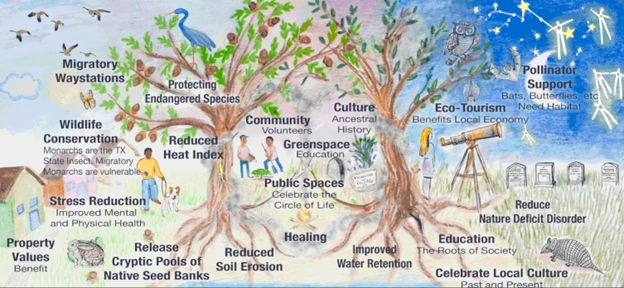
Presentation Summary
Across cities, historic cemeteries sit quietly overlooked. What if these spaces could be restored as native landscapes that reconnect communities to local ecology, cultural heritage, and collective memory? Reimagining cemeteries as living memorials transforms them from neglected land into vital civic spaces rooted in history and nature.
Note: See below for information on becoming a CLM partner and also the CLM Grant Agreement and Plan.
Attendance Options
Our meetings are free and open to the public. This is a hybrid meeting held at the Heard Museum in McKinney and virtually via Zoom.
Location (in-person): Laughlin Hall at the Heard Museum. Please enter through the south doors of the building.
Zoom Link: https://tinyurl.com/yn85nbzd –Passcode: 571904; Meeting ID: 885 5459 6572
Doors and Zoom Open: 6:30 PM (for setup and connection testing)
Meeting Begins: 7:00 PM, with a brief update from Chapter President Rodney Thomas, followed by the featured presentation.
We look forward to seeing you at our program!
About our Speaker
With over 33 years of work experience, Julie is a versatile and creative professional who combines her passion for photography, healthy living, and wildlife conservation. She is driven by a vision of creating a harmonious and respectful relationship between humans and nature and bringing awareness and education to the community about the value and beauty of native wildlife habits. Reimagining cemetery landscapes as wildlife habitats celebrates the cycle of life is now being realized through the Constellation of Living Memorials. She is also the President at Friends of the Warren Ferris Cemetery, where she leads the restoration of the Blackland Prairie ecosystem, one of the most endangered habitats in the world.

