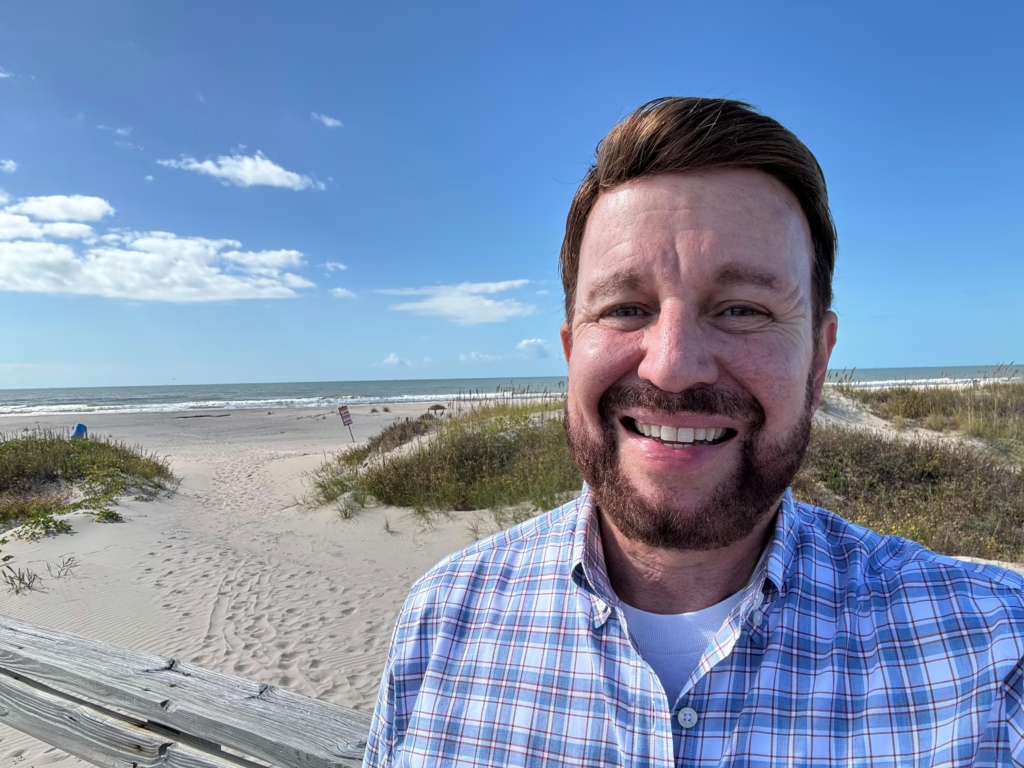

Bob Rose, the chief meteorologist for Lower Colorado River Authority (LCRA), is the speaker for the Highland Lakes Native Plant Society of Texas’ Chapter meeting on Saturday, 17 January 1:00-3:00 p.m. at the Marble Falls Library, 101 Main Street.
Bob is responsible for the daily forecast of weather conditions and temperature affecting LCRA’s power generation, electrical transmission, flood control and water supply operations. In addition to short term forecasts, he provides LCRA operation centers with long-term weather forecasts and updates on the threat of severe weather and extreme temperatures. Bob worked at TV stations in Austin and Bryan-College Station prior to coming to LCRA. He earned his B.S. in Meteorology from Texas A&M University.
Bob has served as past president of the Central Texas Chapter of the American Meteorological Society (AMS), and holds the seal of approval and the certified broadcast meteorologist award from the AMS. He is a regular contributor to the National Drought Monitor, and is also the Travis and Williamson County coordinator for CoCoRaHS, a volunteer network of rainfall observers. His daily blog, Bob’s Blog on Central Texas Weather, can be found at lcra.org. Bob gives numerous talks about the weather to various civic and school groups around Central Texas. He enjoys traveling and has been on 17 different cruises to various parts of the world.
Bob’s presentation, “Spring and Early Summer Weather,” will provide insight into how the weather outlook affects our planting and maintenance of native plants. His presentation will address:
§ Drier than normal weather conditions look to continue into early spring. A change to a wetter pattern expected mid and late spring.
§ Warmer than normal temperatures are expected to start early and continue through spring
§ Odds are increasing for the development of an El Nino this summer
Chapter business occurs during the first 30 minutes of the meeting, followed by Bob’s presentation.
Upcoming Highland Lakes-NPSOT Chapter Meetings:
21 March: Mena Rueffer, Highland Lakes Master Gardener, will share tips and techniques for the propagation of native Texas plants.
16 May: Jacey Stewart, Lower Colorado River Authority, Water Conservation Coordinator II, will present “Water Conservations Practices and Programs”
19 September: Travis Rhames, Drainage Operations Manager, Marble Falls Parks and Recreation Department, will discuss the importance of using native Texas plants in the built environment.