NICE! Plant of the Month
(Agave americana)
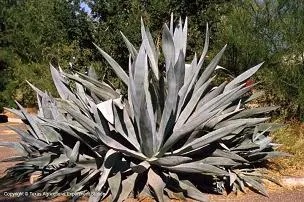
Family: Amaryllis
Other Common Names: Maguey, Flowering Aloe, Spiked Aloe, American Aloe
Type: Rosette-forming succulent similar in size to a medium shrub.
Natural Habitat: Native to Starr County in South Texas and three counties in the Trans Pecos (Atlas of the Vascular Plants of Texas Volume 1). It grows in dry, gravelly soils in South Texas, but is naturalized and grown farther north and west.
Growth: The largest and most majestic of the native Texas agaves often growing as tall as 6 feet with a flowering stalk that reaches 15 feet tall. Takes 8-20 years to flower (the “century” is an exaggeration).
Deer Resistance: Moderate.
Wildlife: Attracts hummingbirds and many other birds.
Light Tolerance: Full sun but can tolerate light shade.
Flowers and Seeds: Showy yellow flowers on a magnificent thick bloom stalk- 15 feet tall; flowers only once leaving behind small offsets or “pups” which can be removed and grown independently. Blooms June-July.
Leaves: Evergreen with 2-5 feet long leaves that are grayish-green to blue-green, with spines at the tips and on the margins; rosette-forming and suckering.
Water Requirements: Very drought tolerant once established; little to no watering is required.
Soil Requirements: Well-drained, sands, loams and clays.
Planting Instructions: Space plants 5 feet apart. Dig hole at least two times wider than, but the same depth as the root ball in a nursery container. Sides of the hole should be irregular, not smooth. Remove plant from container, taking care to support the root ball. Loosen exterior roots gently with your fingers. If the plant is root bound and cannot be loosened by hand, the outer roots may be cut in several places. Lift the plant by the root ball and place in the hole. Backfill hole, using soil that was dug out. Do not add any soil to the top of the root ball but a thin layer of compost may be spread over the root ball and soil surface. Gently firm the soil with your hands, but do not tamp it down. Place 3-4 inches of mulch over the bare soil around, but not touching the plant base.
Watering Instructions: After it is established, it is very xeric. Supplemental water in dry summer months will make it grow faster, but care must be taken not to overwater, especially in clay soils, because too much moisture will cause the roots to rot.
NICE! Tip: This is a great accent plant in desert and rock gardens. Choose location with caution because leaves have long sharp spines. Agaves combine well with other xeric plants: Coral bean, Red yucca, Lantana, Prickly pear and Sotol. Dried seed stalks are impressive in arrangements. Indians roasted the flowering shoots, leaf-bases and pods for food. Agave nectar is now being marketed as a natural sugar substitute.
Look for the NICE! Plant of the Month signs and information sheets on your next visit to a participating Boerne nursery. And thank you for supporting native plants by using them in your landscapes.