

Spring 2022 – NICE Plant of the Season
Written by Dr. Becca Dickstein
Description:

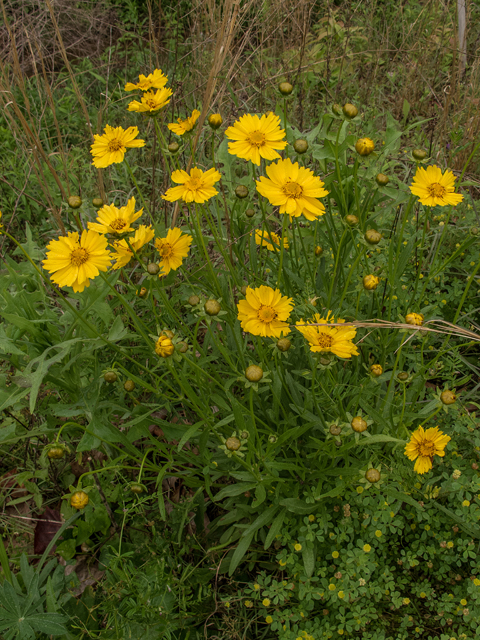
Lanceleaf Coreopsis, Coreopsis lanceolate, takes both its common and Latin names from its lance-like leaves. Its opposite 3-4 inch leaves are deeply cut, appearing almost like separate leaflets. It grows to about 1 ft tall, with the flowers reaching to 2.5 ft tall in full bloom. Lanceleaf Coreopsis has branching stems that can form substantial colonies, a beautiful sight in spring. In nature, this native plant is broadly distributed in prairies, meadows and woodlands throughout the US.
Flowers and Seeds:
Lanceleaf Coreopsis blooms in April through June each year with cheery, fragrant, yellow, 1-1.5 inch daisy-like flowers. These are followed by small nutlets containing seeds that easily self-sow.
Planting sites:
Lanceleaf Coreopsis thrives in full sun to part shade. It is tolerant of most soil types as long as they are well-drained.
Watering Instructions:
Water Lanceleaf Coreopsis when planting it or its seed. Once established, it is drought tolerant.
Comments:
Lanceleaf Coreopsis is a short-lived perennial that is easy to grow as long as it is not overwatered. It can be propagated by cuttings or by seed. Its cheerful golden flowers have a long bloom-time and serve as a nectar source for butterflies and bees. Deadheading the spent blooms will prolong the flowering period. Lanceleaf Coreopsis has a place in cutting gardens, cottage gardens and borders.
Consider planting Lanceleaf Coreopsis instead of non-native Petunia, Begonia, or Snapdragons. Companion species include Zexmenia (Wedelia texana), Mealy Blue Sage (Salvia farinacea), milkweeds like Antelope Horn (Asclepias asperula), Gayfeather (Liatris mucronata), Bluebonnets (Lupinus texensis) and Sundrops (Calylophus berlandieri). Lanceleaf Coreopsis survived the February 2021 winter freeze and it is deer resistant.
Many thanks to the Trinity Forks Chapter of the NPSOT for the NICE Plant of the Season descriptions. Look for the NICE Plant of the Season signs and information sheets on your next visit to a participating North Texas nursery. Thank you for using native plants in your landscapes. NICE = Natives Improve & Conserve Environments
