NICE! Plant of the Month
(Oenothera speciosa)
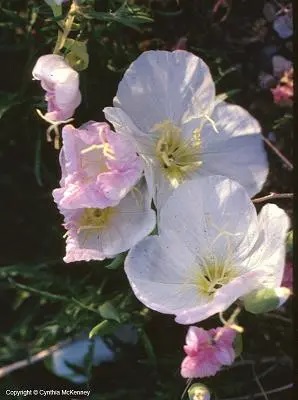
Family: Onagraceae
Other Common Names: Showy Primrose, Buttercups (yellow center).
Type: Perennial; upright to sprawling.
Natural Habitat: Native to hot and dry locations in Central and Southern region of North America. Prairies and open woodlands, roadsides, slopes, and ditches throughout Texas.
Growth: 12-24 in.
Deer Resistance: Leaves are eaten by white-tail deer and turkeys.
Wildlife: Attracts butterflies and birds.
Light Tolerance: Full sun to part shade.
Flowers: 2-in. delicate pink to white; 4 broad petals form shallow cup with yellow center.
Bloom Period: March-June; dormant in summer, blooms again after fall rains.
Fruit: Pubescent, clublike capsule.
Leaves: alternate, 2-3 in. long, toothed or wavy.
Water Requirements: low
Soil Requirements: Sand, loam, clay, caliche; prefers loose, fast-draining soil.
Planting Instructions: Space plants 9 to 12 inches apart. Dig a hole at least two times wider than, but the same depth as the root ball in the nursery container. Sides of the hole should be irregular, not smooth. Remove plant from container, taking care to support the root ball. Loosen exterior roots gently with your fingers. If the plant is root-bound and cannot be loosened by hand, the outer roots may be cut in several places. Lift the plant by the root ball and place into the hole. Backfill hole, using soil that was dug out. Do not add any soil to the top of the root ball. Gently firm the soil with your hands, but do not tamp it down. Place 3-4 inches of mulch over the bare soil around, but not touching the base of the plant.
Watering Instructions: Water deeply after planting to settle soil around roots. Then every 7-10 days, as needed, during the first growing season. Before watering, check for soil moisture at a depth of an inch or two at the edge of the root ball. Skip a watering after a rainfall of ½ to 1 inch. Maintain this watering schedule until the first fall. Reduce watering during the cool fall and winter months. In a “normal” year, no watering may be necessary during the fall and winter, but during a dry period, monthly watering may be needed. Second Spring and thereafter: Water monthly only during periods of drought. Once established, natives will survive with little supplemental irrigation.
NICE! Tip: Sally Wasowski recommends “Team it up with other ground covers such as Gregg dalea or masses of lantana – the primrose looks great while they are dormant and vice versa.” It is attractive in gardens with yuccas, mealy blue sage, prairie verbena and blackeye Susan. Evening primrose becomes dormant in the summer and may bloom again after fall rains. For well groomed flowerbeds, this native wildflower may be considered invasive because it spreads by underground roots and also by seed; sometimes appearing in odd places. If planting in lawns or areas where this is not a problem, this is a NICE! surprise! Mow after it’s through blooming.
Look for the NICE! Plant of the Month signs and information sheets on your next visit to a participating Boerne nursery. And thank you for supporting native plants by using them in your landscapes.