Collin County Chapter

May 5th Meeting: An Introduction to the NICE Program – Building Partnerships for Native Plants

Our Tuesday May 5th chapter meeting will be available to attend in person at the Heard Museum in McKinney or online via Zoom. The program will feature Amy Monroy, the NPSOT NICE Native Plants Partner Chair presenting on “An Introduction to the NICE Program – Building Partnerships for Native Plants”.
Presentation Summary

Learn about this NPSOT state-wide initiative to partner with nurseries to get more native plants to the public. What it is, how it works, how you can be involved. We’ll also go over some proposed changes and take input on those changes — or any you might suggest! This presentation is intended for high participant involvement.

Attendance Options

Our meetings are free and open to the public. This is a hybrid meeting held at the Heard Museum in McKinney and virtually via Zoom.

Location (in-person): Laughlin Hall at the Heard Museum. Please enter through the south doors of the building.

Zoom Link: https://tinyurl.com/yn85nbzd – Passcode: 571904; Meeting ID: 885 5459 6572

Doors and Zoom Open: 6:30 PM (for setup and connection testing)

Meeting Begins: 7:00 PM, with a brief update from Chapter President Rodney Thomas, followed by the featured presentation.

We look forward to seeing you at our program!

About our Speaker

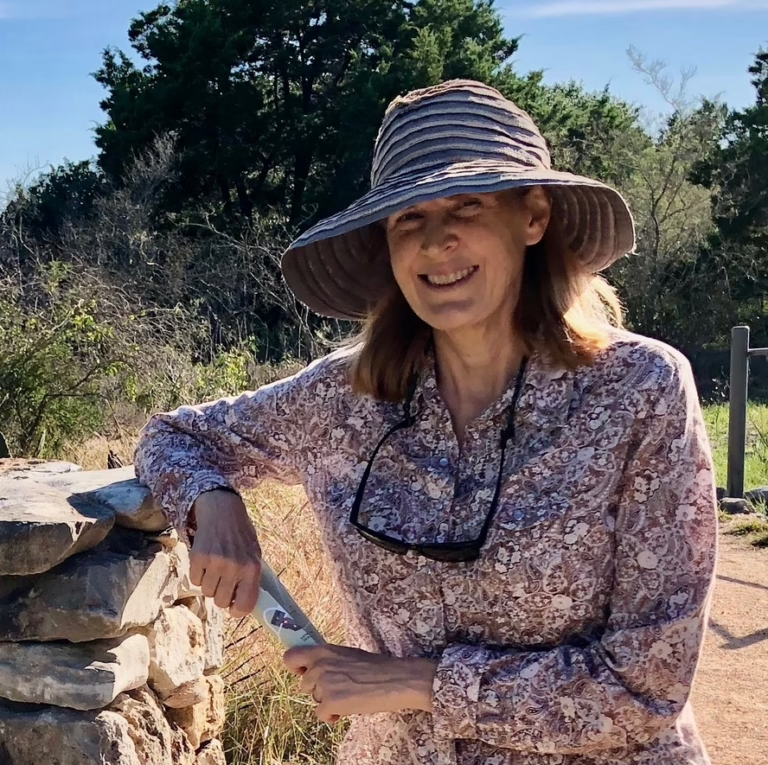
Amy has loved plants all of her life. A fifth (technically, sixth) – generation North Texan, preserving the landscape of her childhood and family heritage is her burning passion. She launched and crowdfunded the Windmill Garden at Dallas College – Brookhaven and managed the horticulture, education, promotions and administration of it for three years before taking the position of horticulturist for the Heard Natural Science Museum and Wildlife Sanctuary from 2019-2025. Currently, she provides design and consultation services for private and public gardens and conservation projects, and is working on several writing projects.

About the Region

Fall Symposium 2025 Logo - Teach for the Future

Salado, the location of our Fall 2025 Symposium, lies at the intersection of two ecoregions: the Edwards Plateau (Limestone Cut Plain) and Blackland Prairie (Northern Blackland Prairie).

The Edwards Plateau area is also called the Hill Country; however, this general term covers a much larger area extending farther north. Spring-fed creeks are found throughout the region; deep limestone canyons, rivers, and lakes (reservoirs) are common. Ashe juniper is perhaps the most common woody species found throughout the region. Additional woody species include various species of oak, with live oak (Quercus fusiformis) being the most common. Sycamores (Platanus occidentalis) and bald cypress (Taxodium distichum) border waterways. This area is well known for its spring wildflower displays, though they may be viewed in spring, late summer, and fall, as well. According to Texas Parks and Wildlife, average annual rainfall in the Edwards Plateau ranges from 15 to 34 inches.

The Blackland Prairie extends from the Red River south to San Antonio, bordered on the west by the Edwards Plateau and the Cross Timbers, and on the east by the Post Oak Savannah. Annual rainfall averages 30 to 40 inches, with higher averages to the east. This region is dominated by prairie species. The most common grass species include little bluestem (Schizachyrium scoparium) and Indian grass (Sorghastrum nutans) in the uplands and switchgrass (Panicum virgatum) in the riparian areas and drainages. Common herbaceous flowering plants include salvias, penstemons, and silphiums. This area has suffered greatly from overgrazing and agricultural use. Few intact areas remain, though many of the plants can be found along county roadsides throughout the region.

Our fall Symposium host chapter, the Tonkawa Chapter, includes both of these ecoregions.

Source: Wildflowers of Texas by Michael Eason