

We are a bird-rich state; Texas has about 630 of the 900+ North American bird species. February is National Bird Feeding Month and with spring around the corner, now is the ideal time to examine the close symbiosis between our native North Central Texas plants and birds.
An often-overlooked benefit of native plant landscapes here in North Central Texas is that they are also great natural bird feeders. While buying birdseed and having feeders in your yard is a great hobby. There is no substitute for providing birds with natural habitats and year-round food sources available from native plants.

Why Native Plants are Best for Birds
Complex relationships and interdependencies have developed over thousands of years between native plants, birds, insects, and other wildlife. Native plants provide birds with a host of benefits, including protective cover, nesting sites, and food sources. In addition, birds help plants by dispersing seeds, pollinating, and eating harmful insects.
When you use non-native plant species, the complex interconnections are broken between plants and birds:
- Insects are often unable to feed on these exotic species.
- The seeds and berries, if eaten, are not as nutritionally beneficial and are spread widely through their droppings.
- The exotics typically do not provide suitable nesting sites.
Below are some interesting items to consider about native plants, and birds:
- One native oak tree can support over 500 species of caterpillars. While most non-native trees host no more than 5 species.
- Surprisingly, a pair of Carolina Chickadees must feed a single clutch 6,000 – 9,000 caterpillars for their proper development.
- A study found that in typical suburban landscapes, the presence of diverse and native vegetation (and a lack of cats) was a more significant determinant than a bird feeder in the number and variety of birds.
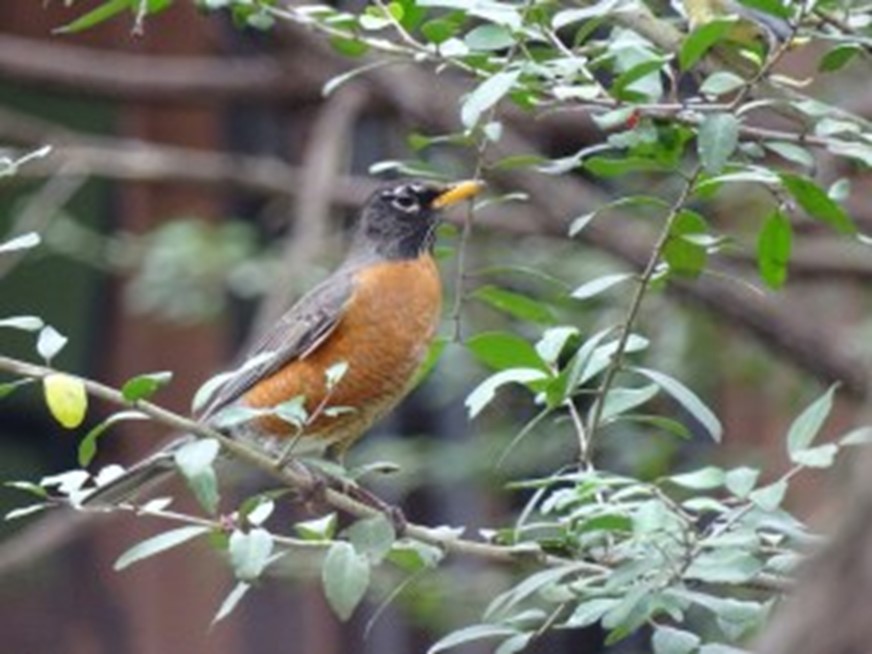
Another key point for backyard landscape is avoiding monotony. Providing native plants in a variety of types, sizes, blooming season, and leaf retention offers the most benefits to a broader range of birds. Below are just a few of the North Central Texas native trees and plants that help our winged friends:
Trees
Our native trees offer nuts, seeds, and insects, plus nesting sites and protective cover for birds.
- Cedar Elm (Ulmus crassifolia) and American Elm (Ulmus americana) yield various caterpillars, plus seeds and leaf buds that attract Yellow-rumped Warblers, Red-bellied Woodpeckers, and others.
- Texas Redbud (Cercis canadensis) flowers morph into seeds that are eaten by granivorous birds.
- Yaupon Holly (Ilex vomitoria) and Possumhaw Holly (Ilex decidua) produce tremendous amounts of colorful berries that Cedar Waxwing and others devour.
Shrubs

A multi-story landscape is beneficial for diverse bird species. Planting an assortment of native understory and shrubbery offers a greater mix of nutritional, nesting material, and cover from predators.
- American Beautyberry’s (Callicarpa americana) prodigious and beautiful berries attract Mockingbirds, Tufted Titmouse, and others.
- Fragrant Sumac (Rhus aromatica) produces red berries early in the spring that are extremely popular with an assortment of birds.
Flowering Plants
Having a mixture of sizes in your flowering natives provides seeds and nectar for an assortment of bird sizes. Be sure to keep “deadheads” on for at least a month or two to provide for hungry birds and other wildlife during the winter months.
- Cardinal Flower (Lobelia cardinalis) and Standing Cypress (Ipomopsis rubra) are two gorgeous scarlet flowering natives that are prime Ruby-throated and Black-chinned Hummingbird attractants.
- Frostweed (Verbesina virginica), a personal favorite, offers finches, warblers, and other birds abundant seeds, and an “icy” spectacle at the first freeze.
- Western Ironweed (Vernonia baldwinii) provides seed-eating birds with a rich crop in the fall.
Grasses
Be sure to also add some beautiful and valuable native grasses to your landscape. Grasses add a variety of habitat, seed, and nesting materials for birds.
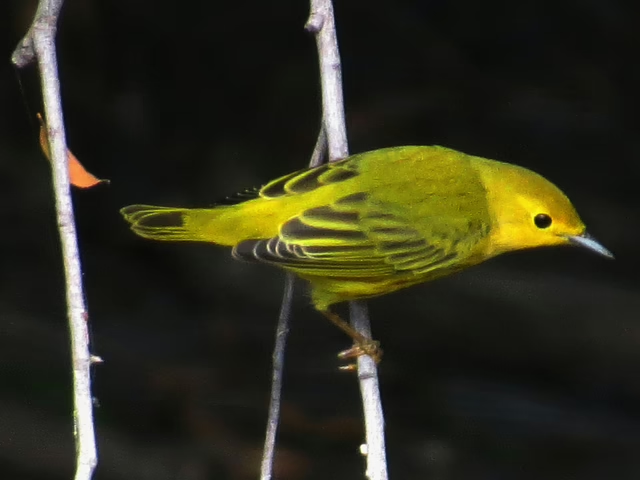
- Indian Grass (Sorghastrum nutans) offers grain-eating birds a food source in the fall, along with plentiful nesting material.
- Inland Sea Oats’ (Chasmanthium latifolium) dramatic golden-brown seed heads and leaves make a wonderful winter presentation, and attract a variety of sparrows.
- Side-Oats Grama (Bouteloua curtipendula) is a beautiful medium-height grass that provides food, nesting material, and cover for birds. Furthermore, it is the state grass of Texas.
Ground Covers and Vines
Native ground covers in your landscape offer a variety of benefits to birds. Their flowers and seeds provide food, and the foliage can give cover from predators. Many types of native vines are available to offer nectar to hummingbirds, and berries and seeds for a wider range of birds.
- Coral Honeysuckle’s (Lonicera sempervirens) richly-colored flowers supply hummingbirds, along with bees and butterflies, with a wonderful nectar source.
- Crossvine (Bignonia capreolata) offers intensely colored flowers and an early nectar source for hummingbirds.
- Lyreleaf Sage (Salvia lyrata) provides seeds to Goldfinches, and nectar to hummingbirds.Pigeonberry (Rivina humilis) is popular, as the name implies, with doves, and many other birds that dine on the delicate berries.
Birds do not require a plastic feeder when they have the food, cover, and shelter of a native plant-filled yard. When you plant natives, you are supporting their survival in every season.
