

Eve’s Necklace (Styphnolobium affine) is an under-the-radar but eye-catching native tree that thrives in North Texas. Its graceful branches, pink and white flowers, and striking black seed pods offer beauty and ecological value to any landscape. As Texas Arbor Day approaches, it is a perfect time to consider adding this unique and ornamental tree to your landscape.
Elegance and Year-round Interest
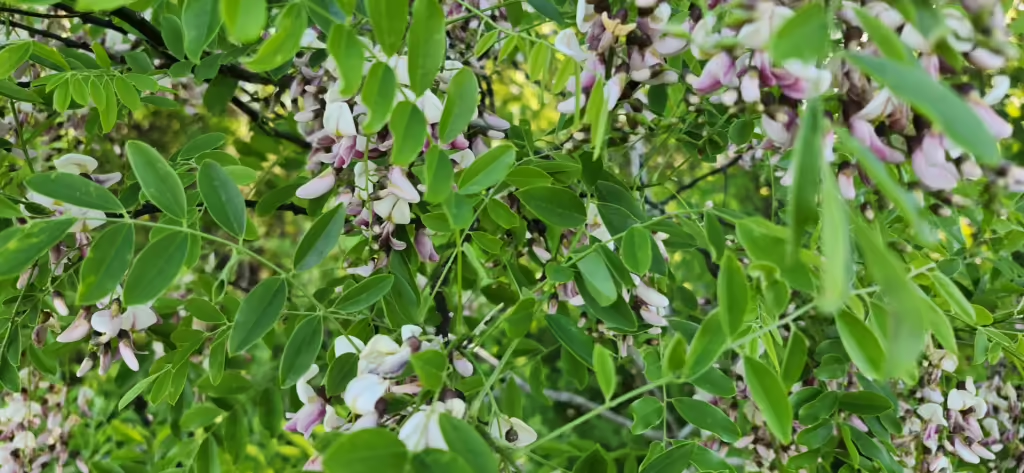
A small to medium-sized deciduous tree or large shrub, Eve’s Necklace is typically between 15 to 30 feet tall, with a crown of around 10 to 20 feet. Its bark is smooth and dark gray to brown. With its small, oval leaflets arranged on slender stems, it has an open, airy canopy. Compound leaves consisting of 7-13 leaflets are arranged in pairs with a single leaflet at the tip. The smooth bark and foliage give the tree a graceful, lacy appearance, adding some refinement to your landscape.
In the spring, Eve’s Necklace produces aromatic pink and white flowers that bloom in cascading clusters. Their flowers attract a variety of pollinators, including bees and other nectar insects. As summer arrives, the flowers give way to the tree’s namesake—long, black seed pods that resemble a string of beads or a “necklace.” In autumn, the leaves turn a vibrant yellow. The pods persist on the tree throughout the winter, offering continued visual interest.
Thriving with Ease
A relatively low-maintenance tree, Eve’s Necklace is well-suited for urban and natural landscapes. It is moderately fast-growing, especially when young. The tree thrives in full sun to partial shade, with a preference for morning sun and some afternoon shade. Once established, it can tolerate occasional drought but appreciates supplemental watering.
More than any other environmental condition, well-drained soil helps ensure Styphnolobium affine viability. It prefers alkaline to neutral soils and rocky, limestone-based terrain. However, it can adapt to various soil types, with the requirement of good drainage. The tree’s taproot system helps it survive in drier conditions but also makes it challenging to transplant once it matures.

Preferred Habitats
Eve’s Necklace is native to the south-central United States, with a limited natural range primarily in north and central Texas and eastern Oklahoma. Within Texas, it is most commonly found in the Blackland Prairies, Edwards Plateau, and Post Oak Savannah regions. Typically, they can be seen in open woodlands, forest edges, and along streams and rivers. It is well-suited as an understory tree within the dappled shade of larger trees and provides filtered shade to plants below. It can also be grown as a specimen tree or at the back of a border.
A Nitrogen-fixing Beauty
The seed pods are not only visually interesting, but they also serve as a reminder of the plant being part of the legume family (Fabaceae). Therefore, they are able to fix nitrogen in the soil, improving the quality by converting atmospheric nitrogen into a form that plants can use. As a result, planting Eve’s Necklace in your landscape can contribute to healthier soil and support the growth of other nearby plants. The seeds are highly toxic, so care should be taken when planting in areas accessible to small children or pets. Other attributes of Eve’s Necklace include:
- Ornamental value: Its beautiful flowers, fragrant blossoms, and vibrant fall color provide year-round interest.
- Wildlife habitat: The tree attracts pollinators, birds, and other wildlife.
- Erosion control: Its deep taproot system helps to stabilize soil and prevent erosion.
- Low maintenance: Once established, Eve’s Necklace requires minimal care.
Adorn Your Yard with Nature’s Necklace
A versatile and attractive tree, Eve’s Necklace is an excellent substitute for the invasive Crape Myrtles that proliferate in Texas yards. While you are unlikely to find them at local nurseries, they often can be found at local native plant sales. Eve’s Necklace is a striking and ecologically valuable native tree that deserves a place in more North Texas landscapes.

