

Native Plants Reduce Demand for Water
“Water is the Driving Force of All Nature”
Leonard De Vinci
We recently made it back home after a tour of the National Parks of the Southwest, which was, unfortunately, cut short by Covid-19. However, we did get to visit nine National Parks and got to see a landscape shaped by water and / or the lack of water. A land dominated by desert sands, punctuated by deep canyons or sky-island mountains or escarpments, we found plants and animals still thriving.
Survivors in the Toughest Conditions
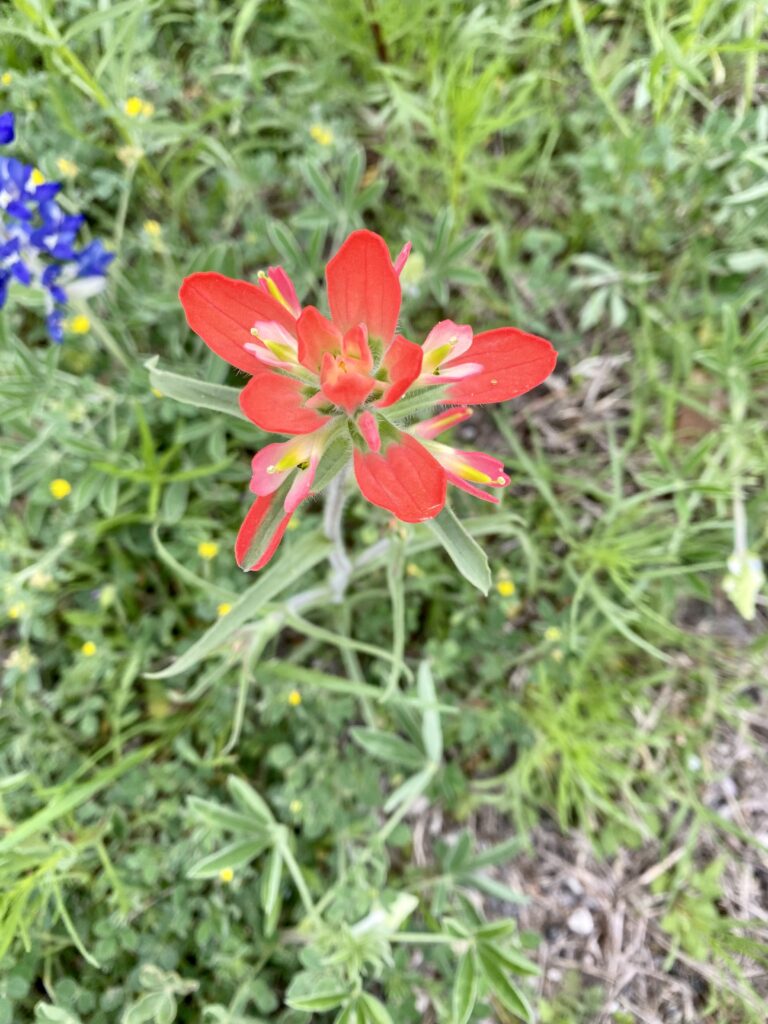
Despite the fact the southwest is experiencing its worst drought in 1,200 years, we found a grassland prairie at Canyonland, blooming Asters, Penstemons, Showy Milkweed, and Indian Paintbrush in riparian areas of canyons and Pinyon, Ponderosa Pines, and Aspen in higher elevations. Probably not as lush as it would be in normal rainfall times, but the landscape was surviving.
Returning home, I was curious to see how my Pocket Prairie faired after 17 days on the road, with only one day of rain and quite a few days of 100+ degree temperatures. Surprisingly, they were doing well, especially the Annual Sunflowers (Helianthus annuus). The plants were not growing vigorously, nor did they have a lot of blooms, but they were not dead.
Impact of Droughts
When we speak of “drought”, what does the drought really affect in your landscape? To a certain degree, everything is affected. To what degree depends on your plant selection. If you have non-natives, unless they are drought-tolerant, they are going to need a lot of supplemental watering (i.e., grass lawns).
Native Plants and Droughts
Marginal native plants (plants not necessarily native to North Texas) will need some supplemental water. We all have “natives” that are not native to North Texas that we “baby along”. I have Cardinal Flower and Texas Star Hibiscus, which do much better to the east of us, that need to be watered at least twice a week.
As far as the true natives to North Texas, they probably need to be watered only once every two weeks to keep from going dormant. If you want them to grow and bloom, additional watering will be needed – a personal choice. My choice is to keep the pollinators happy.
Need for Greater Water Conservation
If you are reading this, you are a NPSOT member or care about the usage of native plants and already know about the water conservation benefits of native plants, so why am I boring you with this information? I am concerned about our water – we do not have enough for our future. And as an organization, we should do a better job at educating—not only our neighbors, but HOA’s, municipalities, and regional government councils. Their solution is to build more lakes, like Bois d’Arc in Fannin County and the proposed Marvin Nichols on the Sulfur River in Northeast Texas.
This is not the answer; we do not have enough creeks and rivers to build new lakes to keep up with growth. The only logical answer is to reduce water consumption. In 2020, the average daily water usage in Frisco was 158 gallons per person. Of that water usage, an estimated 30-50% goes to watering the landscape. We have the knowledge to cut that usage down from 60 gallons per day to less than 6 gallons. Landscapes may not look “pretty” in the heat of the summer, but they will not be totally dead. We should strive to educate the mindset of people and entities.
For those who say lakes will never run out of water, just look to the West. I drove by Lake Mead and Lake Powell. Lake Mead is 178 feet below normal (19% of capacity), while Lake Powell is 167 feet below normal (23% of capacity), and they do not even allow lawns in Las Vegas and Phoenix. Maybe it is time we start having tough conversations about water usage – because without water, there is no future.
