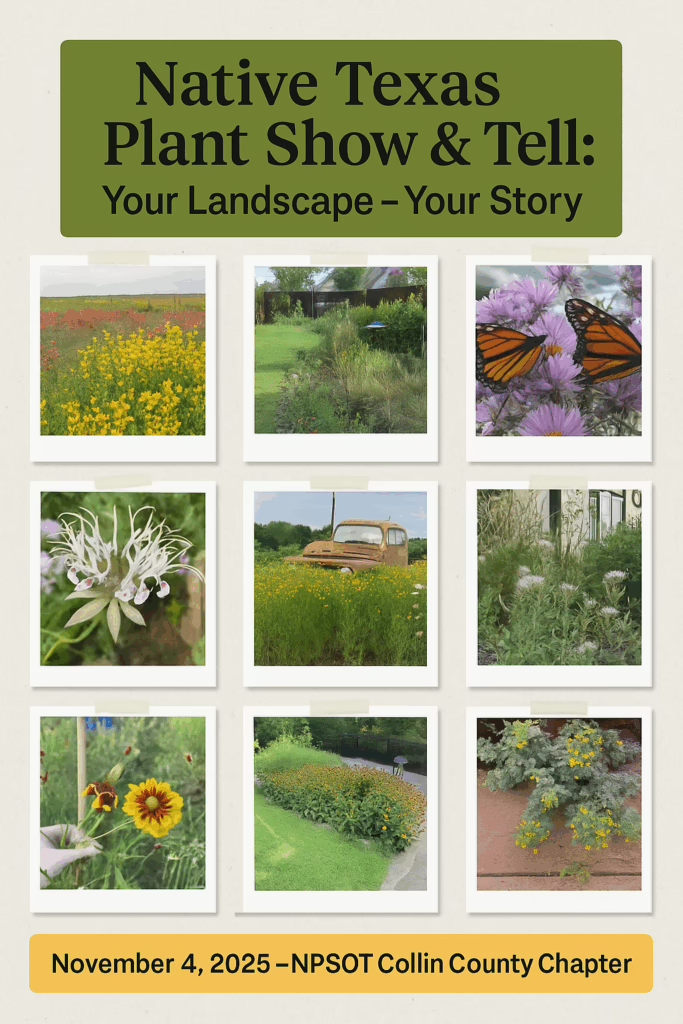
Our annual Native Texas Plant Show & Tell program will be on Tuesday, November 4 at 7:00 pm. Members and other attendees are encouraged to show pictures and tell about their favorite native Texas plants, such as:
- Your favorite native plant(s) in your landscape and their stories.
- Reminiscing about a stunning native wildflower(s) you photographed on a hike.
- Why you find a particular native species so fascinating.
- Your interest in a natural area teeming with native Texas plants.
We’re Looking for Show & Tellers!
This is your chance to share your photos and stories. Everyone is invited to present. Presentations can be done in-person or remotely via Zoom.
- What to Share: Pictures of your favorite native Texas plants from your home, a park, or any natural area.
- Time: Presentations have no minimum length, but are limited to a 10-minute maximum.
- Requirement: Just one! Your presentation must be about native Texas plants.
- Sign-Up Limit: We have space for a maximum of 10 presenters, so sign up early!
Submission Guidelines:
- Accepted Formats: PowerPoint, Google Slides, or PDF. (Please convert Apple Keynote files).
- Important Photo Note: Please do not send individual photo files. To ensure your photos are presented in the correct order, please compile them into a single file. An easy way to do this is using the “Print to PDF” function on your computer.
- Deadline to Submit: Saturday, November 1
- Email To:
collincountynpsot@gmail.com
Attendance Options
Our meetings are open to the public. This is a hybrid meeting held at the Heard Museum in McKinney and virtually via Zoom.
- Location (in-person): Laughlin Hall at the Heard Museum. Please enter through the south doors of the building.
- Zoom Link: https://tinyurl.com/yn85nbzd – Passcode: 571904; Meeting ID: 885 5459 6572
- Doors and Zoom Open: 6:30 PM (for setup and connection testing)
- Meeting Begins: 7:00 PM, with a brief update from Chapter President Rodney Thomas, followed by the “Show and Tellers”.
We look forward to seeing you at our program!