Clear Lake Chapter

Plant of the Month: Partridge Pea

Presented by Helen Lane
November 9, 2020

Botanical name: Chamaecrista fasciculata
Common names: Partridge Pea, Sleepingplant, Sensitive Plant
Family: Ebenaceae (Ebony)


[MUSIC—EASY AND FUN]

[HELEN] My name is Helen Lane and the Plant of the Month is Chamaecrista fasciculata, a native legume.

It grows dry and sandy soil and especially in disturbed areas. This photo was taken along 146 in Kemah where there is construction. The soil that was on the side of the road is very sandy. The recent rains helped green the area.

The Partridge Pea is found in most of the eastern parts of the United States, and generally grows in full sunlight to one- and one-half feet tall. Although likes dry soil, rains are important too. The plant has bright yellow flowers until the first frost.

This slide lists the many names for this flower. It is considered an herb, as it produces seeds like our traditional snap pea plant.

The plant is primarily pollinated by various species of bees, including honeybees. I found the plants become slightly bushy, too. My photo shows the size of the flowers compared to the orange. They are very bright, but small.

As you can see from this slide, the seed pod is small compared to the orange. There are generally about three or four seeds per pod and dry out and break open. These seeds are consumed by birds. If collecting seeds, cold stratification assists in the germination process.

The leaves consist of 10 to 15 pairs of small narrow leaflets, alternating. They’re delicate to the touch, and I think quite pretty.

I took this photo along Sims Bayou. For flood control, the sides were terraced, and grasses, sedges, trees, and Partridge Pea were planted to hold the soil. As you can see, they grow profusely. They are planted for prevention of erosion as well as for the birds, such as ground birds.

This is a lovely flower that we can enjoy all summer long. That’s it!

[MUSIC—AND THAT’S IT]

Related Posts

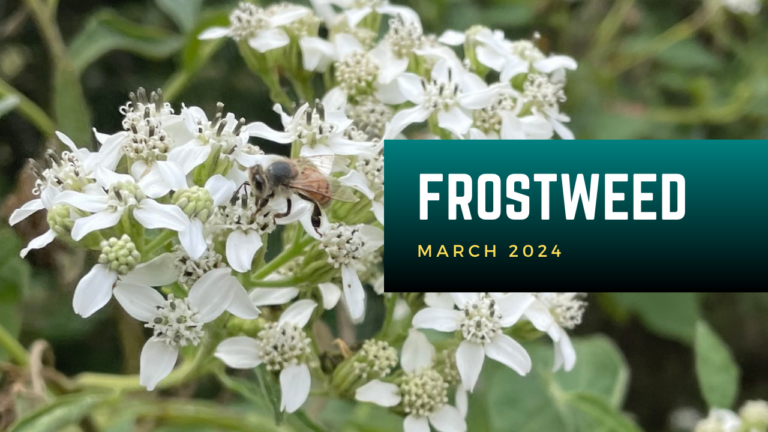
Frostweed

Plant of the Month: Frostweed

Our plant of the month for March 2024 is a little bit icy.
Botanical name: Verbesina virginica
Common name(s): Frostweed, White Crownbeard, Iceplant, Iceweed, Virginia Crownbeard, others

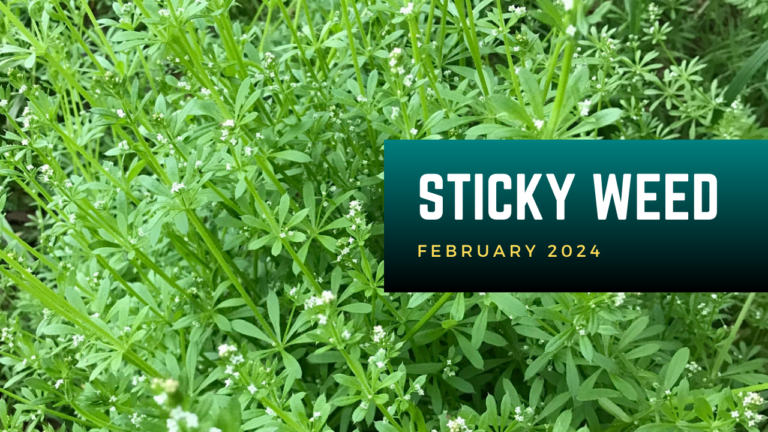
Sticky Weed

Plant of the Month: Sticky Weed

Is our plant of the month for February 2024 a wildflower or a weed? We’ll let you decide.
Botanical name: Galium aparine
Common name(s): Sticky Weed, Sticky Willy, Sticky Grass, Goosegrass, Catchweed Bedstraw, Cleavers, others

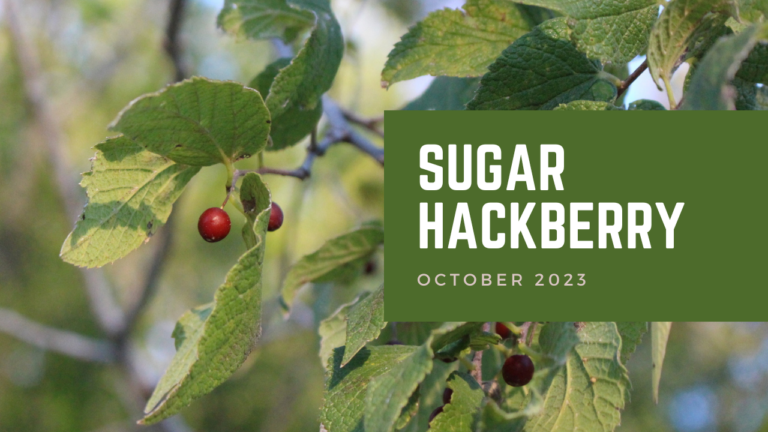
Sugar Hackberry

Plant of the Month: Sugar Hackberry

Our plant of the month for October 2023 is a “favorite” among robins, mockingbirds, and other songbirds.
Botanical name: Celtis laevigata
Common name(s): Sugar Hackberry, Texas Sugarberry, Sugarberry, Palo Blanco

About the Region

Fall Symposium 2025 Logo - Teach for the Future

Salado, the location of our Fall 2025 Symposium, lies at the intersection of two ecoregions: the Edwards Plateau (Limestone Cut Plain) and Blackland Prairie (Northern Blackland Prairie).

The Edwards Plateau area is also called the Hill Country; however, this general term covers a much larger area extending farther north. Spring-fed creeks are found throughout the region; deep limestone canyons, rivers, and lakes (reservoirs) are common. Ashe juniper is perhaps the most common woody species found throughout the region. Additional woody species include various species of oak, with live oak (Quercus fusiformis) being the most common. Sycamores (Platanus occidentalis) and bald cypress (Taxodium distichum) border waterways. This area is well known for its spring wildflower displays, though they may be viewed in spring, late summer, and fall, as well. According to Texas Parks and Wildlife, average annual rainfall in the Edwards Plateau ranges from 15 to 34 inches.

The Blackland Prairie extends from the Red River south to San Antonio, bordered on the west by the Edwards Plateau and the Cross Timbers, and on the east by the Post Oak Savannah. Annual rainfall averages 30 to 40 inches, with higher averages to the east. This region is dominated by prairie species. The most common grass species include little bluestem (Schizachyrium scoparium) and Indian grass (Sorghastrum nutans) in the uplands and switchgrass (Panicum virgatum) in the riparian areas and drainages. Common herbaceous flowering plants include salvias, penstemons, and silphiums. This area has suffered greatly from overgrazing and agricultural use. Few intact areas remain, though many of the plants can be found along county roadsides throughout the region.

Our fall Symposium host chapter, the Tonkawa Chapter, includes both of these ecoregions.

Source: Wildflowers of Texas by Michael Eason