Clear Lake Chapter

Plant of the Month: Sticky Weed

Presented by Rowena McDermid
February 12, 2024

Botanical name: Galium aparine
Common name(s): Sticky Weed, Sticky Willy, Sticky Grass, Goosegrass, Catchweed Bedstraw, Cleavers, others
Family: Rubiaceae


[MUSIC—EASY AND FUN]

[Rowena] Hello, everyone. Plant of the month this month is Galium aparine, otherwise known as Sticky Weed. It might only be February, but with the warm weather this weed has been growing gang busters in my garden. It has many common names I usually refer to it as Sticky Weed, but it’s also known as Stick Willy, Sticky Grass, Goosegrass, Bedstraw, Cleavers, among many others.

Sticky Weed is an annual of the Rubiaceae family. It creeps along with straggling stems which branch and grow along the ground and over other plants. They attach themselves with small, hooked hairs that grow along the leaves and the stems. The stems are angular or square in shape and can reach up to three feet long. The leaves are simple and are borne in whirls of six to eight. The flowers are small, four petaled, and are greenish white in color. The flowers are clustered in two or three and grow from the leaf axles. The fruits are burrs which grow one to three seeds clustered together. They’re also covered in hooked hairs which cling to animal fur and human clothing and this of course aids in seed dispersal.

So, is it a wildflower or a weed? Well, some people say that weeds are just wildflowers that are growing where you don’t want them, but I definitely consider this a weed. Galium aparine is widely distributed across Europe and North America. There is debate about whether it is native to North America but most sources state that it is. In some states it is classified as a noxious weed and the seed is restricted or prohibited in Connecticut, Massachusetts, New York, and Vermont. In the Canadian provinces of Alberta, British Columbia, Manitoba, and Saskatchewan, there is zero tolerance for Sticky Weed in crop seeds. However, it does have wildlife uses. It is eaten by birds and mammals, for example deer and rabbits, and is also used by many insects, including aphids and spittlebugs.

Fortunately, Sticky Weed can be controlled either by hoeing or hand pulling or a combination of the two. Some sources mention mulching as a good way to control it. It will die back as the weather warms up, but it’s important to remove it before it flowers and sets seeds because if it does that then it’ll come back even worse the following year. On sensitive skin it will cause tiny scratches that resemble a rash.

Sticky Weed is edible, especially if it’s picked before it sets seed, though it’s not palatable raw. It does need to be cooked. It’s been eaten in soups and stews. Young shoots can be cooked and eaten buttered, just like any other spring vegetable. And, I’ve even seen mention of it being used in a smoothie. The fruits can be dried and roasted to make a coffee-like drink. And, it also has medicinal uses — as a tea or a tincture for urinary health and as a topical treatment for skin infections and eczema.

So, most of the photographs in this presentation were taken from my own garden, although I did take some from Etsy for the tincture. My references included Wikipedia, USDA.gov database, Wildflower.org, Brooklyn Botanic Garden Weed of the Month blog, and also a UK site, eatweeds.co.uk.

Thank you.

[MUSIC—AND THAT’S IT]

Related Posts

Plant of the month for August is Splitbeard Bluestem, Andropogon ternarius, and also called Feather Bluestem or Paintbrush Bluestem. It is a native. It's a warm season grass. It's a perennial. It's a bunchgrass. By warm season, it means that it's dormant in the winter and starts growing in the spring as the weather warms up. A bunchgrass tends to stay in a small circle or a bunch. The grass has numerous thin basal leaves, which usually stay about 12 or 15 inches tall, which makes it ideal in our home landscapes. It grows best in part shade to full sun. And this grass will be available at our plant sale on October 20 and 21. It prefers to grow in sand or well-drained soil, which we kind of struggle with here, but it does do well. It's shade tolerant and drought tolerant. I know the camera has a hard time focusing on those light hairy little seeds. The bloom time is from August to November. In late summer, it will send up its bloom stalk, which may be up to three feet tall. And, as the seeds on the long slender stalk mature, they'll split into two tiny stems about two inches long, each with seeds of fluffy white tufts. The seeds are wind distributed. The plants may be started from seed or another way is to dig your mature plant and with your shovels, cut it into maybe four sections, which then can be replanted in other places in your yard or shared with some of your neighbors. It's an easy plant to grow. Splitbeard can be found on the prairie with Little Bluestem and it's great when it's seen in the afternoon sun en masse; reminds me of snowflakes on the branches. And it can be used in a winter dried arrangement in the house. Native bees can use Splitbeard Bluestem for nesting materials. And until their bloom stalk is sent up, the narrow basal leaves are hard to distinguish from other bunchgrasses such as Sideoats Grama. And there it is. And you note how the seeds are all on one side, thus its name. We don't have any of this one for sale at our fall sale. Maybe we will in the spring, in April. But it was interesting, I thought, when I looked for Splitbeard Bluestem in the Wasowski book of Native Texas Plants these two bunchgrasses were on the same page. So, that is the story of the Sideoats Grama and the Splitbeard Bluestem.

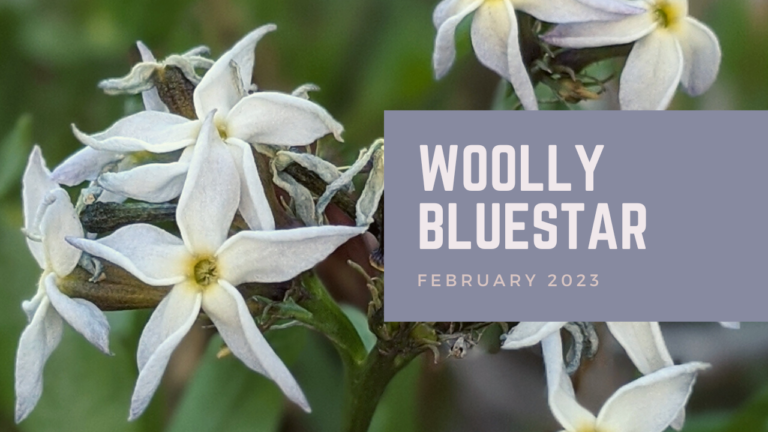
Plant of the Month: Woolly Bluestar

Our Plant of the Month for February 2023 is Amsonia tomentosa, commonly known as Woolly Bluestar, Woolly Amsonia, Small Leaved Amsonia, or Gray Amsonia.

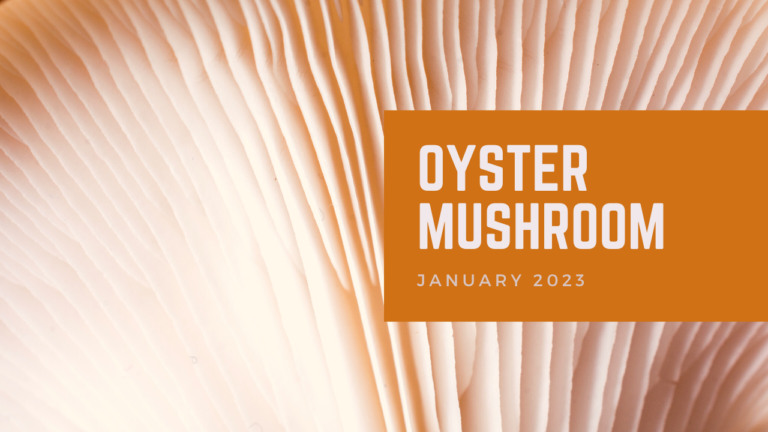
Oyster Mushroom

Plant of the Month: Oyster Mushroom

Our plant of the month for January isn’t a plant at all, it’s a fungus!
Botanical name: Pleurotus ostreatus
Common name(s): Oyster Mushroom, Pearl Oyster Mushroom

About the Region

Fall Symposium 2025 Logo - Teach for the Future

Salado, the location of our Fall 2025 Symposium, lies at the intersection of two ecoregions: the Edwards Plateau (Limestone Cut Plain) and Blackland Prairie (Northern Blackland Prairie).

The Edwards Plateau area is also called the Hill Country; however, this general term covers a much larger area extending farther north. Spring-fed creeks are found throughout the region; deep limestone canyons, rivers, and lakes (reservoirs) are common. Ashe juniper is perhaps the most common woody species found throughout the region. Additional woody species include various species of oak, with live oak (Quercus fusiformis) being the most common. Sycamores (Platanus occidentalis) and bald cypress (Taxodium distichum) border waterways. This area is well known for its spring wildflower displays, though they may be viewed in spring, late summer, and fall, as well. According to Texas Parks and Wildlife, average annual rainfall in the Edwards Plateau ranges from 15 to 34 inches.

The Blackland Prairie extends from the Red River south to San Antonio, bordered on the west by the Edwards Plateau and the Cross Timbers, and on the east by the Post Oak Savannah. Annual rainfall averages 30 to 40 inches, with higher averages to the east. This region is dominated by prairie species. The most common grass species include little bluestem (Schizachyrium scoparium) and Indian grass (Sorghastrum nutans) in the uplands and switchgrass (Panicum virgatum) in the riparian areas and drainages. Common herbaceous flowering plants include salvias, penstemons, and silphiums. This area has suffered greatly from overgrazing and agricultural use. Few intact areas remain, though many of the plants can be found along county roadsides throughout the region.

Our fall Symposium host chapter, the Tonkawa Chapter, includes both of these ecoregions.

Source: Wildflowers of Texas by Michael Eason