

“Winter is a Season of Recovery and Preparation”
Paul Theroux
Winter is upon us. This is the season to relax and reflect on how well our gardens grew. To gauge our planning and the prep work we did last winter. Did it pay off this past spring, summer and fall?
If your garden was like mine, 2022 was met with mixed results. On one hand, I did not have a very good blooming year; hence the pollinator numbers were down. I had very few Queens this year; the Passiflora looked good all summer. On the bright side, most of the plants will live to see another year.
Texas Weather
2022 was an interesting year in that we were in a drought most of the year – a severe drought. Yet, Collin County is at 86% of our total yearly rainfall with one month to go. When historians look back at the records, this year will look like a normal to slightly below normal rainfall year. Don’t tell that to your neighbors with their non-native plants. They had to water – a lot. I watered too.
But I watered because I wanted to keep some of the plants blooming for the pollinators. I could have chosen not to have watered, and I would guess 85% of my plants would have survived into the fall. And those plants who survived into fall were rewarded with soaking rains. The rains were a blessing for the fall bloomers, such as goldenrod, fall asters, frostweed, and salvias. They put on a nice show for the pollinators.
Our natives have evolved to survive and thrive in these drought – flooding rain periods called “Texas Weather”.
Relax for the Holidays
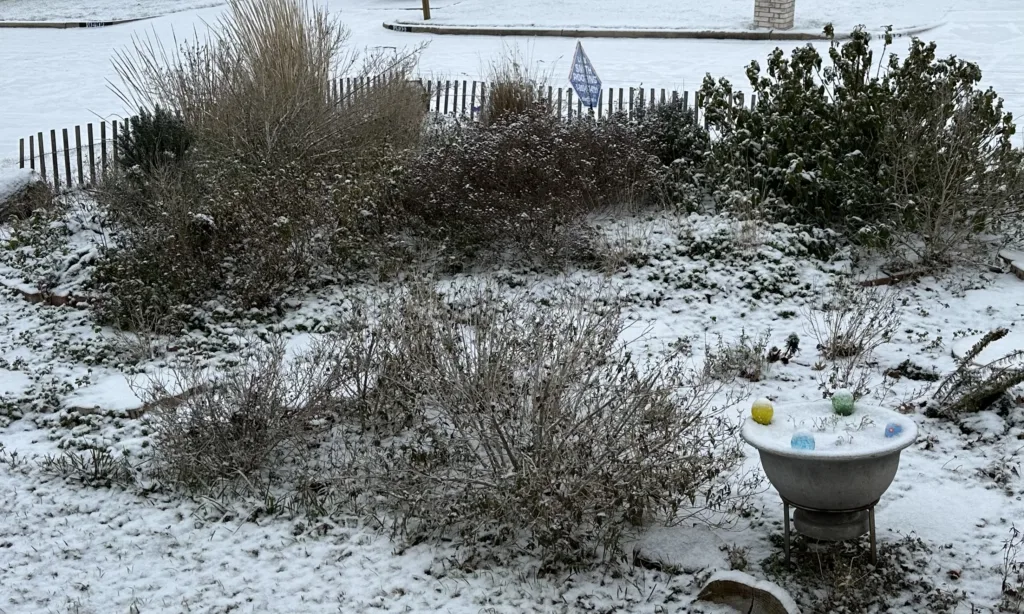
As a proud owner of a native landscape, it is time to relax and enjoy the shades of brown (brown is a color) and the plant skeletons of your hard work this past year. Take in the holidays with your family and friends. Show them the success you had in your garden and explain to them the yard is supposed to look like a “mess” until late February because you have created a winter home for all your pollinators.
Planning Ahead
Lastly, be sure to look back in your garden journal and make note of what worked and what did not work. It is not too early to start thinking about what plants need to be moved or thinned or replaced and what new plants you wish to add to your landscape. Before you know it, spring will be here, and it will be time to get to work again.
But until then, Merry Christmas and Happy New Year to all.
