NICE! Plant of the Month
Ageratina havanensis
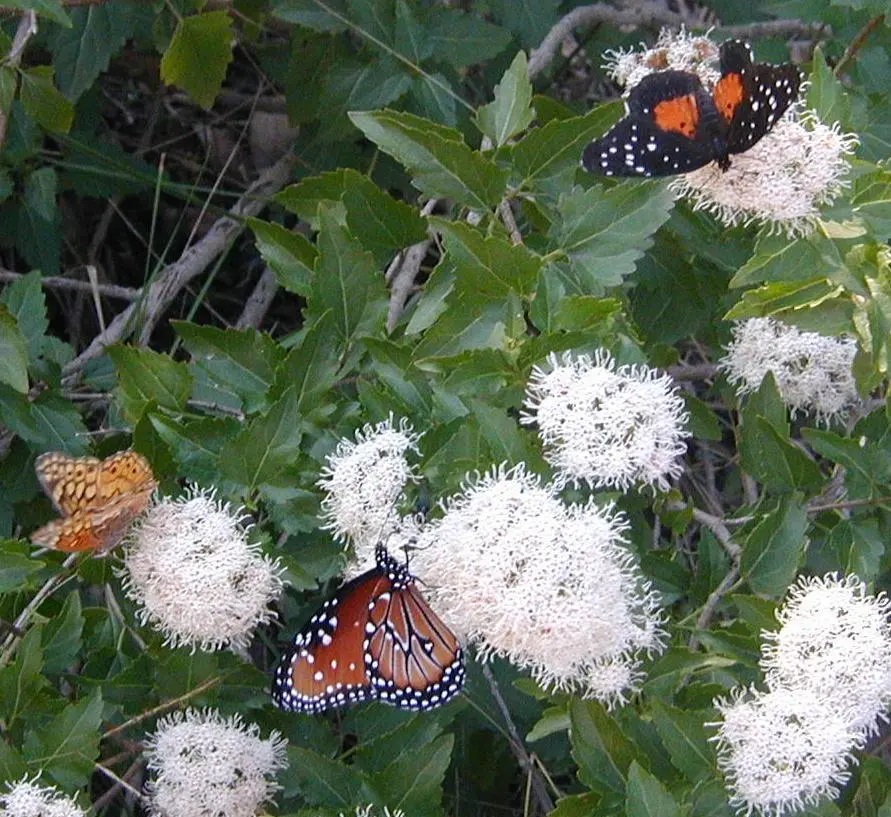
Family: Asteraceae (Aster)
Other Common Names: Havana snakeroot, White mistflower, Shrubby boneset
Type: Deciduous, multi-branched, rounded perennial shrub rising from many stems at the base, 2-6 feet tall.
Natural Habitat: Rocky hillsides, rocky ravines, ledges and bluffs in the Edwards Plateau
Growth: Moderate growth but grows bushier and blooms better if cut back after fall bloom period.
Deer Resistance: Moderately deer resistant.
Wildlife: Attracts hummingbirds, bees, moths and butterflies and is a larval host to Rawson’s Metalmark.
Light Tolerance: Full sun, but will tolerate part shade.
Flowers: Prolific, long-lasting fragrant white flowers (sometimes pinkish-white) in terminal clusters in late summer and fall.
Fruit: 1/5-inch long achenes (small, dry, hard one-seeded, indehiscent [not splitting open] fruit) with bristles on one end.
Leaves: Deltoid, green leaves up to three inches in length with wavy to coarsely toothed edges. Leaves are opposite on moderately long leafed stalks.
Water Requirements: Dry, but tolerates supplemental watering during drought.
Soil Requirements: Rocky, limestone soils, but adapts to most well-drained soils.
Maintenance: Vigorous and quick-growing. Be prepared for a BIG vine.
Planting Instructions: Space plants 4-6 feet apart. Dig a hole at least two times wider than, but the same depth as the root ball in the nursery container. Sides of the hole should be irregular, not smooth. Remove plant from container, taking care to support the root ball. Loosen exterior roots gently with your fingers. If the plant is root-bound and cannot be loosened by hand, the outer roots may be cut in several places. Lift the plant by the root ball and place into the hole. Backfill the hole with the soil that was dug out. Do not add any soil to the top of the root ball. Gently firm the soil with your hands, but do not tamp it down. Place 3-4 inches of mulch over the bare soil around, but not touching the base of the plant.
Watering Instructions: Water deeply after planting to settle soil around roots. Then every 7-10 days, as needed, during the first growing season. Before watering, check for soil moisture at a depth of an inch or two at the edge of the root ball. Skip a watering after a rainfall of ½ to 1 inch. Maintain this watering schedule until the first fall. Reduce watering during the cool fall and winter months. In a “normal” year, no watering may be necessary during the fall and winter, but during a dry period, monthly watering may be needed. Second Spring and thereafter: Water monthly only during periods of drought. Once established, natives will survive with little supplemental irrigation.
NICE! Tip: Thoroughwort is ideal for an under story plant, for a rocky slope or at the edge of a woodland.
Look for the NICE! Plant of the Month signs and information sheets on your next visit to a participating Boerne nursery. And thank you for supporting native plants by using them in your landscapes.