Collin County Chapter

The Coneflower Courier Reemerges

As Valerie referenced in the August 2021 newsletter, we now have our chapter newsletters from January 1994 – February 2001 on the website. Betsy Farris, former NPSOT Collin County Chapter president and long-time member, was kind enough (and very organized) to provide us with these newsletters that were originally in paper format.
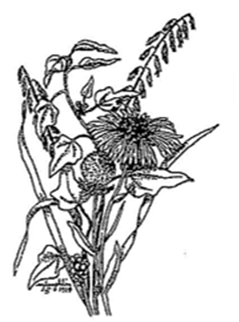
 “The Coneflower Courier”, as the newsletter was originally named, offers fascinating insights into the early years of the Collin County Chapter. As mentioned earlier, Valerie discussed a September 1999 article that still resonates today on the “Landscaping Revolution”. Some other items of interest from perusing the newsletters include:

  • A great drawing of a native plant bundle was displayed in most of the newsletters.
  • From the May 1996 newsletter, a note for “adventurous” gardeners with links to native plant internet sites.
  • In the earliest years, a sign of how things change, phone numbers without area codes.
  • From the March 1997 edition, a smile-inducing “Foxy Tale” from the Heard Museum.
  • Our driving directions before Google Maps.
  • A prescient prediction on the coming trouble from the invasive Field Scabiosa in the March 1999 newsletter.
  • A wonderful Native Plant Portrait of the Maximillian Sunflower (Helianthus maximillani) by Betsy in the August 1999 edition.

We hope you enjoy having these pieces of our history available and take advantage of the fantastic information contained in The Coneflower Courier.


About the Region

2026 Fall Symposium Logo

This low-elevations region of Texas extends inland from the barrier islands, about 60 or so miles, and stretches from Brownsville to Louisiana. In total, it covers about 9.5 million acres, with a high point of 150 feet in elevation. More than 1000 species of plants can be found in this region. On the southern end, species more common in Mexico (such as Sabal mexicana) and Central America occur.

The barrier islands provide us with dune systems, and clay flats to the inland side, which have species found in these areas alone. Many plants here, such as Ipomoea pes-caprae (beach morning glory), can be found throughout tropical regions of the globe. I’ve encountered the same species on the beaches of Guam.

Once inland, vast marshes and wet prairies occur. Occasionally, oak (Quercus fusiformis) groves can be found. Common grasses include species of Bothriochloa, Paspalum, and Sporobolus; eastern gamagrass (Tripsacum dactyloides); and switchgrass (Panicum species). Many rivers and creeks cut through the Gulf Prairies, and along these riparian areas various species of trees, Sabal minor, and other plants adapted to clay soils can be found. Due to overgrazing, farming, and fire suppression, woody species such as mesquite (Prosopis glandulosa) and huisache (Acacia farnesiana), and invasive species such as chinaberry (Melia azedarach), Brazilian pepper (Schinus terebinthifolius), and Chinese tallow (Sapium sebiferum) have increased and displaced our native flora.

Source: Wildflowers of Texas by Michael Eason