

The term “invasive species” brings forth a variety of connotations and disagreement about its meaning. We will utilize Executive Order 1312 establishing the National Invasive Species Council as our source. An invasive species is:
- “Non-native (or alien) to the ecosystem under consideration
- Whose introduction causes or is likely to cause economic or environmental harm or harm to human health.
- Invasive species can be plants, animals, and other organisms (e.g., microbes).
- Human actions are the primary means of invasive species introductions.”
Traits of Invasive Species
Whether a plant or animal, these species present the following characteristics:
- Endanger the survival of native plants and animals
- Quickly reproduce, and grow
- Rapidly establish themselves over a large area
- Prosper over many years
They are typically able to succeed due to environmental conditions that are similar or more favorable than their native range. In addition, their success is due to the absence of natural predators, competitors, and diseases that would naturally temper their advancement.

Facts and Figures
Even though not all non-native species are invasive – all invasives are non-native. Below are some eye-opening facts about the impact of invasives on our environment and economy:
- Almost half of our federally endangered native species are significantly threatened by invasive species.
- The cost of managing and controlling invasive species in the US is nearly $140 billion annually. For plants alone, the cost is estimated at $13 billion per year.
- The Texas Parks and Wildlife Department bans the importing and possession of about 600 species.
- Texas has 37 noxious weeds, or nonindigenous invasive plants, per the Texas Department of Agriculture.
Damage from Invasive Plants
Our focus is invasive plants, specifically those that cause the most damage in North Central Texas. All of these plants are unfortunately readily available for purchase locally.
Invasive plants inflict damage on our ecosystem by easily self-propagating outside of their initial location and quickly spreading to decrease the biodiversity of the surrounding area. Plus, invasives threaten the survival of native plants, which are pushed out by their incursion. Native animals that depend on our native plants for nourishment and protection are also severely impacted by the loss of native plants.
The Dirty Dozen Invasive Plants
Below is a listing of the invasive plants, the dirty dozen, which can be purchased locally, and cause the most severe issues for our native ecosystems. We have also included alternative plants that are native to North Texas, readily available, provide your landscape with the same or better benefits than the invasive, and without harming our local natural habitats.
| Invasive Plant | Impact on Environment | Native Alternative | Benefits of Native Plant |
|---|---|---|---|
| Bermudagrass | · Extremely difficult to eradicate | Buffalograss (Bouteloua dactyloides) | · Durable grass |
| · Crowds out native grasses and other prairie plants | · Low water requirements | ||
| · Non-aggressive | |||
| Bradford Pear | · Cross-pollinating with similar cultivars has allowed them to spread via seed dispersal | Rusty Blackhaw Viburnum (Viburnum rufidulum) | · Tall shrub / small tree produces attractive fall foliage |
| · Dense thickets smother native woodland plants | · Spring-time flowers | ||
| · Birds attracted to their fruits | |||
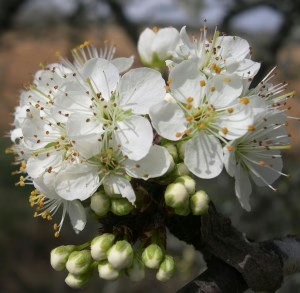
| Chinaberry tree | · Quickly spreads due to root sprouts and seed dispersal by birds | Mexican Plum (Prunus Mexicana) | · Small tree that attracts pollinator insects |
| · Crowds out native plants that provide more benefits to native insects and animals | · Abundant berries provide wildlife with valuable food source | ||
| · Fragrant and showy white blooms | |||
| Chinese, Glossy, and Japanese privet | · Troublesome threesome all spread rapidly by their prodigious seed dispersal | Carolina Cherry Laurel (Prunus caroliniana) | · Large shrub or small tree with evergreen foliage |
| · Dense canopies and evergreen foliage usurp native trees and shrubs | · Berries provide nourishment for birds | ||
| · Larval host for butterflies and nectar source for a variety of insects | |||
| Chinese tallow tree | · Begins seed production early in life and is a prolific producer | Texas Redbud (Cercis canadensis) | · Small tree with beautiful spring flowers |
| · Will outcompete native trees, and their decomposing leaves create unfavorable conditions for natives | · Hardy and drought tolerant | ||
| · Sought after nectar source by butterflies, and other insects | |||
| Chinese wisteria | · These woody vines strangle native shrubs and trees. | Coral Honeysuckle (Lonicera sempervirens) | · Twining vine with beautiful reddish flowers |
| · Form dense thickets that inhibit native plant’s growth | · Flowers attract a wide variety of species | ||
| · Vines offer shelter to birds and insects | |||
| Japanese honeysuckle | · An evergreen woody vine | Virginia Creeper (Parthenocissus quinquefolia) | · Hardy vine with beautiful fall color |
| · Spreads by runners and seed dispersal | · Attractive foliage does not damage buildings like other vines | ||
| · Girdles and strangles native shrubs and young trees | |||
| Lilac chastetree | · Very aggressive small tree or large shrub | Mexican Buckeye (Ungnadia speciosa) | · Tall shrub produces beautiful pink flowers |
| · Readily seeds to surrounding areas | · Attracts butterflies as larval host and nectar source | ||
| Nandina | · Extremely tenacious, fast-growing, and spreads by seed and root system | American Beautyberry (Callicarpa americana) | · Stout shrub is best suited for part shade, but tolerates other conditions |
| · Outcompetes and eliminates natives due to its adaptability | · Produces striking purple fruit uniquely clustered on branches. | ||
| · Berries are an important food source for birds | |||
| Periwinkle | · Creates a thick layer of growth that smothers native groundcovers and small plants | Coralberry (Symphoricarpos orbiculatus) | · Woody shrub with long lasting berries |
| · Extremely aggressive and tolerant of a variety of conditions | · Hardy and spreads easily in shade or part shade | ||
| · Beneficial to wildlife for food, cover, and nesting | |||
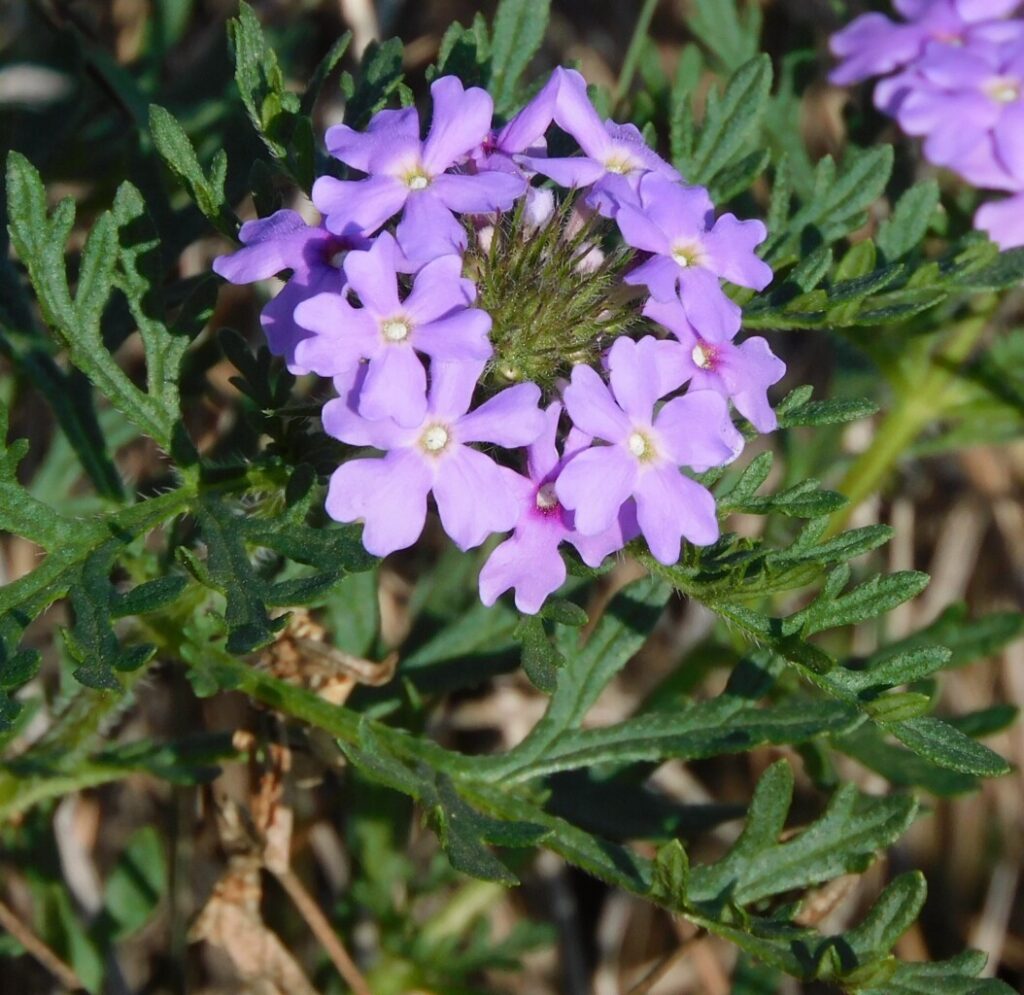
| Pincushions | · Fast growing perennial that will overwhelm native prairie plants | Prairie Verbena (Glandularia bipinnatifida) | · Short perennial with attractive purple flowers often lasting March – October |
| · Difficult to control once it becomes established in an area | · Hardy and able to tolerate variety of conditions | ||
| Redtip photinia | · Unyielding spreading overwhelms native shade plants | Aromatic Sumac (Rhus aromatica) | · Pruned as tree or shrub, creates an effective screen |
| · Nearly evergreen leaves | |||
| · Female plants produce red flowers and berries |
Invasive plants impact all Texans through their degradation of local ecosystems, the escalating cost to manage and control, and harming our enjoyment of the state’s vast natural resources. Lastly, by choosing native alternatives to these “dirty dozen” invasive plants, you can play a big part in stopping the spread of invasive plants here in North Texas.
