Austin Chapter

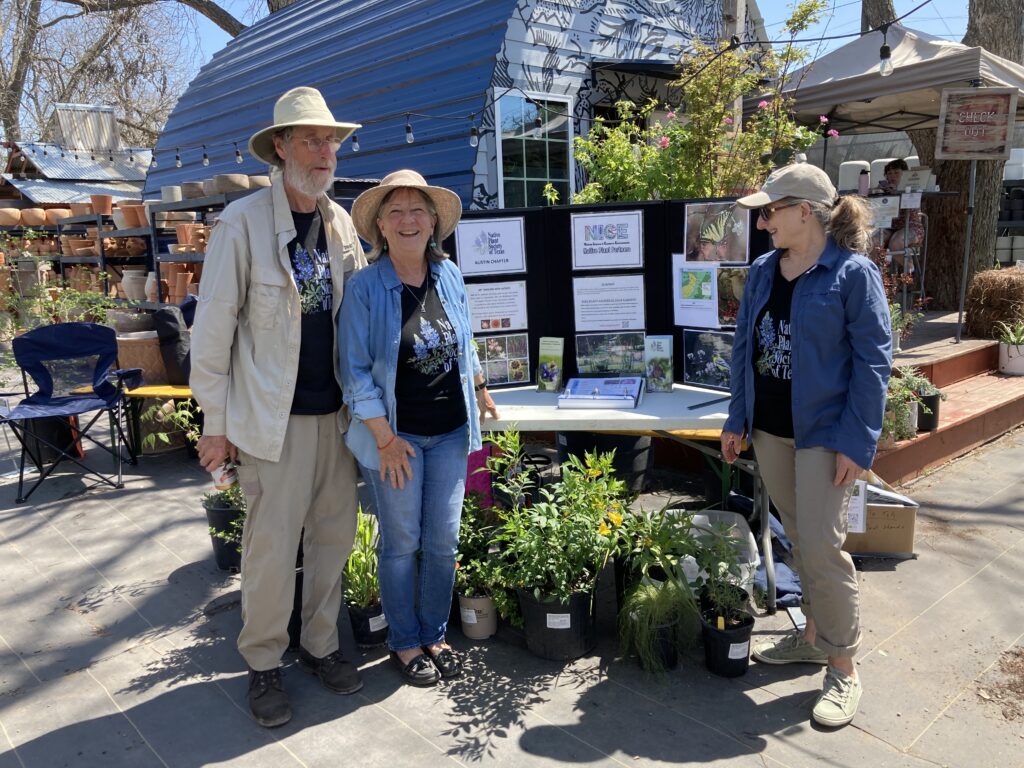
NICE Partner Event – Barton Springs Nursery, April 22 and 23

Barton Springs Nursery and NPSOT Austin are holding an on-site event to encourage Austinites to include native plants in their gardens this Spring. We invite you to join us to learn why native plants are important and help you choose plants that would work best in your yard.

WHAT IS THE NICE PARTNER PROGRAM?

(Natives Improve Communities and Environments)

The NICE Native Plant Partner program is a collaboration between the Native Plant Society of Texas and local nurseries around the state to offer native plants that are best adapted to the local environment.

Texas is a large, diverse state and plants that work for one region may not always be the best choice in a different region. NICE Partner committees, run by our local chapters, highlight native plants of the month or the season in cooperation with participating local nurseries in order to assure availability. The Native Plant Society chapter then helps promote native plants sales to the public by providing signs and plant information sheets at the point of sale, advertising on its website and co-hosting onsite native plant events.

WHY PLANT NATIVES IN YOUR GARDEN?

  • Native plants are drought-tolerant, naturally conserving our precious water resources. and reducing utility bills.
  • Native plants provide habitat and food for birds, butterflies, bees and other wildlife.
  • Native plants don’t need special pampering or fertilizing.
  • Natives evolved to thrive on texas soils, droughts, floods, summer heat and winter freeze.
  • Natives help us recreate and maintain biological diversity in our urban and suburban landscapes.

About the Region

2026 Fall Symposium Logo

This low-elevations region of Texas extends inland from the barrier islands, about 60 or so miles, and stretches from Brownsville to Louisiana. In total, it covers about 9.5 million acres, with a high point of 150 feet in elevation. More than 1000 species of plants can be found in this region. On the southern end, species more common in Mexico (such as Sabal mexicana) and Central America occur.

The barrier islands provide us with dune systems, and clay flats to the inland side, which have species found in these areas alone. Many plants here, such as Ipomoea pes-caprae (beach morning glory), can be found throughout tropical regions of the globe. I’ve encountered the same species on the beaches of Guam.

Once inland, vast marshes and wet prairies occur. Occasionally, oak (Quercus fusiformis) groves can be found. Common grasses include species of Bothriochloa, Paspalum, and Sporobolus; eastern gamagrass (Tripsacum dactyloides); and switchgrass (Panicum species). Many rivers and creeks cut through the Gulf Prairies, and along these riparian areas various species of trees, Sabal minor, and other plants adapted to clay soils can be found. Due to overgrazing, farming, and fire suppression, woody species such as mesquite (Prosopis glandulosa) and huisache (Acacia farnesiana), and invasive species such as chinaberry (Melia azedarach), Brazilian pepper (Schinus terebinthifolius), and Chinese tallow (Sapium sebiferum) have increased and displaced our native flora.

Source: Wildflowers of Texas by Michael Eason