Fredericksburg Chapter

Crossroads of the Eclipses: How Plants and Dark Skies are Connected in the Texas Hill Country

Tuesday, June 27 Native Plant Society of Texas, Fredericksburg Chapter Meeting
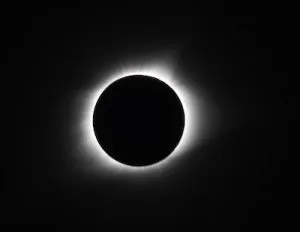


The annular solar eclipse of 2023 and the total solar eclipse of 2024 will place the Texas Hill Country at the crossroads of two remarkable celestial phenomena. Central Texas will become the epicenter of great activity and tourism during these events, hosting visitors from across the state, around the nation, and worldwide. The total solar eclipse’s path of totality passes through 83 Texas counties and 15 U.S. states. However, it is among the pristine streams, migrating birds, vibrant bluebonnets, and rolling terrain of the Hill Country where optimum viewing is forecast.


How dark skies and plants are connected is a topic addressed by Dawn Davies with Hill Country Alliance at the Fredericksburg chapter meeting on Tuesday, June 27. As Night Sky Program Manager, Dawn works with volunteers and local leaders across the region to promote night sky preservation and eliminate light pollution and its detrimental environmental effects. She also heads up the Hill Country Eclipse Team, an assembly of community and county-based task forces working together to prepare for the upcoming 2023 and 2024 solar eclipse events.

“We are excited to have Ms. Davies join us for our June meeting to share her insights on dark skies, the upcoming eclipses, and how plants might be affected,” said Deborah Simmons, President, Fredericksburg Chapter of NPSOT. “We hope the public will come join us to learn more and bring their questions.”

The chapter holds its monthly meetings on the 4th Tuesday of the month at St. Joseph’s Halle (212 W. San Antonio St., Fredericksburg). There is a social time at 6:30 p.m. and the meeting starts at 7 p.m.


Hill Country Alliance, a non-profit organization, is focused on raising public awareness and building community support around the need to preserve the natural resources and heritage of the Central Texas Hill Country.

 – Holly Simonette

Dawn Davies, June 27, 2023 Speaker for Fredericksburg chapter meeting

About the Region

2026 Fall Symposium Logo

This low-elevations region of Texas extends inland from the barrier islands, about 60 or so miles, and stretches from Brownsville to Louisiana. In total, it covers about 9.5 million acres, with a high point of 150 feet in elevation. More than 1000 species of plants can be found in this region. On the southern end, species more common in Mexico (such as Sabal mexicana) and Central America occur.

The barrier islands provide us with dune systems, and clay flats to the inland side, which have species found in these areas alone. Many plants here, such as Ipomoea pes-caprae (beach morning glory), can be found throughout tropical regions of the globe. I’ve encountered the same species on the beaches of Guam.

Once inland, vast marshes and wet prairies occur. Occasionally, oak (Quercus fusiformis) groves can be found. Common grasses include species of Bothriochloa, Paspalum, and Sporobolus; eastern gamagrass (Tripsacum dactyloides); and switchgrass (Panicum species). Many rivers and creeks cut through the Gulf Prairies, and along these riparian areas various species of trees, Sabal minor, and other plants adapted to clay soils can be found. Due to overgrazing, farming, and fire suppression, woody species such as mesquite (Prosopis glandulosa) and huisache (Acacia farnesiana), and invasive species such as chinaberry (Melia azedarach), Brazilian pepper (Schinus terebinthifolius), and Chinese tallow (Sapium sebiferum) have increased and displaced our native flora.

Source: Wildflowers of Texas by Michael Eason