

Flame acanthus is a tough Texas native perennial with bright green foliage and hot red-orange tubular flowers. It’s no surprise that a common name for this shrub is hummingbird bush because it is a hummingbird magnet! If you are trying to attract hummingbirds to your garden, this is a must-have plant for you.
Though it is called hummingbird bush, flame acanthus is also loved by all butterflies and other pollinators. It is actually a favorite nectar plant of the Monarch butterfly, and is often one of the few nectar sources available in the worst of our summer heat.
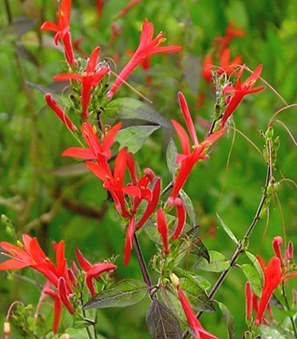
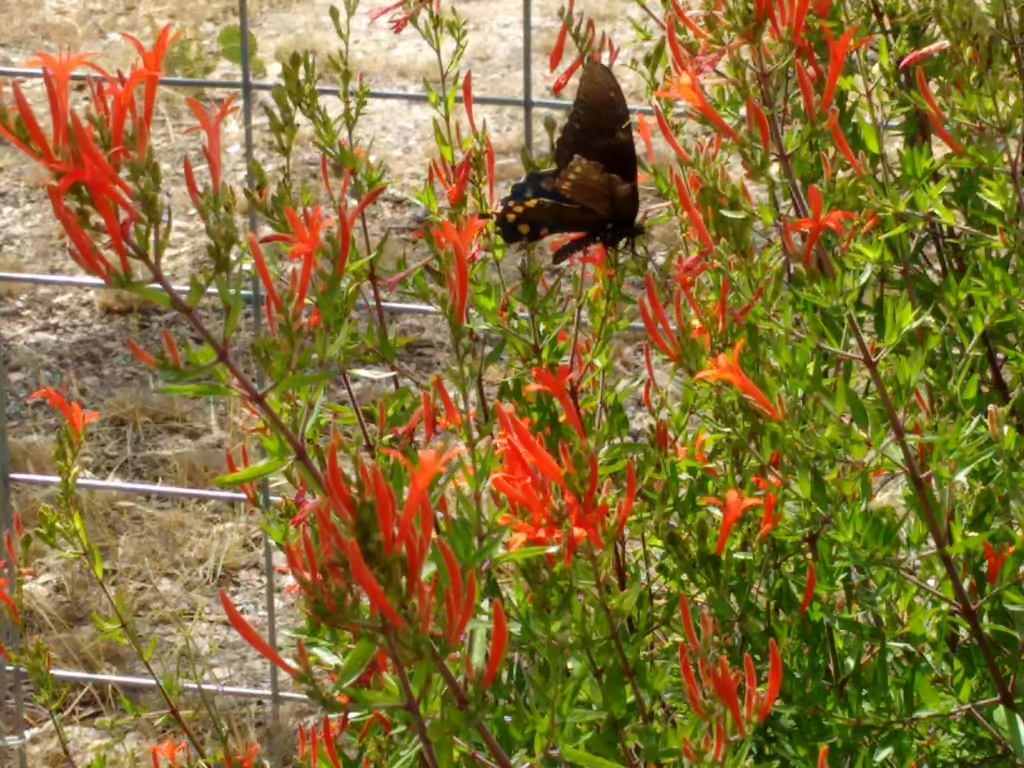
It is considered a small shrub, growing only 3-4 feet high, and will take full sun or part shade, in almost any soil. Its water needs are extremely low. It may need a bit of watering for the first year, but once it is established, it rarely needs more. Its tiny flame-like blooms festoon the branches like tiny candles all summer long. It is freeze-hardy and deciduous (loses its leaves in winter) and leafs out in early spring. Also, it reseeds prolifically. You might begin with a group of three plants, spaced 3-4 feet apart, but you will soon have many more. If you don’t want the volunteers, they are quite easily pulled up in spring and moved to another spot, or shared with friends.
It is also VERY deer resistant! So it can be planted anywhere in your landscape.
As for maintenance, there is none required – but you may shape it lightly if it grows unevenly – or to control its size as needed. Pruning it now and then will encourage more growth and more blooms.
WHERE TO FIND IT
Our local N.I.C.E. nurseries have happily agreed to stock up on our Plant of the Season in order to have it available to the public. These independent nurseries carry only the best plants for our area, as well as high-quality soil amendments and gardening supplies. Look for the “N.I.C.E. Plant of the Season” sign stake at these nurseries and growers in Fredericksburg, Medina, Kerrville, and Comfort:
* Friendly Natives, 1107 N. Llano Street, Fredericksburg, 830-997-6288* Medina Garden Nursery, 13417 Tx. Highway 16, Medina, 830-589-2771
* Natives of Texas, 4256 Medina Highway, Kerrville, 830-896-2169
* Plant Haus 2, 604 Jefferson Street, Kerrville, 830-792-4444
* The Gardens at The Ridge, 13439 S. Ranch Road 783 (Harper Rd.), Kerrville, 830-896-0430
*The Garden Haus, 109 Farm to Market Rd. 473, Comfort, 830-995-5610
Cindy Anderson is a member of the Native Plant Society of Texas (Kerrville Chapter) and the Hill Country Master Gardeners. An enthusiastic (though often frustrated) gardener, she has learned first-hand the value of native plants, and gladly shares reviews of her favorites in this quarterly seasonal column.
