

If you want to create a pollinator garden, but don’t know where to start, this month’s speaker at Native Plant Society of Texas (NPSOT), Fredericksburg Chapter will share tips and resources for going from a blank slate to recognized pollinator garden. Holly Simonette, owner of Enchanted Fredericksburg Ranch & Glassblowing and communications director of the Fredericksburg Chapter of Native Plant Society of Texas, will discuss how she and her husband, Paul, created a beautiful pollinator garden/picnic area out of the destruction from Winter Storm Uri. She will be speaking at the next meeting of the NPSOT Fredericksburg Chapter on July 23 at 6:30 p.m. at St. Joseph’s Halle.
“We made mistakes when we started our pollinator garden, but we’ve had lots of successes, ,” said Simonette. “I’m going to share them all so people can be more successful and save time and money when they create their own pollinator gardens.”
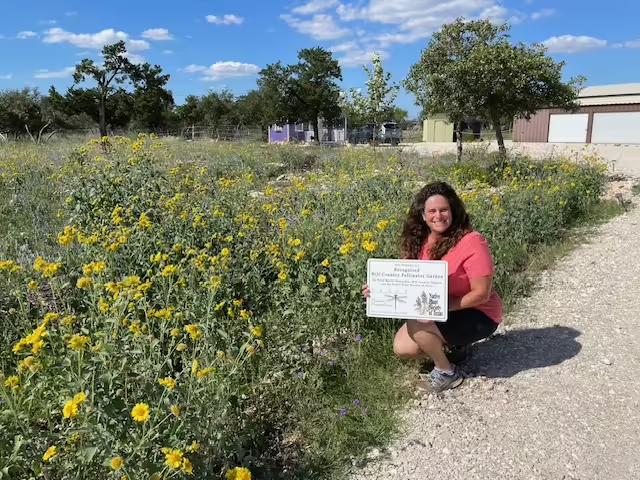
“If we all take a piece of our property and convert it into a Texas native plants pollinator garden, we can provide food and habitat for so many insects and birds that are critical to our local ecosystem and crops,” said Deborah Simmons, president of the Fredericksburg Chapter of NPSOT. “Holly is going to share what she has learned from creating a pollinator garden that is recognized by the Hill Country Master Naturalists and NPSOT.”
The Simonettes are restoring their 22-acre ranch to native Texas wildflowers, shrubs and grasses. The Pollinator Garden Assistance and Recognition Program (PGARP), a partnership between the Hill Country Master Naturalists and NPSOT, recognized their pollinator garden in September 2022. The garden is open to the public Fridays and Saturdays from 9 a.m. – 3 p.m. and by appointment. Find more information about PGARP here.
The Fredericksburg NPSOT chapter holds its monthly meetings on the 4th Tuesday of the month at St. Joseph’s Halle (212 W. San Antonio St., Fredericksburg). There is a social time with snacks at 6:30 p.m. and the meeting starts at 7 p.m. The public is invited to attend in person and via YouTube online streaming. More information is online at Facebook , Instagram, and https://npsot.org/chapters/fredericksburg/. Meetings are free and open to the public.
