January 2010
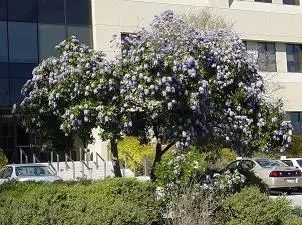
NICE! Plant of the Month (Sophora secundiflora) Description:Slow growing, evergreeen, multi-trunked shrub or small tree. Usual height is 6-12 feet, up to 30 feet, with a width of 10 feet. Foliage is dense, with dark glossy green leaves having 7-15 leaflets. Flowers, appearing in early spring, are clusters of fragrant
Still green after being in the freezer
Author: Bill Ward Last weekend after the temperature in our yard dropped to 12 degrees one night and 16 the next night, I was lamenting about having to look out on a desolate brown yard for several weeks until spring arrives. It was a nice surprise, however, to see that
NICE! 10 for ’10 — starting with an old favorite
Author: Bill Ward During 2010, Operation NICE! (Natives Instead of the Common Exotics!) will feature 10 of the most popular and successful of past NICE! Plants of the Month. The NICE! Committee members voted for their favorites among the nominees in several categories: trees, shrubs, flowers, vines, and grasses. The
Mountain laurel is a Central Texas favorite
Texas mountain laurel (Sophora secundiflora)is a flowering evergreen shrub or small tree that has been a favorite plant for home and commercial landscaping in Central Texas for a long time.
100 more bigtooth maples line streets of Boerne
Maple-lined streets still would be just a dream if the Lende Foundation had not committed to finance a maple-planting program for ten consecutive years.
100 More Bigtooth Maples Line the Streets of Boerne
Author: Bill Ward We did it again! For the fourth year, the Boerne Chapter of the Native Plant Society of Texas successfully gave away about 100 bigtooth maples to homeowners, businesses, schools, and churches. Some day, all those maples will make Boerne the Bigtooth Maple Town, where residents and visitors
The native-plant garden and nursery in Medina, Texas
The newest participant in the Boerne Chapter’s Operation NICE! (Natives Instead of Common Exotics!) is Medina Garden Nursery. It’s on Highway 16, just at the southeastern entrance to the little town of Medina and right across the road from Baxter Adams’ tree nursery, the supplier for of our annual Bigtooth
Native plant garden & nursery in Medina
**ARCHIVED POST ** Hundreds of potted plants for sale are lined up on the ground among the native trees, shrubs, and flowers planted in the big “front yard” of Ernesto Cariño’s rock house. “Medina Garden Nursery” is the perfect name for this business, because it is both a nursery and
The ligustrum woods of Boerne
**ARCHIVED POST ** One day the land just back of the soon-to-be-built Boerne Public Library will be a pleasant wooded slope with pathways winding through native trees and shrubs down to shady banks of an intermittent creek. It will be a place to take a stroll, read a book, watch
Brush – it’s a matter of perspective
**ARCHIVED POST ** Brush … you know … that worthless mix of small trees, shrubs, and vines that needs to be cleaned off the land. Or is that really a sensible definition of “brush”?
The ligustrum woods of Boerne — landscape at its worst
One day the land just back of the soon-to-be-built Boerne Public Library will be a pleasant wooded slope with pathways winding through native trees and shrubs down to shady banks of an intermittent creek. It will be a place to take a stroll, read a book, watch birds and butterflies,
Prairies — more than grass on flat land
Author: Bill Ward A couple of years ago, Kathy and I were fortunate to be on a field trip that visited Burleson Prairie, a several-hundred-acre restoration project on the Blackland Prairie near Temple. Being fairly naïve about prairies, we were surprised by such a large variety of native plants, both