March 2010
NICE! Plant of the Month (Lonicera sempervirens) Description:Coral honeysuckle (evergreen honeysuckle or woodbine) is a perennial, almost evergreen vine with a woody base. Native to the eastern half of Texas and the eastern U.S as far north as Massachusetts, coral honeysuckle can be found in woods, thickets, slopes, cliffs, and
“Native-Plant Watch” — helping Boerne school children grow native
Author: Bill Ward One of my good buddies in the Boerne Chapter of the Native Plant Society of Texas is Delmar Cain. He is like several others of us who have taken an interest in native plants during our post-retirement years. It was not that much of a stretch for
Coral honeysuckle is the perfect vine for landscapes
Its whorls of bright-red trumpet flowers, shiny dark-green oval and oblong leaves, and red berries make this honeysuckle a showy vine for home landscaping.
February 2010
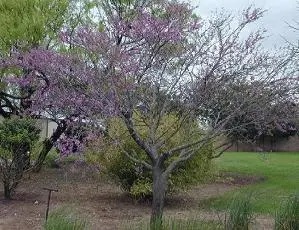
NICE! Plant of the Month (Cercis canadensis var. texensis) Description:Texas Redbud grows as a deciduous small tree or multi-trunked shrub, achieving a maximum height of 10-20 feet. It differs from the Eastern Redbud in that the leaves are rounder, thicker, and very glossy. This tree is best known for the
Warnock herbarium found in Kendall County
**ARCHIVED POST ** Two or three weeks ago my wife Kathy brought home a collection of pressed native plants for me to see. She suspected I’d be interested in these herbarium specimens because of their high quality, and she was right! This turns out to be a historic collection!
Using native grasses in the landscape
The challenge is our unfamiliarity with using native grasses in the home landscape, even though they can dramatically cut the maintenance that your yard requires and are incredibly water-efficient.
Flora’s death: green is not forever
Dead plant matter feeds us and gets recycled into rich soil amendment materials by microbes and larger animal life.
Coral honeysuckle, a NICE! vine for landscaping
Author: Bill Ward Guess what was the first plant to bloom in our yard in 2010? No, it wasn’t anemone nor agarita, usually the first two natives to flower when winter starts to give way to spring. It was coral honeysuckle! That vine began to put out a few red
The Native-Plant Guru of the Trans-Pecos Collected in Kendall County
Author: Bill Ward Two or three weeks ago my wife Kathy brought home a collection of pressed native plants for me to see. She suspected I’d be interested in these herbarium specimens because of their high quality, and she was right! This turns out to be a historic collection! Kathy
Redbuds show that spring is here
If the redbuds are blooming, can the bluebonnets be far behind?
Still green after being in the freezer
**ARCHIVED POST ** Last weekend after the temperature in our yard dropped to 12 degrees one night and 16 the next night, I was lamenting about having to look out on a desolate brown yard for several weeks until spring arrives.
Benny Simpson gets a makeover
**ARCHIVED POST ** It was a sad sight indeed! Benny Simpson’s trial plots at Texas AgriLIFE Urban Solutions site in Dallas were overgrown, weedy, and littered with piles of unremoved limbs from past prunings. Grapevine, some as thick as a wrist, scampered up through the limbs of trees. Goldenrod, gone