

Fall 2021 plant sale roundup
Fall is the best time to plant just about anything in Texas. Here are a few native plant sales we know of.
Ribbon-cutting ceremony at I-35 Monarch way stations
New educational signs were installed this summer at the Monarch Waystations at rest areas along Interstate 35 in Bell County and Hill County. We’re celebrating with ribbon-cuttings to kick off our 2021 fall symposium
Program: Big Bend – NPSOT Meeting
**ARCHIVED POST ** Program: Big Bend – NPSOT Meeting Date: October 2, 2021 Time: 10AM – 12PM Place: The Pavilion at the Chihuahuan Desert Nature Center (CDRI) RSVP to: Big Bend Chapter NOTE: Though the meeting will be outdoors, we request that all attendees exercise caution and follow appropriate measures
Registration announced for fall symposium
Our Fall Symposium is open for registration. The event will include both virtual and in-person outdoor activities and will be October 2-10.
Remembering Carroll Abbott
Originally published August 1994 in Volume XII, Number 4, of the Native Plan Society of Texas News, while Benny Simpson was president of the Society
Introducing a natives in schools project
Educating school children about native plants and plant habitats can create life-long native plant enthusiasts and inspire some to choose careers in native plant conservation, research, or landscaping.

Plant of the Month: Chile Pequin
August 2021 Plant of the Month
Botanical name: Capsicum annuum
Common names: Chile Pequin, Chile Petin, Bird Pepper, Turkey Pepper, Cayenne Pepper
Pending legislation would boost wildlife, outdoor recreation
The Recovering America’s Wildlife Act would be the most significant wildlife funding legislation passed in over a generation
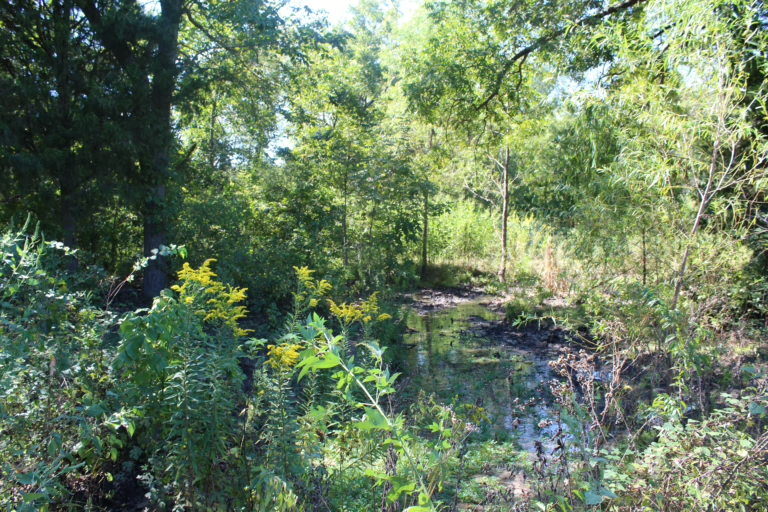
Native Plants of North Texas’ Bottomland Hardwood Forests
“Sing me a melody – Sing me a blues Walk through the bottomland without no shoes The Brazos she’s running scared – She heard the news Walk through the bottomland without no shoes” Walk Through The Bottomland – Lyle Lovett Prairies are not our only ecosystem here in North Texas.
Fall 2021 landscaping classes announced
We will offer 10 landscaping classes this fall at 7 different locations around the state as part of our popular Native Landscape Certification Program.
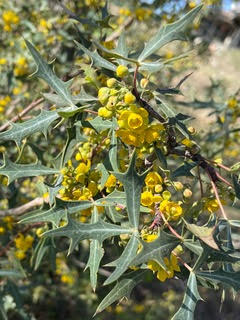
Agarita – NICE Plant of the Season
Evergreen shrub with sharp-pointed leaves and fall berries Provided courtesy of the Trinity Forks Chapter and Dr. Becca Dickstein Description: Agarita, Mahonia trifoliolata, is an evergreen, holly-like, native Texas shrub that grows 3-6 ft. tall 3-5 ft. wide. It has stiff, spreading branches holding gray-green to blue-gray sharp-pointed, thorny leaves.
Bexar Roots July 2021
**ARCHIVED POST ** from 2021-07-24 Click Here **ARCHIVED POST** **ARCHIVED POST LINKS & PICTURES MAY NOT WORK** **ARCHIVED POST AUTHOR: aawalt **
