

Bill Lindemann (1937-2021)
Bill Lindemann, twice president of the Society, passed away on July 19, 2021, from complications after heart surgery.
It’s contest time
It’s time for our annual contests for photos, videos, and chapter newsletters.

Plant of the Month: Parsley Hawthorn
July 2021 Plant of the Month
Botanical name: Crataegus marshallii
Common names: Parsley Hawthorn, Parsleyleaf Hawthorn
Nature’s translucent jewels
There are four species of Rosinwood (Silphium) in north central Texas and about 20 species growing across the eastern two-thirds of the United States
July 27, 2021 What Did We Learn About Native Plants from the Big Freeze of February 2021?
**ARCHIVED POST ** from 2021-07-11 7:00 pm – Meeting and program What Did We Learn About Native Plants from the Big Freeze of February 2021? A panel of San Antonio gardeners and natural resource professionals will present their views, discuss the issues, and answer questions about the impact of the
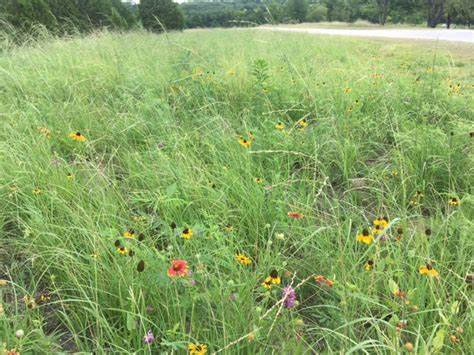
What are Prairie Remnants and Prairie Restorations?
In our sprawling Metroplex, it can be hard to discern what was our “natural” landscape. With our mix of heavily developed land, artificial lakes, and small pockets of parks and nature preserves, it is challenging to see what was indigenous.
Newsletter contest for chapters
Many of our chapters have their own newsletters and we want to recognize the effort and creativity it takes to write and publish them.
Bexar Roots June 2021
**ARCHIVED POST ** from 2021-06-20 Click Here **ARCHIVED POST** **ARCHIVED POST LINKS & PICTURES MAY NOT WORK** **ARCHIVED POST AUTHOR: aawalt **

Plant of the Month: Pleatleaf Iris
June 2021 Plant of the Month
Botanical name: Alophia drummondii
Common names: Pleatleaf Iris, Propeller Flower, Purple Pleat-leaf, Pinewoods Lily
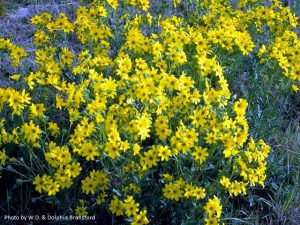
Top 10 Benefits of Using North Texas Native Plants
“Native plants give us a sense of where we are in this great land of ours. I want Texas to look like Texas and Vermont to look like Vermont.”, “Lady Bird” Johnson Many people when hearing about native plants, wonder what it means and why it is important. It is
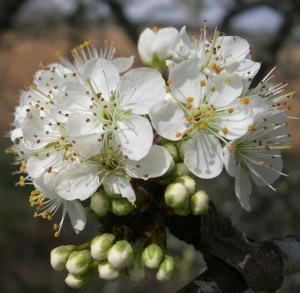
The Dirty Dozen Invasive Plants of North Texas
The term “invasive species” brings forth a variety of connotations and disagreement about its meaning. We will utilize Executive Order 1312 establishing the National Invasive Species Council as our source. An invasive species is:
Photo contest for 2021
Our 2021 contest is all-digital and photos may be entered in twelve different categories corresponding to the Level III ecoregions found in Texas.
